This post may contain affiliate links. Please read our disclosure policy.
There’s nothing worse than spending money on beautiful salmon fillets only to overcook them into dry, chalky fish that nobody wants to eat. I used to do this all the time before I understood that salmon is actually done at a much lower temperature than I thought.
The secret to perfectly cooked salmon is knowing the right internal temperature—and it’s not what most people think. Unlike chicken, salmon doesn’t need to reach 165°F. In fact, if you cook it that high, you’ll end up with dry, disappointing fish every single time.

Quick answer: What temperature should salmon be?
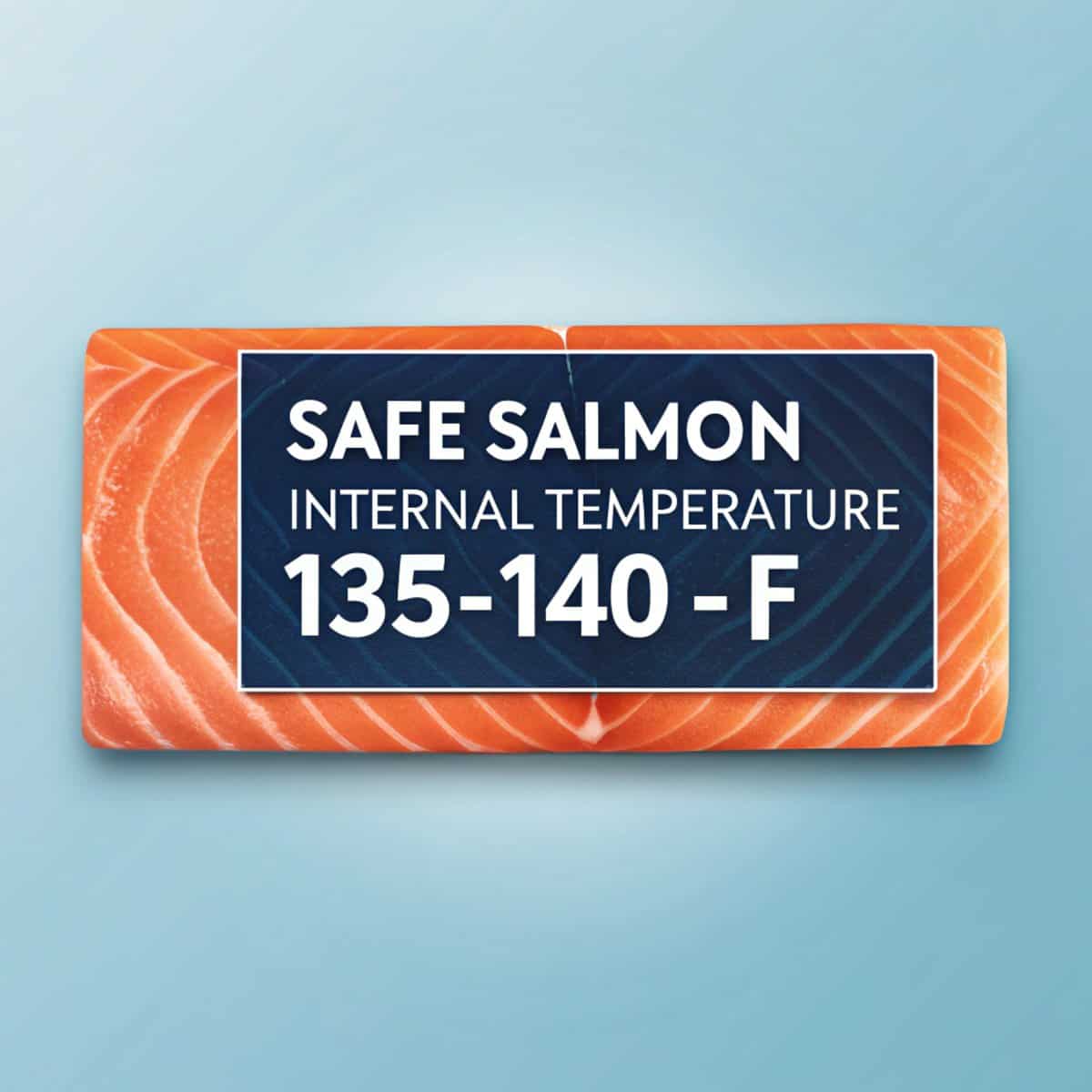
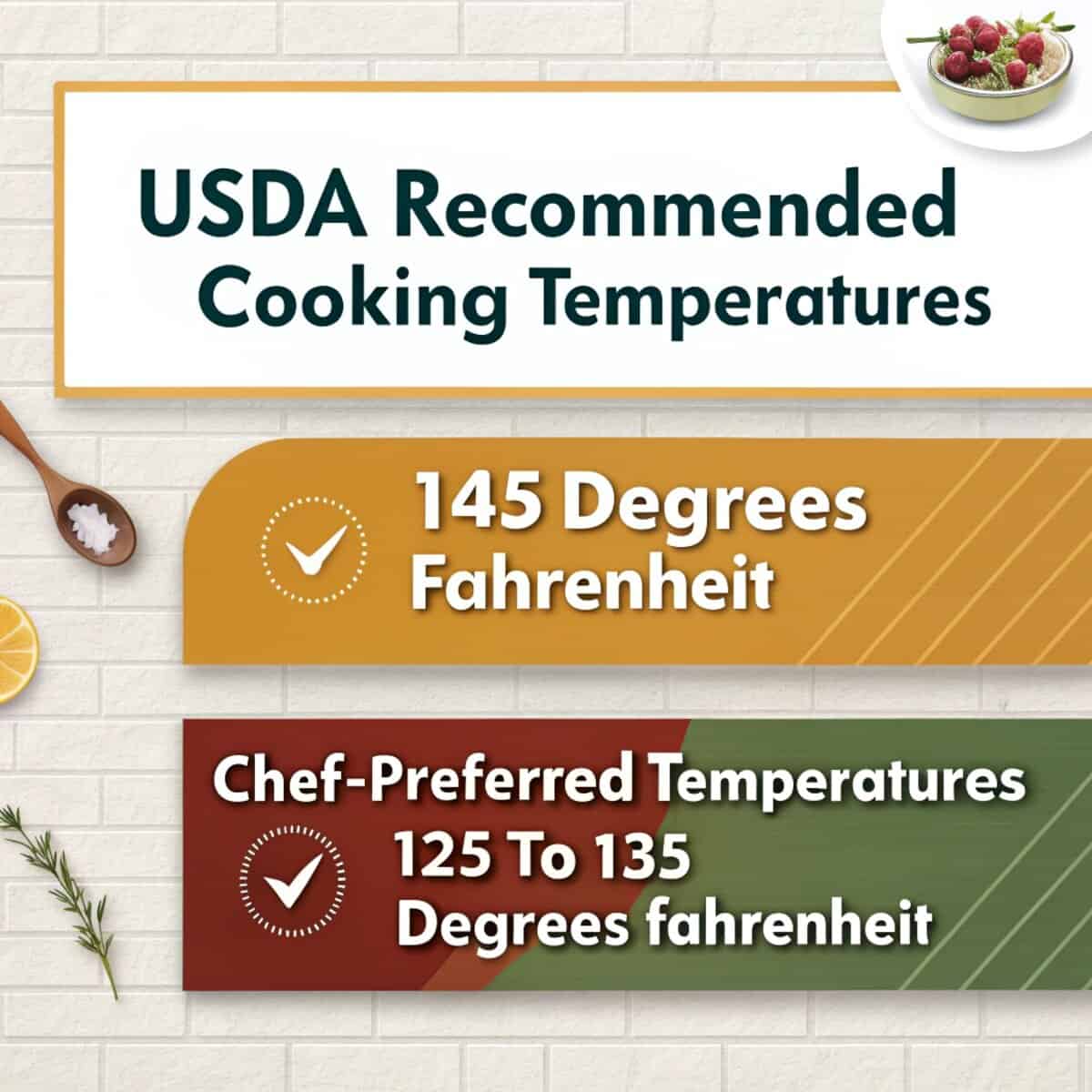
The USDA recommends cooking salmon to an internal temperature of 145°F (63°C). However, many chefs and home cooks prefer salmon cooked to 125-130°F for medium-rare or 135-140°F for medium, which results in moister, more tender fish.
At 145°F, salmon is fully cooked and safe to eat, but it will be firmer and less moist. At 125-130°F, salmon is still safe (as long as it’s from a reliable source) and has a buttery, melt-in-your-mouth texture.
The temperature you choose depends on your personal preference and the quality of your salmon.
Safe salmon internal temperatures
| Doneness Level | Internal Temp | Texture | Appearance | Best For |
|---|---|---|---|---|
| Rare | 110-120°F (43-49°C) | Very soft, almost raw center | Translucent in center, bright orange | Sushi-grade salmon only |
| Medium-Rare | 125-130°F (52-54°C) | Buttery, moist, tender | Slightly translucent center, deep pink | High-quality fresh salmon |
| Medium | 135-140°F (57-60°C) | Moist and flaky | Opaque throughout, light pink | Most popular, everyday cooking |
| Medium-Well | 145°F (63°C) | Firm, fully cooked | Opaque, pale pink | USDA recommendation |
| Well-Done | 150°F+ (66°C+) | Dry, flaky, firm | Very pale, white albumin visible | Not recommended |
Why salmon temperature matters
Salmon is completely different from chicken. While chicken must reach 165°F to kill bacteria, salmon is safe at much lower temperatures because it doesn’t carry the same risks.
The problem with overcooking salmon:
- It becomes dry and chalky
- The delicate oils dry out
- White albumin (protein) leaks out and looks unappetizing
- The fish loses its buttery texture
Benefits of cooking to the right temperature:
- Moist, tender texture
- Rich, buttery flavor
- Beautiful color
- Flaky but not dry
I learned this the hard way after years of cooking salmon to 145°F and wondering why restaurant salmon always tasted so much better. Once I started pulling salmon at 130°F, everything changed.
USDA vs chef-preferred temperatures
There’s often confusion about salmon temperature because the USDA says one thing and chefs say another.
| Source | Recommended Temp | Why |
|---|---|---|
| USDA | 145°F (63°C) | Ensures all potential bacteria are killed; conservative safety guideline |
| Most Chefs | 125-135°F (52-57°C) | Optimal texture and moisture; salmon is safe at lower temps from quality sources |
| Sushi Restaurants | Raw to 110°F | Sushi-grade salmon flash-frozen to kill parasites |
My take: If you’re buying fresh, high-quality salmon from a reputable source, cooking to 125-135°F is safe and produces much better results. If you’re unsure about the source or feeding young children, pregnant women, or immunocompromised individuals, stick with 145°F.
How to check salmon internal temperature
What you’ll need
- Instant-read meat thermometer – Digital is best, reads in 2-3 seconds
- Make sure the probe is thin enough not to break up the delicate fish
Step-by-step instructions
| Step | What to Do | Why |
|---|---|---|
| 1. Insert at an angle | Push thermometer into the thickest part of the fillet at a 45-degree angle | Salmon is thin, so angling helps you get into the center |
| 2. Go to the middle | Insert probe into the very center, not near edges | Center cooks slowest and is the best indicator |
| 3. Don’t touch the pan | Keep probe in the fish, not touching the cooking surface | Pan/grill is hotter than the fish |
| 4. Read quickly | Wait 2-3 seconds for stable reading | Salmon cooks fast; don’t leave thermometer in too long |
| 5. Check thickest part | Always measure the thickest section of the fillet | Ensures even cooking throughout |
Common mistakes
- Checking near the edges. The edges cook faster than the center. Always check the thickest, center part.
- Leaving the thermometer in too long. Salmon is delicate and continues cooking quickly. Check and remove from heat immediately.
- Not accounting for carryover cooking. Salmon’s temperature rises 5-10°F after removing from heat. Pull it off 5 degrees before your target temp.
Salmon cooking temperatures by method
Different cooking methods affect the final texture, but the internal temperature guidelines remain the same.
Baked salmon (375-400°F oven)
| Fillet Thickness | Time at 375°F | Time at 400°F | Target Internal Temp |
|---|---|---|---|
| ½ inch | 8-10 minutes | 6-8 minutes | 125-135°F |
| 1 inch | 12-15 minutes | 10-12 minutes | 125-135°F |
| 1½ inches | 15-18 minutes | 12-15 minutes | 125-135°F |
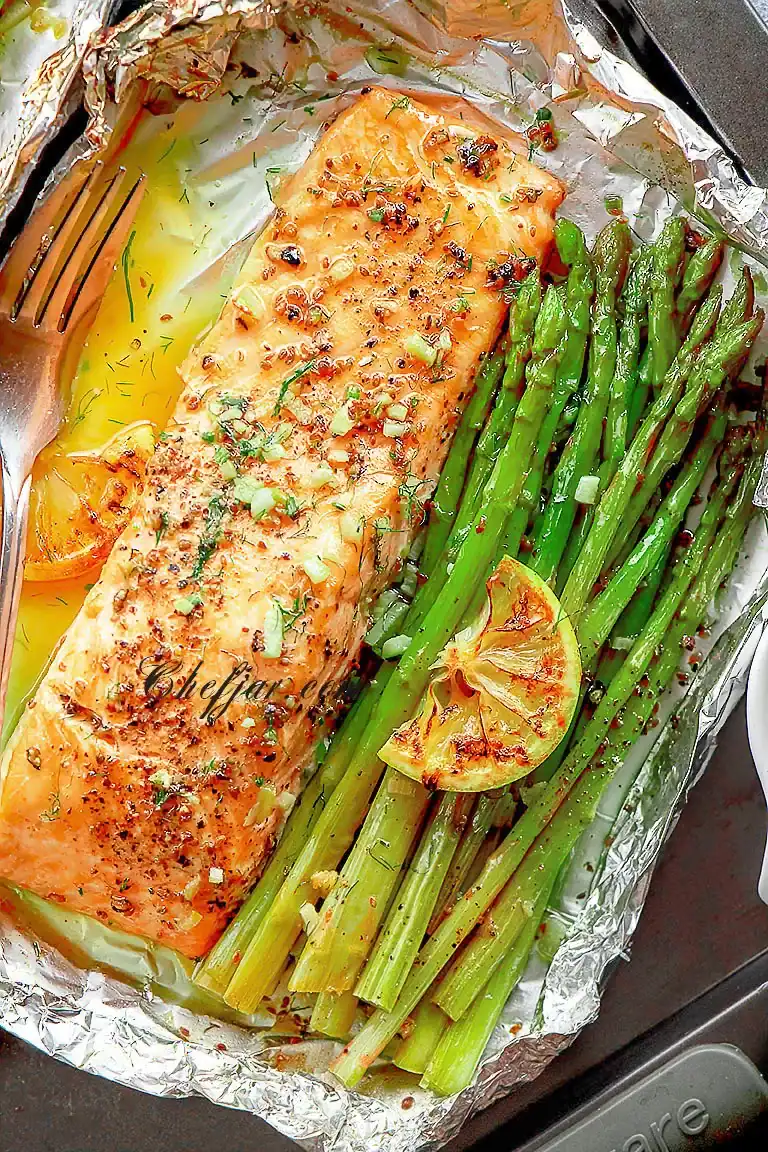
Tip: Bake on a parchment-lined sheet or in foil for easy cleanup and moist salmon.
Pan-seared salmon (medium-high heat)
| Fillet Thickness | Skin-Side Down | Flip Time | Target Internal Temp |
|---|---|---|---|
| ¾ inch | 4-5 minutes | 1-2 minutes | 125-135°F |
| 1 inch | 5-6 minutes | 2-3 minutes | 125-135°F |
| 1½ inches | 6-7 minutes | 3-4 minutes | 125-135°F |
Tip: Sear skin-side down first for crispy skin, then flip briefly to finish.
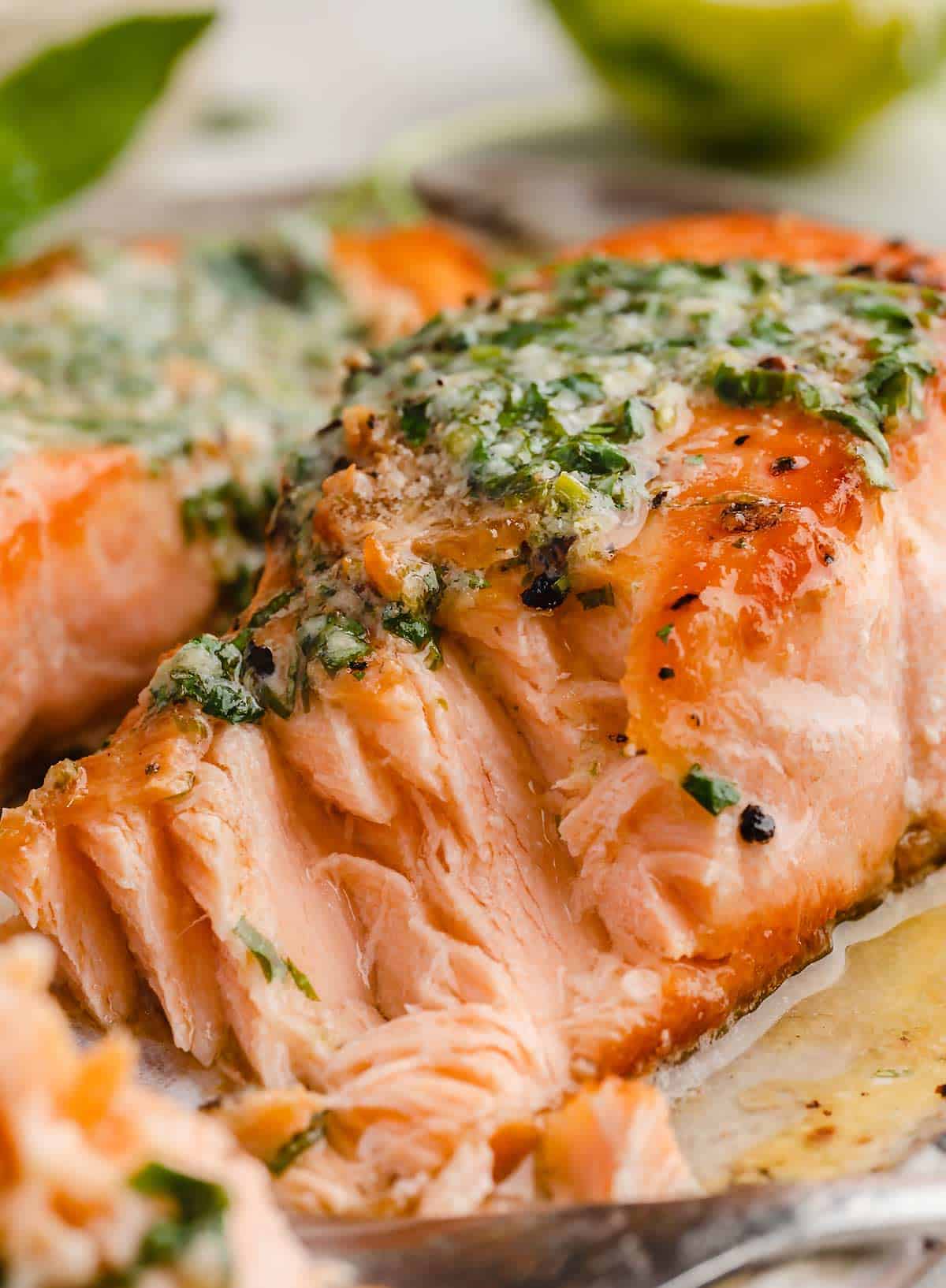
Grilled salmon (medium-high heat)
| Fillet Thickness | First Side (skin down) | Second Side | Target Internal Temp |
|---|---|---|---|
| ¾ inch | 4-5 minutes | 2-3 minutes | 125-135°F |
| 1 inch | 5-6 minutes | 3-4 minutes | 125-135°F |
| 1½ inches | 6-8 minutes | 4-5 minutes | 125-135°F |
Tip: Oil the grill grates well to prevent sticking. Use a fish spatula for easy flipping.
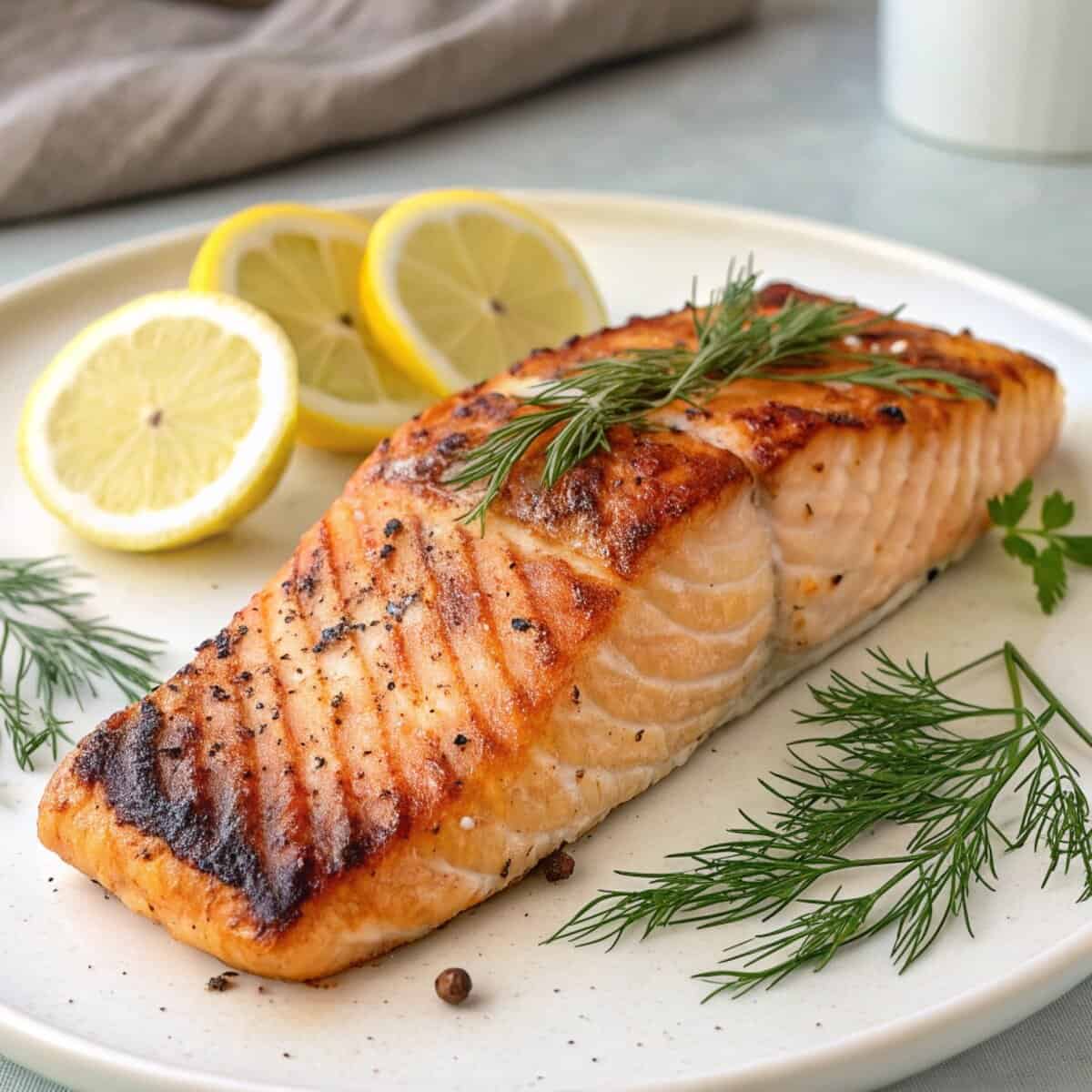
Air fryer salmon (375-400°F)
| Fillet Thickness | Time at 375°F | Time at 400°F | Target Internal Temp |
|---|---|---|---|
| ¾ inch | 7-9 minutes | 6-8 minutes | 125-135°F |
| 1 inch | 9-11 minutes | 8-10 minutes | 125-135°F |
Tip: No need to flip. Check temp at minimum time to avoid overcooking.
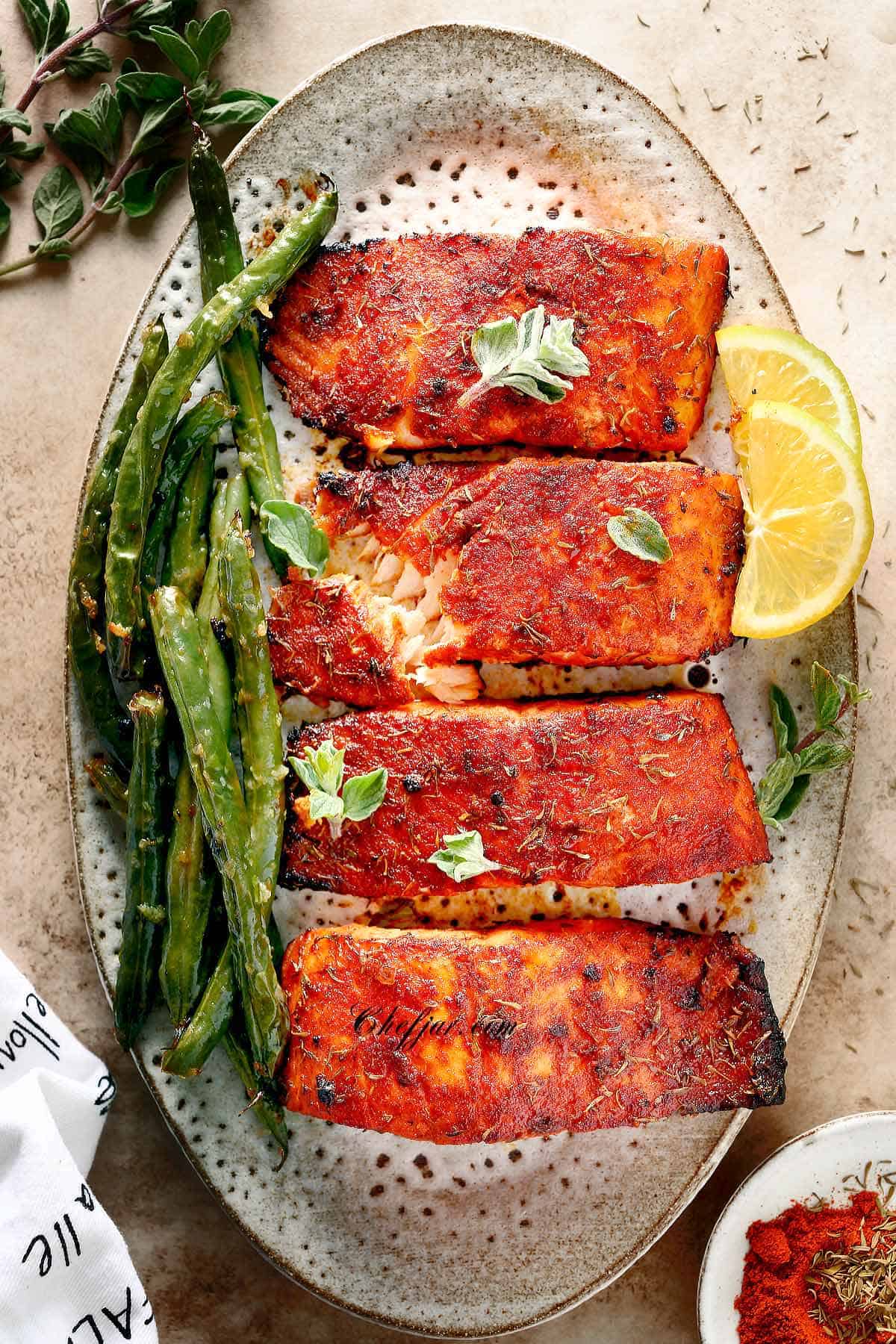
Signs salmon is done (without a thermometer)
While a thermometer is most accurate, here are visual and texture cues:
| Sign | What to Look For | Doneness Level |
|---|---|---|
| Flakes easily | Gently press with a fork; salmon separates into flakes | Medium to medium-well (135-145°F) |
| Opaque color | Flesh changes from translucent to opaque | Medium (135-140°F) |
| Slight translucency | Center still slightly translucent/darker | Medium-rare (125-130°F) |
| White albumin | White protein dots on surface | Overcooked (145°F+) |
| Firm to touch | Fish feels firm when pressed | Medium-well to well-done |
| Butter knife test | Knife slides through easily with slight resistance | Medium-rare to medium |
Note: These methods aren’t as reliable as a thermometer, especially when you’re learning. Invest in a good instant-read thermometer for consistent results.
What is the white stuff on cooked salmon?
That white, creamy substance that sometimes oozes out of salmon is called albumin—a protein that coagulates when heated.
Why it appears:
- Salmon is overcooked or cooked at too high a temperature
- The proteins contract and push out moisture and albumin
- More common when salmon reaches 145°F or higher
How to minimize it:
- Cook salmon to 125-135°F instead of 145°F
- Don’t cook over excessively high heat
- Brine the salmon for 15 minutes before cooking (dissolves some proteins)
- Pat salmon very dry before cooking
Is it safe to eat? Yes, albumin is completely safe. It just doesn’t look very appetizing.
Carryover cooking in salmon
Salmon continues cooking after you remove it from heat. This is called carryover cooking, and it’s crucial for getting perfect salmon.
| Cooking Method | Temperature Rise After Removing | What to Do |
|---|---|---|
| Oven-baked | +5-10°F | Pull at 120-125°F for medium-rare finish |
| Pan-seared | +5-8°F | Remove at 120-128°F for medium-rare |
| Grilled | +5-10°F | Remove at 120-125°F for medium-rare |
| Air fryer | +3-5°F | Pull at 122-130°F for medium-rare |
The rule: Always remove salmon 5-10 degrees before your target temperature. Let it rest for 3-5 minutes, and it will reach the perfect temp.
Best practices for perfectly cooked salmon
- Buy quality salmon. Fresh, high-quality salmon (wild-caught if possible) tastes better and is safer to cook to medium-rare. Look for bright color, firm texture, and a fresh ocean smell—not fishy.
- Bring salmon to room temperature. Take it out of the fridge 15-20 minutes before cooking. Cold salmon cooks unevenly.
- Pat it completely dry. Moisture prevents browning and makes steam. Use paper towels to pat the surface very dry.
- Season generously. Salmon has a rich flavor that can handle bold seasoning. Salt, pepper, lemon, garlic, and herbs all work beautifully.
- Don’t flip too early. When pan-searing or grilling, let salmon cook undisturbed until it releases naturally from the pan. If it’s sticking, it’s not ready to flip.
- Use carryover cooking. Pull salmon off the heat before it reaches your target temp. It will finish cooking as it rests.
- Let it rest. Rest salmon for 3-5 minutes after cooking. This allows juices to redistribute and the temperature to equalize.
How to fix undercooked salmon
If you check your salmon and it’s not at temperature yet, don’t panic. Just return it to the heat.
| Cooking Method | How to Continue Cooking |
|---|---|
| Oven | Return to oven for 2-3 more minutes, check again |
| Pan | Lower heat to medium, cover, cook 1-2 more minutes |
| Grill | Move to indirect heat (cooler zone), close lid, cook 2-3 minutes |
| Air fryer | Add 1-2 more minutes, check temp again |
Check frequently to avoid overcooking. Salmon can go from underdone to overdone quickly.
Can you eat salmon raw or rare?
Yes, if it’s sushi-grade salmon from a reputable source. Sushi-grade salmon has been flash-frozen to kill parasites, making it safe to eat raw.
When raw/rare salmon is safe:
- Purchased from a trusted fishmonger or grocery store labeled “sushi-grade”
- Previously frozen at -4°F (-20°C) for 7 days or -31°F (-35°C) for 15 hours
- Fresh, high-quality, and properly handled
Who should avoid raw salmon:
- Pregnant women
- Young children
- Immunocompromised individuals
- Anyone unsure about the source
My recommendation: If you’re buying regular salmon (not sushi-grade), cook it to at least 125°F. If you have sushi-grade salmon, you can safely enjoy it rare at 110-120°F or even raw.
❓Salmon temperature FAQs
The USDA recommends 145°F for safety, but most chefs prefer 125-135°F for medium-rare to medium. At this temperature, salmon is moist, buttery, and still safe to eat when sourced from quality suppliers.
Yes! Salmon should be pink or even slightly translucent in the center when cooked to medium-rare (125-130°F). This is the ideal texture. Salmon that’s pale throughout is overcooked.
Look for these signs: the fish flakes easily with a fork, it’s opaque throughout (or slightly translucent in the center for medium-rare), and it feels firm but not hard when pressed gently. However, a thermometer is the most reliable method.
Your salmon is likely overcooked past 145°F. Salmon dries out quickly at high temperatures. Try cooking to 130-135°F instead and remove it from heat 5 degrees before your target temp to account for carryover cooking.
145°F is safe according to USDA guidelines, but it produces drier, firmer salmon than most people prefer. For juicier, more tender salmon, aim for 125-135°F. The lower temperature is safe with high-quality, fresh salmon.
Absolutely. Salmon cooked past 145-150°F becomes dry, chalky, and unpleasant. The delicate oils evaporate, and white albumin proteins leak out. Always use a thermometer and pull salmon off heat early.
It depends on thickness and method, but generally:
¾-inch fillet: 8-12 minutes total
1-inch fillet: 12-15 minutes total
1½-inch fillet: 15-20 minutes total
Always check internal temperature rather than relying solely on time.
Skin-on is better for pan-searing and grilling—it protects the delicate flesh, adds flavor, and gets deliciously crispy. For baking, either works. You can always remove the skin after cooking if you don’t want to eat it.
An instant-read digital thermometer with a thin probe works best. ThermoWorks ThermoPop ($30), Lavatools Javelin ($42), or Thermapen ($100) are all excellent choices. Avoid leave-in thermometers—they’re too bulky for delicate salmon.
Frozen salmon takes about 50% longer to cook than thawed. It’s best to thaw salmon in the fridge overnight before cooking for even results. If cooking from frozen, add 5-7 minutes to cooking time and check the temp carefully.
Yes, but gently. Reheat in a 275°F oven for 10-15 minutes, or microwave at 50% power in 30-second intervals. Salmon is delicate and dries out easily when reheated, so low and slow is best. I actually prefer leftover salmon cold in salads.
Restaurants usually cook salmon to 125-135°F (medium-rare to medium) instead of 145°F, resulting in much moister, more buttery fish. They also use high-quality, fresh salmon and proper technique—high heat for searing, then finishing in a lower-temp oven.
The bottom line
Cooking salmon to the perfect temperature transforms it from dry and disappointing to buttery and delicious. The key is understanding that salmon is done at a much lower temperature than most people think.
Remember these key points:
- 125-135°F is ideal for moist, tender salmon (medium-rare to medium)
- 145°F is the USDA recommendation but produces drier fish
- Use an instant-read thermometer for accuracy
- Remove salmon 5-10 degrees before target temp to account for carryover cooking
- Let salmon rest 3-5 minutes after cooking
Once you start cooking salmon to 130°F instead of 145°F, you’ll never go back. The difference is night and day—rich, buttery texture instead of dry, chalky fish. Your family will actually ask for salmon night instead of dreading it.
Invest in a good meat thermometer, trust the lower temperature, and enjoy perfectly cooked salmon every single time.
Did this salmon temperature guide help you cook better fish? Leave a comment below and let me know what temperature you prefer for your salmon!