


This post may contain affiliate links. Please read our disclosure policy.
If you’ve ever bought a large tub of cottage cheese and wondered whether you can freeze the leftovers, you’re not alone! This is one of the most common questions we get about cottage cheese storage. The short answer is yes, you can freeze cottage cheese, but there are some important things you need to know first.

In this guide, we’ll cover everything about freezing cottage cheese, including how texture changes, the best ways to use frozen cottage cheese, and proper thawing methods so you get the best results.
Can You Freeze Cottage Cheese?

Yes, you can freeze cottage cheese! It’s completely safe to freeze cottage cheese for up to 3-6 months. However, freezing will change the texture significantly, so it’s not ideal for every use.
The USDA confirms that freezing cottage cheese is safe, and many people successfully freeze it to extend its shelf life and reduce food waste.
What Happens to Cottage Cheese When You Freeze It?

Here’s what you need to know about texture changes:
- Texture becomes grainy and watery. Fresh cottage cheese has a creamy, smooth texture with distinct curds. When frozen and thawed, the water separates from the curds, making it grainier, drier, and sometimes crumbly. The creamy consistency you love in fresh cottage cheese won’t be the same.
- Some liquid separation is normal. You’ll notice excess liquid (whey) when you thaw frozen cottage cheese. This is completely normal and expected.
- Fat content matters. Full-fat cottage cheese tends to freeze slightly better than low-fat or fat-free versions. The higher fat content helps maintain a bit more creaminess, though texture changes still occur.
- Small curd vs large curd. Small curd cottage cheese generally freezes better than large curd because the smaller pieces handle freezing and thawing with less dramatic texture changes.
Best Ways to Freeze Cottage Cheese

Follow these tips for the best results when freezing cottage cheese:
- Use airtight containers. Transfer cottage cheese to freezer-safe, airtight containers or heavy-duty freezer bags. Remove as much air as possible to prevent freezer burn.
- Freeze in portion sizes. Divide cottage cheese into smaller portions (like 1-cup servings) so you only thaw what you need. This prevents waste and makes it easier to use in recipes.
- Label and date everything. Write the date on your container so you know when to use it by. Frozen cottage cheese is best used within 3-6 months.
- Stir before freezing. Give the cottage cheese a good stir before freezing to distribute the curds and liquid evenly.
- Don’t freeze in the original container. The original packaging isn’t designed for freezing and may crack or allow freezer burn.
- Freeze flat in bags. If using freezer bags, lay them flat in the freezer so they freeze quickly and stack easily.
Best Uses for Frozen Cottage Cheese
Frozen and thawed cottage cheese works best in cooked or blended recipes where texture isn’t as important. Here are the best ways to use it:
- Smoothies and protein shakes. Blend thawed cottage cheese into smoothies for a protein boost. The texture changes won’t matter once it’s blended smooth.
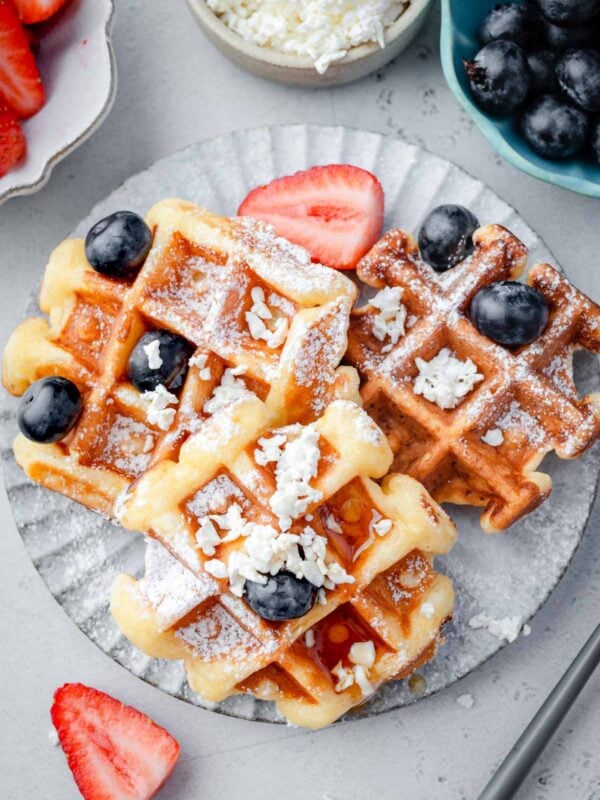
- Baked goods. Use in pancakes, waffles, muffins, or our Blueberry Cottage Cheese Breakfast Bake or in Strawberry Cottage Cheese Breakfast Bake. Baking masks the texture changes completely.
- Casseroles and lasagna. Mix into lasagna, baked pasta dishes, or casseroles where it will be combined with other ingredients.
- Scrambled eggs. Stir into scrambled eggs for extra protein and creaminess.
- Sauces and dips. Blend into creamy sauces, Alfredo sauce, or dips where you’ll be blending it smooth anyway.
- Cottage cheese ice cream. The frozen texture actually works well for making high-protein ice cream!
- Mashed potatoes. Mix into mashed potatoes for added protein and creaminess.

When NOT to Use Frozen Cottage Cheese
Avoid using thawed cottage cheese for:
- Eating plain or with fruit. The grainy, watery texture is unappetizing on its own.
- Salads. The texture changes make it unsuitable for fresh salads like our Tzatziki Chickpea Salad.
- Cottage cheese bowls. Any recipe where cottage cheese is the star and eaten fresh won’t work well.
- Dips served cold. Ranch dips or veggie dips where you want a smooth, creamy texture.
How to Thaw Frozen Cottage Cheese

Proper thawing makes a big difference in the final texture. Here are the best methods:
- Refrigerator thawing (best method). Move frozen cottage cheese to the refrigerator and let it thaw slowly overnight or for 6-8 hours. This is the safest method and gives the best texture.
- Cold water thawing (faster). Place the sealed container or bag in a bowl of cold water, changing the water every 30 minutes. Cottage cheese should thaw in 1-2 hours.
- Microwave thawing (for cooking only). Use the defrost setting in 30-second intervals if you’re immediately using it in a cooked recipe. This is the fastest but can create the most texture changes.
- Never thaw at room temperature. This allows bacteria to grow and isn’t food safe.
How to Improve Texture After Thawing
While you can’t fully restore the original texture, these tips help:
- Drain excess liquid. Pour off any separated whey or press the cottage cheese gently in a strainer to remove excess moisture.
- Stir well. Mix the cottage cheese thoroughly to redistribute the curds and any remaining liquid.
- Blend it. Use a blender or food processor to make it smooth for sauces, smoothies, or baked goods.
- Add fresh cottage cheese. Mix in a small amount of fresh cottage cheese to improve the texture if you’re using it in a recipe where some texture is needed.
- Use it in warm dishes. The texture is less noticeable in warm, cooked recipes.
How Long Does Cottage Cheese Last?

Fresh cottage cheese in the fridge: 7-10 days after opening (check the sell-by date)
Frozen cottage cheese: 3-6 months in the freezer
Thawed cottage cheese: Use within 3-4 days and do not refreeze
Should You Freeze Cottage Cheese?
Here’s our honest take: Freeze cottage cheese only if you plan to use it in cooked or blended recipes.
If you love eating cottage cheese fresh with fruit, in salads, or in bowls, freezing isn’t worth it. The texture changes are too significant for fresh applications.
However, if you have extra cottage cheese that’s about to expire and you use it in smoothies, baking, or cooked dishes, freezing is a great way to reduce waste and always have some on hand for recipes.
Alternative Storage Tips
Instead of freezing, try these options:
Buy smaller containers. Purchase cottage cheese in sizes you’ll actually finish within a week.
Make recipes throughout the week. Use cottage cheese in different recipes like our Cottage Cheese Scrambled Eggs, pancakes, and pasta dishes throughout the week.
Share with friends. If you bought too much, share with neighbors or friends who also love cottage cheese.
Check the date before buying. Choose containers with the longest sell-by date for maximum freshness.
FAQs
Yes, frozen and thawed cottage cheese is safe to eat. However, the texture will be grainy and watery, so it’s best used in cooked or blended recipes rather than eating it plain.
Bad cottage cheese will have a sour smell, visible mold, excessive liquid separation, or a yellowish color. If it tastes sour or off, discard it. When in doubt, throw it out!
Freezing doesn’t kill bacteria, but it does stop bacterial growth. This is why it’s important to freeze fresh cottage cheese before it expires and to use proper food safety practices when thawing.
It’s not recommended. Original containers aren’t designed for freezing and may crack or allow freezer burn. Transfer to freezer-safe, airtight containers instead.
Full-fat, small curd cottage cheese freezes best. The higher fat content and smaller curds handle texture changes slightly better than low-fat or large curd varieties.
No, you should not refreeze cottage cheese once it’s been thawed. This creates food safety risks and makes the texture even worse. Only thaw what you plan to use.
Whipped cottage cheese has a smoother texture to start with, but it still undergoes similar texture changes when frozen. It may blend slightly better when thawed, but the difference is minimal.
Bottom line: Yes, you can freeze cottage cheese for 3-6 months, but expect significant texture changes. Use frozen cottage cheese in smoothies, baked goods, casseroles, and cooked dishes where the grainy texture won’t matter. For fresh applications like cottage cheese bowls and salads, stick with fresh cottage cheese for the best experience!
Cottage Cheese Recipes To Try!

Pancake recipes
Syrniki Recipe (Cottage Cheese Pancakes)

Sauces & Dips
High Protein Cottage Cheese Ranch Dressing

Cooking Basics
Cottage Cheese Substitute: 9 Easy Alternatives That Work
Breakfast & Brunch


