This post may contain affiliate links. Please read our disclosure policy.
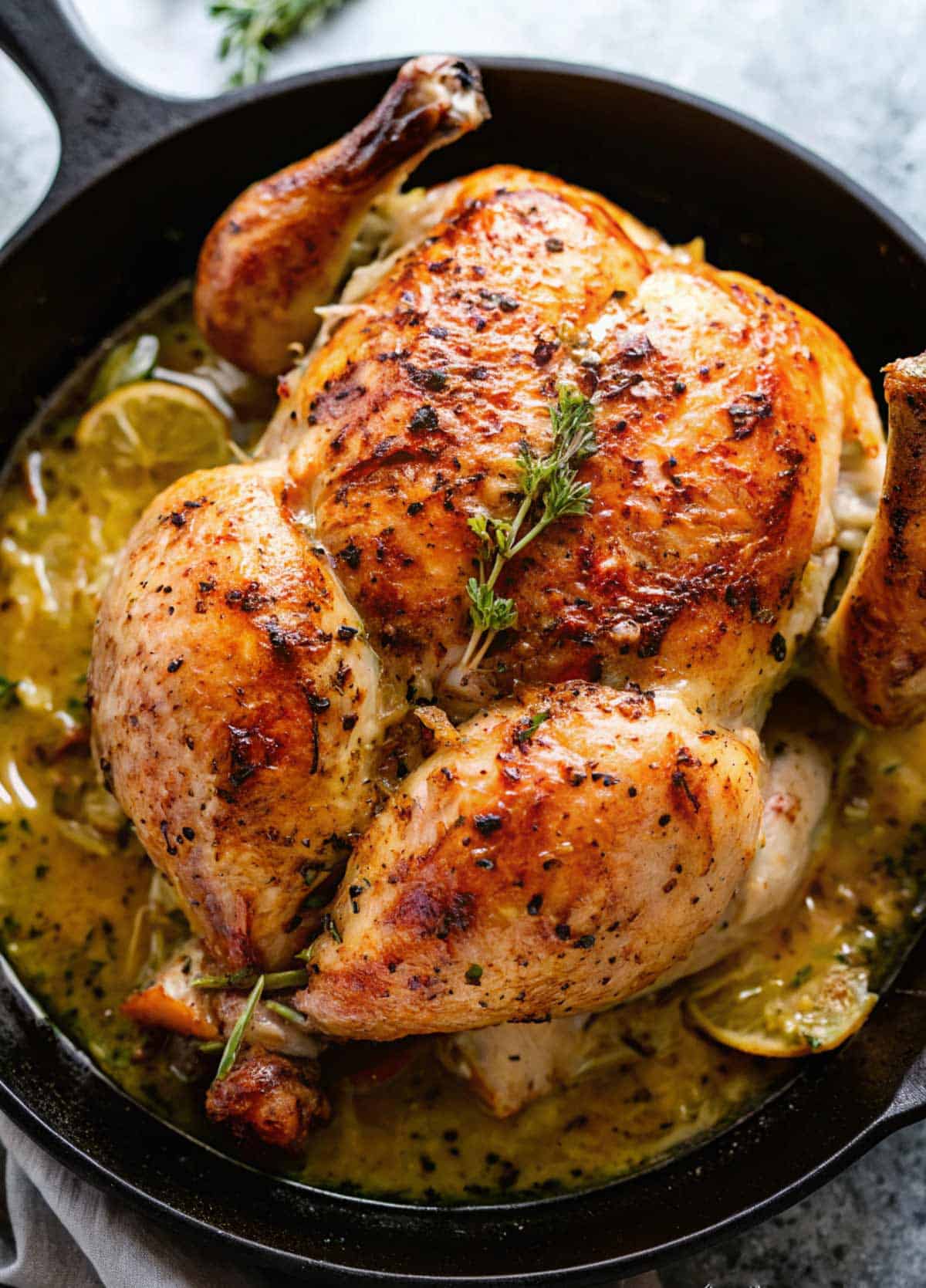
There’s something magical about a perfectly roasted chicken—crispy golden skin, juicy tender meat, and that incredible aroma filling your kitchen. But the difference between perfect roast chicken and dry, disappointing chicken often comes down to one thing: knowing the right internal temperature.
In this complete guide, I’ll walk you through everything you need to know about whole chicken internal temperature, where to check it, how long to roast chicken at different temperatures, and my best tips for juicy, flavorful results every single time.
What Temperature Should Whole Chicken Be?
According to the USDA, chicken must reach a minimum internal temperature of 165°F (74°C) to be safe to eat. This temperature kills harmful bacteria like Salmonella and Campylobacter that can cause food poisoning.
However, here’s what makes roasting whole chicken tricky: different parts cook at different rates. The dark meat in the thighs and legs can actually handle (and benefits from) slightly higher temperatures, while the white breast meat becomes dry if overcooked.
Whole Chicken Temperature Chart (At a Glance)
| Chicken Part | Minimum Safe Temp | Ideal Temperature | Notes |
|---|---|---|---|
| Thigh (Check Here First!) | 165°F (74°C) | 170-175°F (77-79°C) | Dark meat is better at higher temps |
| Breast | 165°F (74°C) | 165°F (74°C) | Don’t exceed or it gets dry |
| Drumstick | 165°F (74°C) | 170-175°F (77-79°C) | Same as thigh |
| Wing | 165°F (74°C) | 165-170°F (74-77°C) | Usually done first |
| Stuffing (if stuffed) | 165°F (74°C) | 165°F (74°C) | Check center of cavity |
Where to Check Whole Chicken Temperature (This is Critical!)
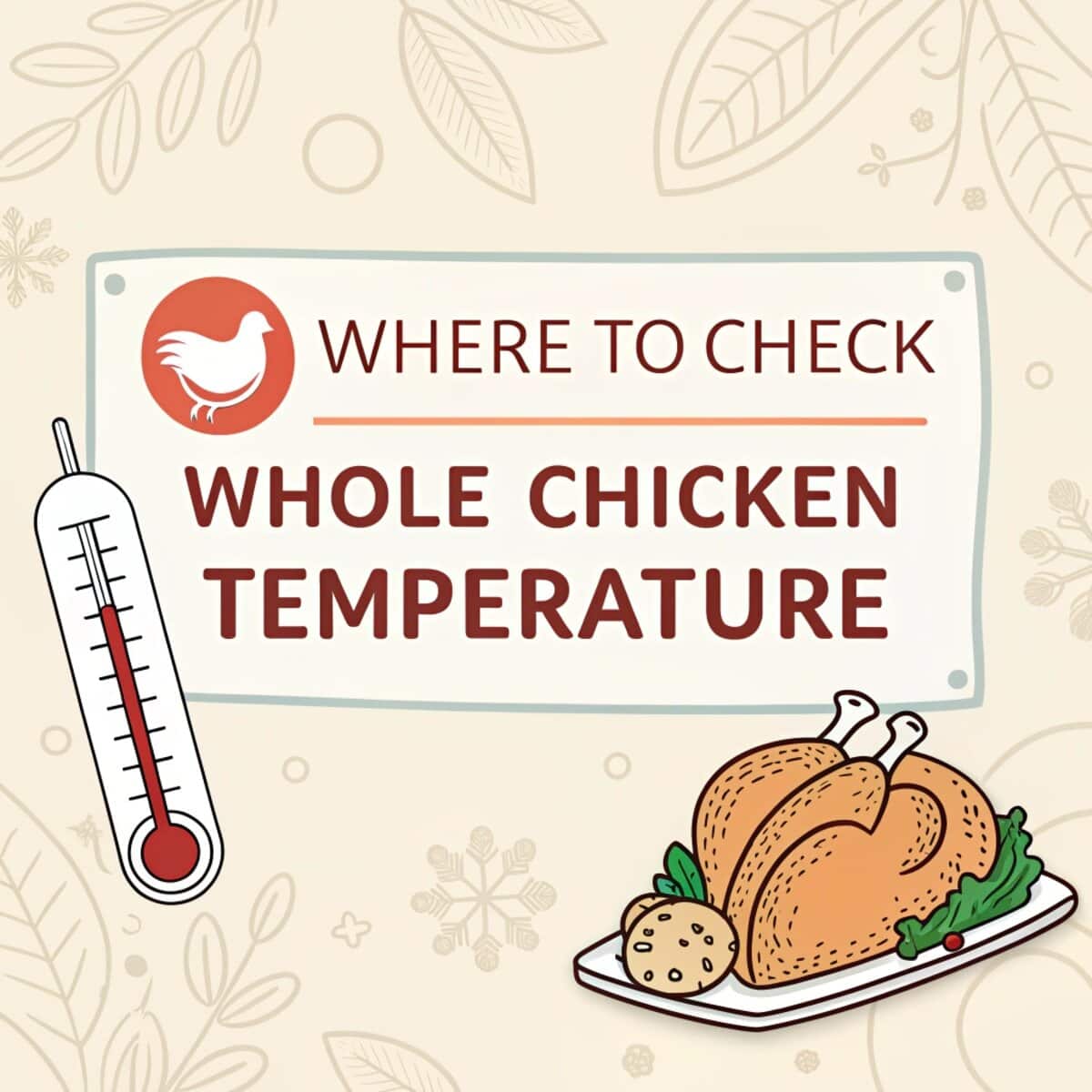
Knowing the right temperature is only half the battle—you also need to know WHERE to check. Checking in the wrong spot can give you a false reading, leading to undercooked or overcooked chicken.
The Most Important Spot: The Thigh
Insert your thermometer into the thickest part of the thigh, between the leg and the body. The probe should go deep into the meat but shouldn’t touch the bone (bones conduct heat differently and will give you an inaccurate reading).
Angle matters! Insert the thermometer at an angle from the side, aiming toward the center of the thigh. You want to hit the thickest, meatiest part.
Why the thigh? The thigh is the slowest part to cook. If your thigh is at 165°F, everything else is definitely done. Plus, dark meat actually tastes better at 170-175°F when the extra fat has rendered and the meat is fall-off-the-bone tender.
Secondary Check: The Breast
After checking the thigh, insert your thermometer into the thickest part of the breast, going in from the side (not the top). Aim for the center of the breast, avoiding the bone.
Why check the breast? You want to make sure the breast hasn’t overcooked. If your thigh is at 170°F but your breast is at 180°F, your breast will be dry and chalky. Ideally, the thigh should be a few degrees hotter than the breast.
If You’ve Stuffed Your Chicken
If you’ve stuffed your chicken (which I generally don’t recommend for food safety reasons), you MUST check the center of the stuffing. Insert the thermometer all the way into the middle of the cavity. The stuffing must reach 165°F.
Pro tip: I recommend cooking stuffing separately (as dressing) rather than inside the bird. It’s safer, easier to check, and your chicken cooks faster!
How to Use a Meat Thermometer for Whole Chicken

Best Thermometers for Roast Chicken
- Instant-Read Thermometer (Highly Recommended): An instant-read thermometer like the Thermapen or ThermoPop is perfect for checking multiple spots quickly. Just remember to check toward the end of cooking time—don’t leave it in the oven.
- Leave-In Probe Thermometer: A probe thermometer stays in the chicken while it roasts and connects to a monitor outside the oven. You can set an alarm for your target temperature. Great for hands-off monitoring!
- Avoid Pop-Up Thermometers: Those little plastic pop-up indicators that come with some chickens are notoriously unreliable. They often pop at temperatures way higher than necessary, leading to dry chicken. Always use your own thermometer.
Step-by-Step Temperature Checking
- Check the chicken about 10-15 minutes before your estimated finish time
- Remove the chicken from the oven (or leave in if using a leave-in thermometer)
- Insert thermometer into the thickest part of the thigh, avoiding bone
- Wait 10-15 seconds for an accurate reading
- Check the breast as a secondary measurement
- If reading is 160°F or higher, your chicken is done (it will coast to 165°F during resting)
- If below 160°F, return to oven and check again in 10 minutes
How Long to Roast Whole Chicken
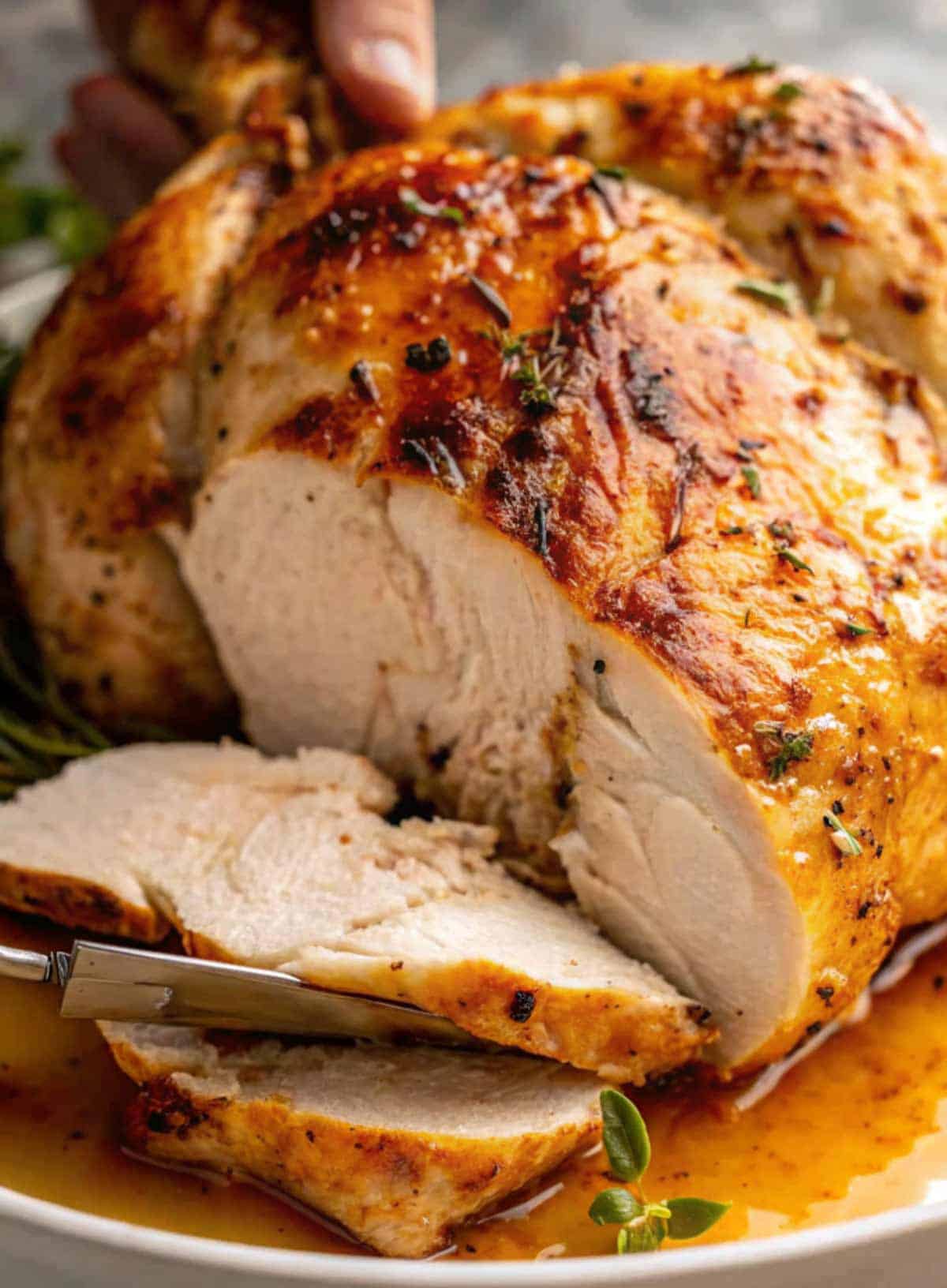
While temperature is the ultimate indicator of doneness, it helps to know approximately how long your chicken will take. Timing depends on the size of your chicken and your oven temperature.
Roasting Time by Weight (at 375°F)
| Chicken Weight | Roasting Time (Unstuffed) | Roasting Time (Stuffed) |
|---|---|---|
| 3-4 lbs | 1 hour to 1 hour 15 min | 1 hour 15 min to 1 hour 30 min |
| 4-5 lbs | 1 hour 15 min to 1 hour 30 min | 1 hour 30 min to 1 hour 45 min |
| 5-6 lbs | 1 hour 30 min to 1 hour 45 min | 1 hour 45 min to 2 hours |
| 6-7 lbs | 1 hour 45 min to 2 hours | 2 hours to 2 hours 15 min |
| 7-8 lbs | 2 hours to 2 hours 15 min | 2 hours 15 min to 2 hours 30 min |
Important: These are estimates only. Always use a thermometer to confirm doneness—ovens vary, chickens are different, and these times are just guidelines!
Roasting Time at Different Oven Temperatures
At 350°F (Slow & Steady):
- Add about 15-20 minutes to the times above
- Best for: More forgiving timing, even cooking
- Downside: Takes longer
At 375°F (My Preferred Method):
- The sweet spot for roast chicken
- Best for: Crispy skin and juicy meat
- Most reliable timing
At 400-425°F (Hot & Fast):
- Subtract 10-15 minutes from times above
- Best for: Extra crispy skin, faster cooking
- Downside: Easier to overcook, requires more attention
At 450°F (High Heat Start):
- Start at 450°F for 15 minutes, then reduce to 375°F
- Best for: Maximum crispy skin
- Follow 375°F times after the initial blast
The Perfect Roast Chicken: Balancing White and Dark Meat
Here’s the challenge with whole chicken: white breast meat is perfect at 165°F, while dark thigh meat is better at 170-175°F. So how do you roast a whole chicken where both come out perfect?
My Strategy for Perfect Chicken
- Strategy 1: Protect the Breast: Cover the breast with foil for the first half of roasting, then uncover for browning. This slows down breast cooking while the thighs catch up. Remove the foil for the last 30-40 minutes to crisp the skin.
- Strategy 2: Position Matters: For the first 30 minutes, roast your chicken breast-side down. This positions the thighs (which need more heat) facing up toward the oven’s heat, while the breast is protected. Flip it breast-side up for the remaining time to brown.
- Strategy 3: Spatchcock (My Favorite!): Remove the backbone and flatten the chicken. This helps everything cook more evenly and reduces cooking time by 25-30%. The chicken also browns more evenly. Game-changer!
- Strategy 4: Tent and Rest: Pull the chicken when the breast hits 160°F and the thigh hits 165°F. Tent with foil and rest for 15-20 minutes. During resting, carryover cooking will bring the breast to 165°F and the thigh to 170-175°F. Perfect!
Why 165°F? The Science Behind Safe Chicken Temperature

The USDA set 165°F as the safe minimum temperature because at this point, all harmful bacteria are instantly killed. Here’s what happens at different temperatures:
- 140°F: Salmonella starts dying, but it takes 30+ minutes
- 150°F: Takes about 3 minutes to kill bacteria
- 155°F: Takes about 1 minute to kill bacteria
- 165°F: Instant kill for all foodborne pathogens
The 165°F guideline gives you a safety buffer and ensures that even if your thermometer is slightly off or you checked the wrong spot, your chicken is still safe to eat.
Important note: Some chefs pull chicken at 150°F and hold it there for several minutes to pasteurize the meat. While this is technically safe if done correctly, I don’t recommend it for home cooks. The margin for error is too small. Stick with 165°F for peace of mind.
Carryover Cooking: The Secret to Juicy Chicken
Here’s a secret professional chefs use: carryover cooking.
When you pull chicken from the oven, it continues cooking. The internal temperature will rise 5-10°F during resting as the residual heat distributes throughout the meat.
What this means for you:
- Pull your chicken when the thigh reaches 160°F (not 165°F)
- Let it rest for 15-20 minutes, tented with foil
- During resting, the temperature will coast up to 165-170°F
- Your chicken stays juicier because it wasn’t exposed to oven heat for those extra 5-10 degrees
This technique is the difference between good roast chicken and GREAT roast chicken.
How to Know When Whole Chicken is Done (Without a Thermometer)
While I always recommend using a thermometer, here are backup methods if you don’t have one:
The Juice Test
Pierce the thigh with a knife or fork. If the juices run clear (not pink), the chicken is likely done. Pink or bloody juices mean it needs more time.
Limitation: This isn’t 100% reliable—sometimes juices can run clear before the chicken reaches 165°F.
The Wiggle Test
Grab the drumstick and wiggle it. If the leg moves very easily in its joint and almost feels like it might fall off, the chicken is done.
Visual Cues
- Skin is golden brown and crispy
- Meat has shrunk away from the ends of the bones
- No pink meat visible when you cut between the thigh and body
Bottom line: These methods can help, but a thermometer is the only foolproof way to ensure both safety and perfect doneness.
Common Whole Chicken Temperature Mistakes
Mistake #1: Only Checking the Breast
The breast cooks faster than the thigh. If you only check the breast, you might pull the chicken while the thighs are still undercooked. Always check the thigh first!
Mistake #2: Trusting the Pop-Up Timer
Those plastic pop-up indicators often activate at 180-185°F, way higher than necessary. By then, your breast meat is bone-dry. Use your own thermometer.
Mistake #3: Touching the Bone
Bones conduct heat and will give you a falsely high reading. Make sure your thermometer probe is in the meat, not against bone.
Mistake #4: Not Letting it Rest
Cutting into chicken immediately after removing it from the oven causes all the juices to run out. Let it rest for 15-20 minutes—the temperature will continue to rise and the juices will redistribute.
Mistake #5: Cooking a Frozen Chicken
Always thaw your chicken completely before roasting. A frozen chicken cooks unevenly and can harbor bacteria in still-frozen areas even when the outside seems done.
Mistake #6: Opening the Oven Too Often
Every time you open the oven to check, the temperature drops 25-50°F and extends cooking time. Check only once or twice, toward the end of estimated cooking time.
Mistake #7: Overcrowding the Pan
If vegetables or other items crowd the chicken, air can’t circulate properly. This leads to steaming instead of roasting, and you’ll get pale, soggy skin instead of crispy golden perfection.
Troubleshooting Whole Chicken Temperature Issues
My chicken reached 165°F but the juices are still pink. Is it safe?
Yes! Pink juices near the bone are often caused by bone marrow leaching out, not undercooked meat. If your thermometer reads 165°F in multiple spots (especially the thigh), it’s safe to eat.
The breast is at 165°F but the thigh is only at 155°F. What do I do?
This is a problem—your thigh is undercooked. Return the chicken to the oven and shield the breast with foil to prevent overcooking. Check again in 10-15 minutes.
My chicken hit 165°F but it still looks pink inside. Why?
Young chickens sometimes have pinkish meat even when fully cooked due to immature hemoglobin in the bones. As long as your thermometer reads 165°F in multiple spots, it’s safe. If you’re unsure, cook to 170°F.
One leg is at 165°F but the other is at 155°F. Is this normal?
Yes, chickens don’t always cook perfectly evenly. This can happen if the chicken was positioned unevenly in the oven or if your oven has hot spots. Return it to the oven until both sides reach 165°F.
Can I save an undercooked chicken?
Absolutely! If you’ve carved it and realized it’s undercooked, you can return the pieces to a baking dish, cover with foil, and continue roasting at 350°F until they reach 165°F.
Can I save an overcooked chicken?
If the breast is dry, you can salvage it by shredding the meat and mixing with broth, mayo, or sauce for chicken salad or tacos. The dark meat is usually still okay even if overcooked.
Roasted Chicken Temperature FAQs
Technically, chicken held at 160°F for about 15 seconds reaches pasteurization. However, I recommend pulling at 160°F and letting it rest to coast up to 165°F. This gives you the safety margin of 165°F while keeping the meat juicier.
For breast meat, yes—it will be very dry. For thigh meat, 180°F is actually fine and can make the dark meat more tender. But by the time your thighs reach 180°F, your breast is likely overcooked.
Possible reasons: you didn’t let it rest (juices ran out), you cooked it straight from the fridge (uneven cooking), your oven runs hot, or you checked temperature in the wrong spot and actually did overcook it.
Only if the skin is browning too fast. Most of the time, roast uncovered for crispy skin. If using foil to slow breast cooking, remove it for the last 30 minutes to crisp up.
Yes, by 5-10°F. This is called carryover cooking. Pull your chicken at 160°F and it will coast to 165-170°F during a 15-20 minute rest.
Yes, but it will take longer (add 20-30 minutes to cooking time) and the skin won’t be as crispy. I prefer 375°F for the best balance of crispy skin and juicy meat.
Buy one! They’re inexpensive ($10-20 for a basic instant-read) and they’re the only reliable way to ensure both safety and quality. In a pinch, use the juice test and wiggle test, but these aren’t as reliable.
You can, but I don’t recommend it for food safety reasons. Stuffing inside the cavity takes longer to reach 165°F, which means the breast meat often overcooks. Cook stuffing separately as dressing.
My Best Tips for Perfect Roast Chicken Temperature
1. Invest in a Good Thermometer
A quality instant-read thermometer ($20-100) is worth every penny. It’s the difference between perfect chicken and dry, disappointing chicken—or worse, unsafe chicken.
2. Pull at 160°F, Not 165°F
This is the single best tip for juicy chicken. Let carryover cooking do the last 5 degrees while the chicken rests. Your chicken will be noticeably more moist.
3. Always Check the Thigh First
The thigh is the slowest part to cook. If the thigh is at 165°F, everything else is definitely done.
4. Pat it Bone-Dry
Moisture is the enemy of crispy skin. Pat your chicken completely dry with paper towels before seasoning. This one step dramatically improves skin texture.
5. Don’t Skip the Rest
Resting for 15-20 minutes allows juices to redistribute. It’s not optional—it’s the difference between good and great chicken.
6. Learn to Spatchcock
Removing the backbone and flattening the chicken reduces cooking time by 25% and helps everything cook more evenly. Once you try it, you’ll never go back.
7. Check in Multiple Spots
Don’t rely on one reading. Check both thighs, both breasts if you’re unsure. Chickens don’t always cook perfectly evenly.
8. Account for Your Oven
Ovens vary wildly. If your chicken consistently finishes early or late compared to recipes, adjust your timing accordingly. Use an oven thermometer to verify your oven’s actual temperature.
Final Thoughts
Roasting a whole chicken doesn’t have to be intimidating. With a meat thermometer and the knowledge of where and when to check temperature, you can serve perfectly cooked chicken every single time—juicy, flavorful, and completely safe.
Remember the key numbers: 165°F in the thigh is your minimum, but pulling at 160°F and letting it rest to 165-170°F is your secret to the juiciest results.
Your first chicken might not be perfect. But by your second or third, you’ll start to develop the instinct for timing, and roast chicken will become one of your go-to weeknight dinners (or impressive Sunday suppers).
Now grab that thermometer, preheat your oven, and roast some chicken with confidence. You’ve got this!
Internal Temperature Guides


Cooking Basics
Turkey Internal Temp Guide( Safe Cooking Temperatures)

Cooking Basics