This post may contain affiliate links. Please read our disclosure policy.
You’re standing at the stove with a meat thermometer in hand, staring at your chicken and wondering—is it done yet? I’ve been there countless times, and I know how frustrating it is to either serve undercooked chicken (yikes!) or dry out a perfectly good piece of meat by overcooking it.
The truth is, knowing the right chicken internal temperature is the single most important thing you can learn for cooking chicken safely and perfectly every time. Forget the old tricks about clear juices or cutting into the meat—a thermometer gives you the answer in seconds.

Quick answer: What temperature should chicken be?
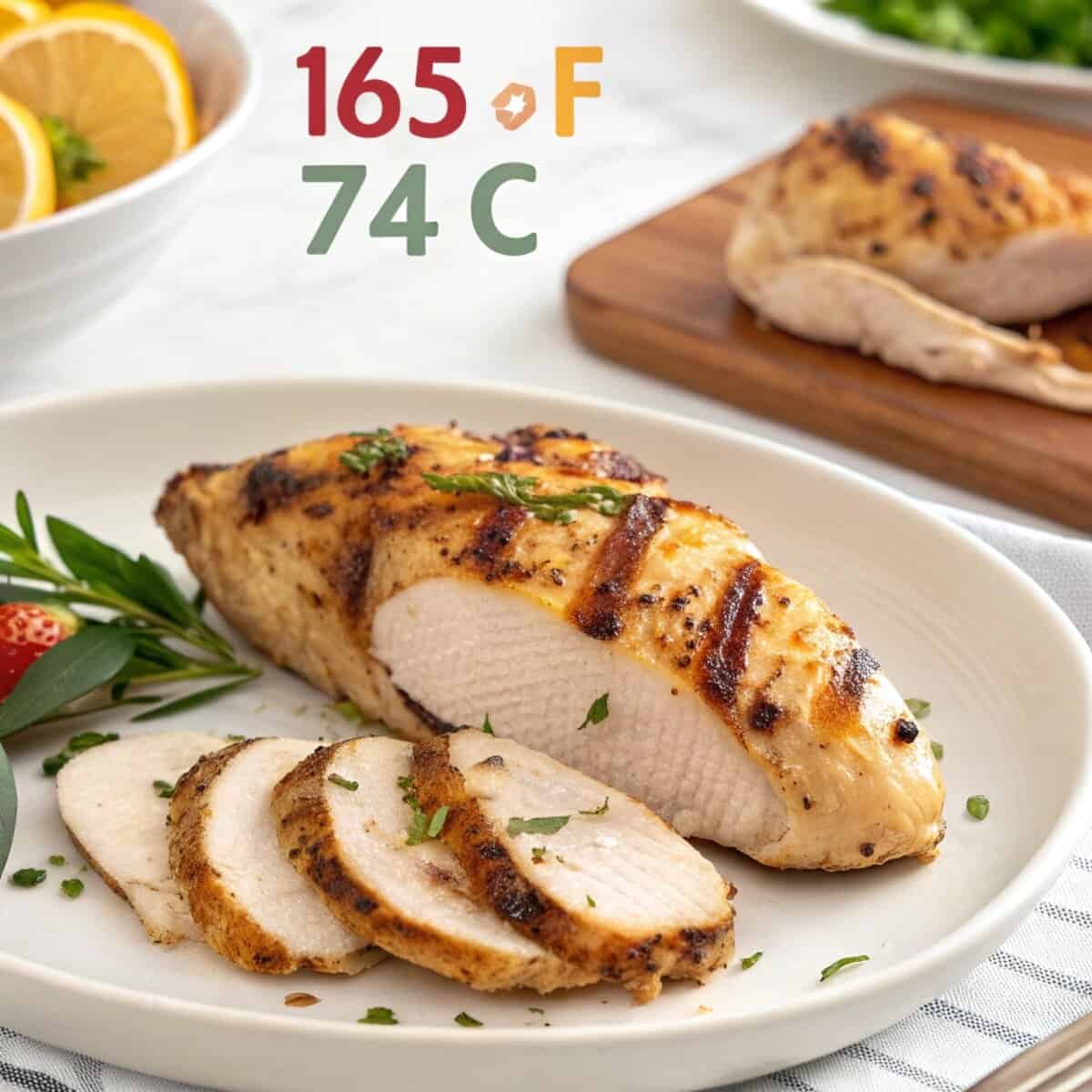
All chicken must reach an internal temperature of 165°F (74°C) to be safe to eat, according to the USDA. This applies to chicken breasts, thighs, wings, drumsticks, and ground chicken. At this temperature, harmful bacteria like salmonella are killed, making the chicken safe to consume.
However, there’s more to the story. Dark meat chicken (thighs and drumsticks) actually tastes better when cooked to 175°F because the extra time breaks down the connective tissue and makes them more tender and juicy.
| Chicken Cut | Minimum Safe Temp | Ideal Temp | Where to Check | Notes |
|---|---|---|---|---|
| Chicken Breasts | 165°F (74°C) | 165°F | Thickest part of breast | Pull at 160°F and rest 5 minutes |
| Chicken Thighs | 165°F (74°C) | 175°F (79°C) | Thickest part, away from bone | More tender at higher temp |
| Chicken Drumsticks | 165°F (74°C) | 175°F (79°C) | Thickest part of leg | Fall-off-bone texture at 175°F |
| Chicken Wings | 165°F (74°C) | 175-180°F | Meatiest section | Higher temp = crispier skin |
| Whole Chicken | 165°F (74°C) | Breast: 165°F, Thigh: 175°F | Multiple spots | Check breast, thigh, and joint |
| Ground Chicken | 165°F (74°C) | 165°F | Center of patty/meatball | Check multiple spots, no pink |
Why chicken internal temperature matters
Chicken can carry bacteria like salmonella and campylobacter that cause serious food poisoning. These bacteria are only killed when chicken reaches the proper internal temperature throughout—not just on the surface.
Guessing by color or texture isn’t reliable. I’ve cut into chicken that looked perfectly white inside but still hadn’t reached 165°F. I’ve also overcooked chicken to 185°F trying to make sure it was “done enough,” only to end up with dry, rubbery meat nobody wanted to eat.
A meat thermometer takes all the guesswork out. You get perfectly cooked, safe chicken every single time.
Safe chicken temperatures explained
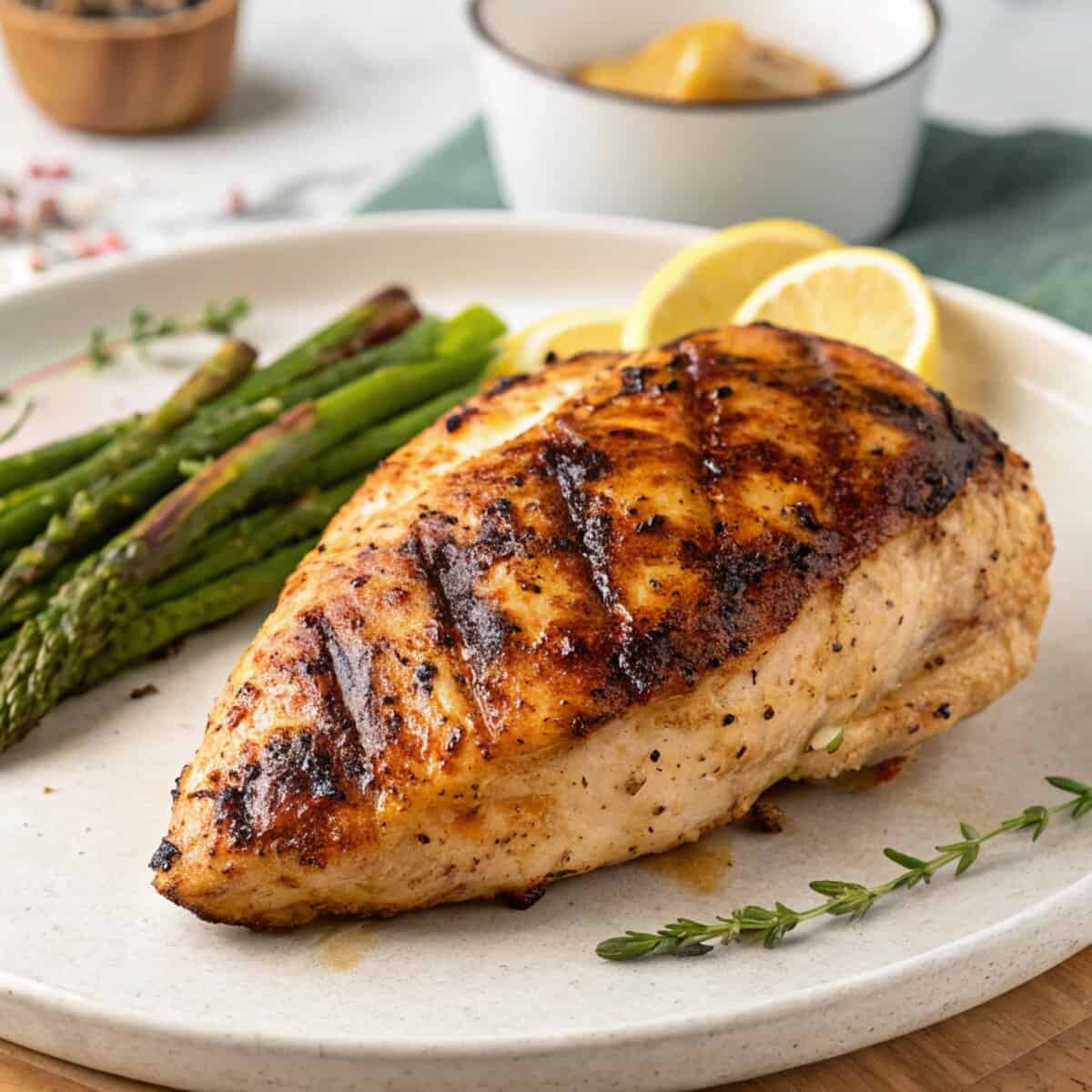
Chicken breasts: 165°F (74°C)
Chicken breasts are lean white meat with very little fat. They cook quickly and dry out easily if overcooked.
Target temperature: 165°F exactly. Pull them off the heat right at 165°F—they’ll stay juicy and tender.
Tip: Let chicken breasts rest for 5 minutes after cooking. The internal temperature will rise another 5 degrees during this time, so you can actually pull them at 160°F and let carryover cooking finish the job.
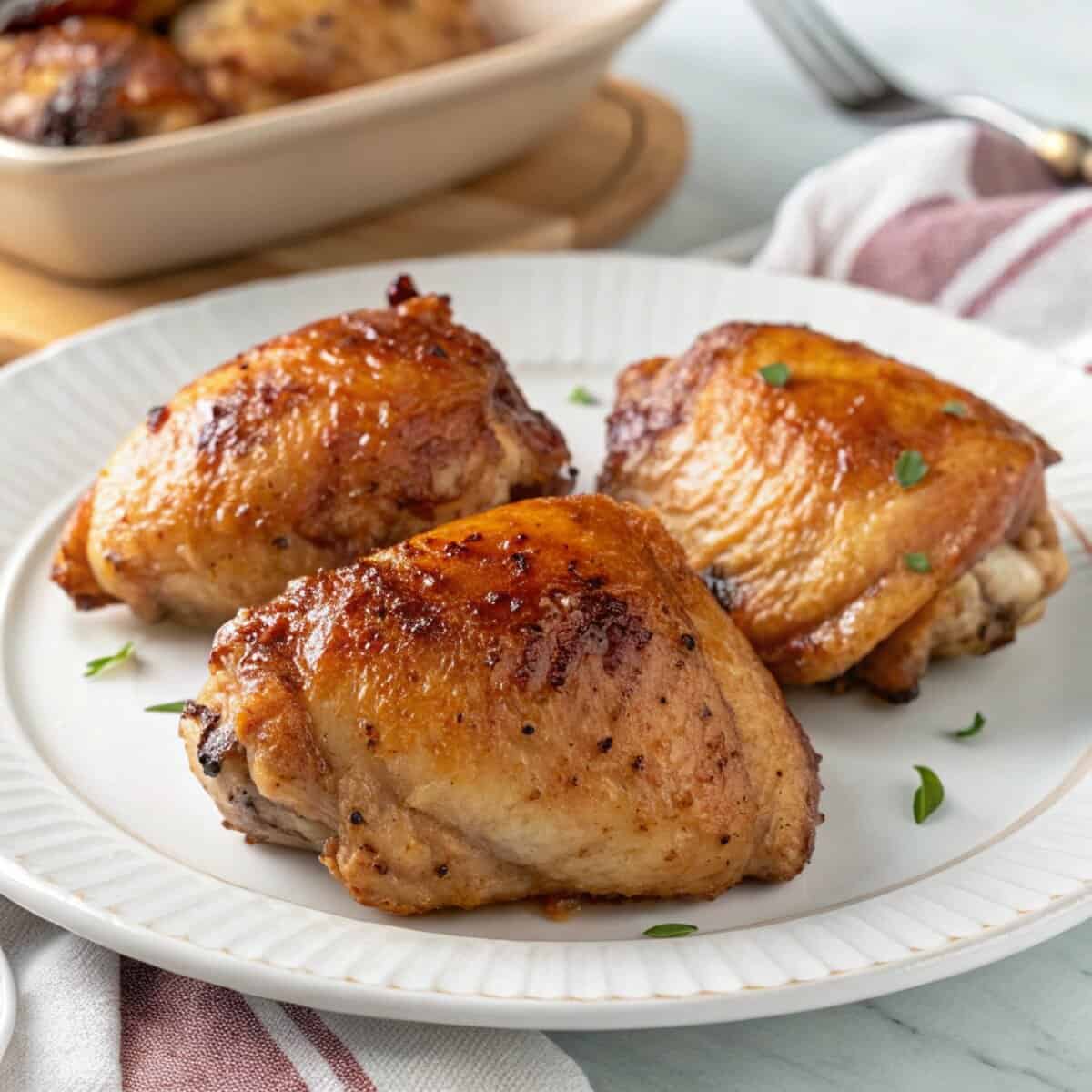
Chicken thighs: 165°F minimum, 175°F ideal
Chicken thighs are dark meat with more fat and connective tissue. They’re much more forgiving than breasts.
Minimum safe temperature: 165°F
Ideal temperature for best texture: 175°F (79°C)
Why go higher? The extra time breaks down collagen and fat, making thighs incredibly tender and juicy. You can even cook thighs to 180°F without drying them out.
My preference: I always cook thighs to 175°F. The texture is noticeably better than at 165°F.
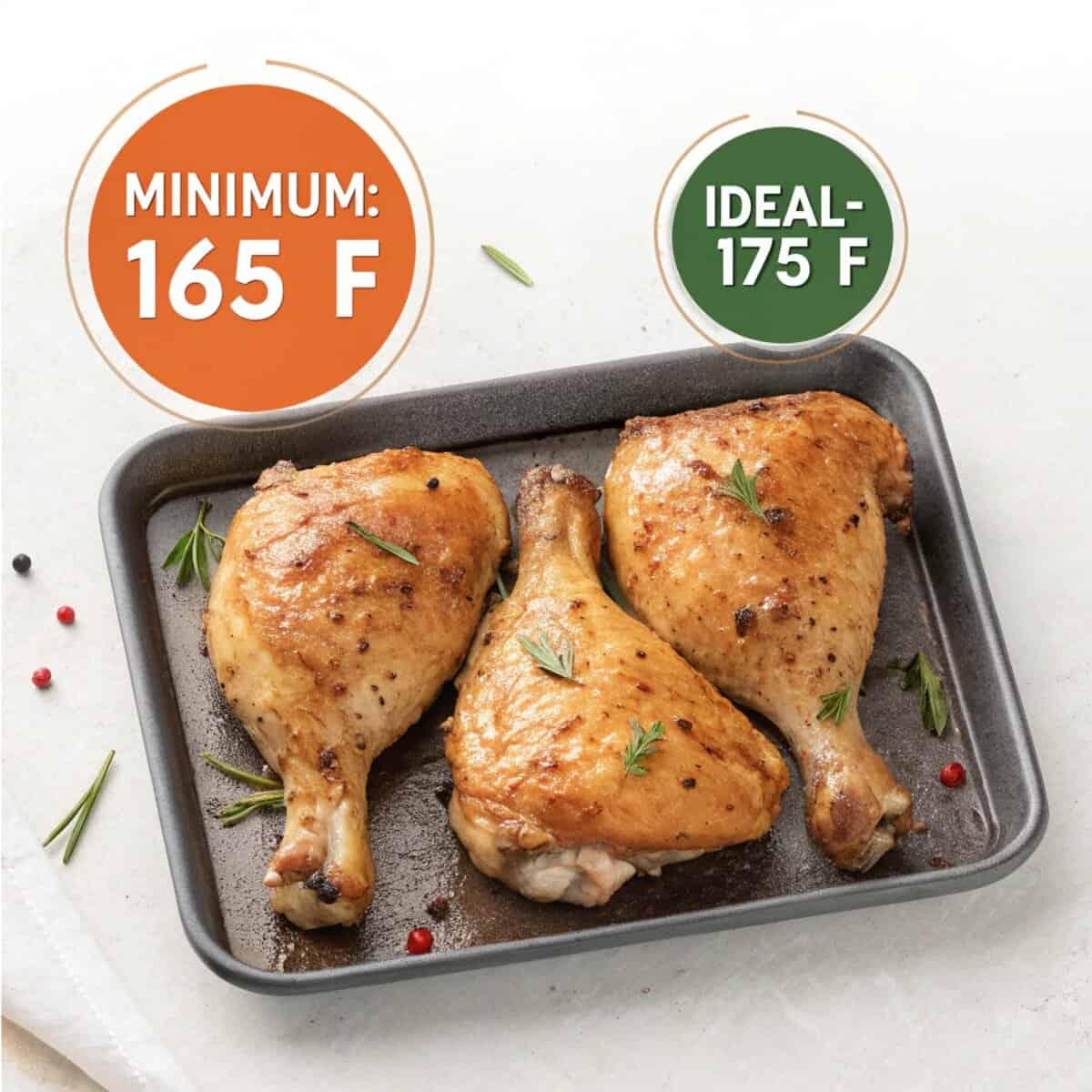
Chicken drumsticks: 165°F minimum, 175°F ideal
Drumsticks are also dark meat, so they follow the same rules as thighs.
Target temperature: 175°F for the most tender, fall-off-the-bone texture.
Where to check: Insert the thermometer into the thickest part of the drumstick without touching the bone.
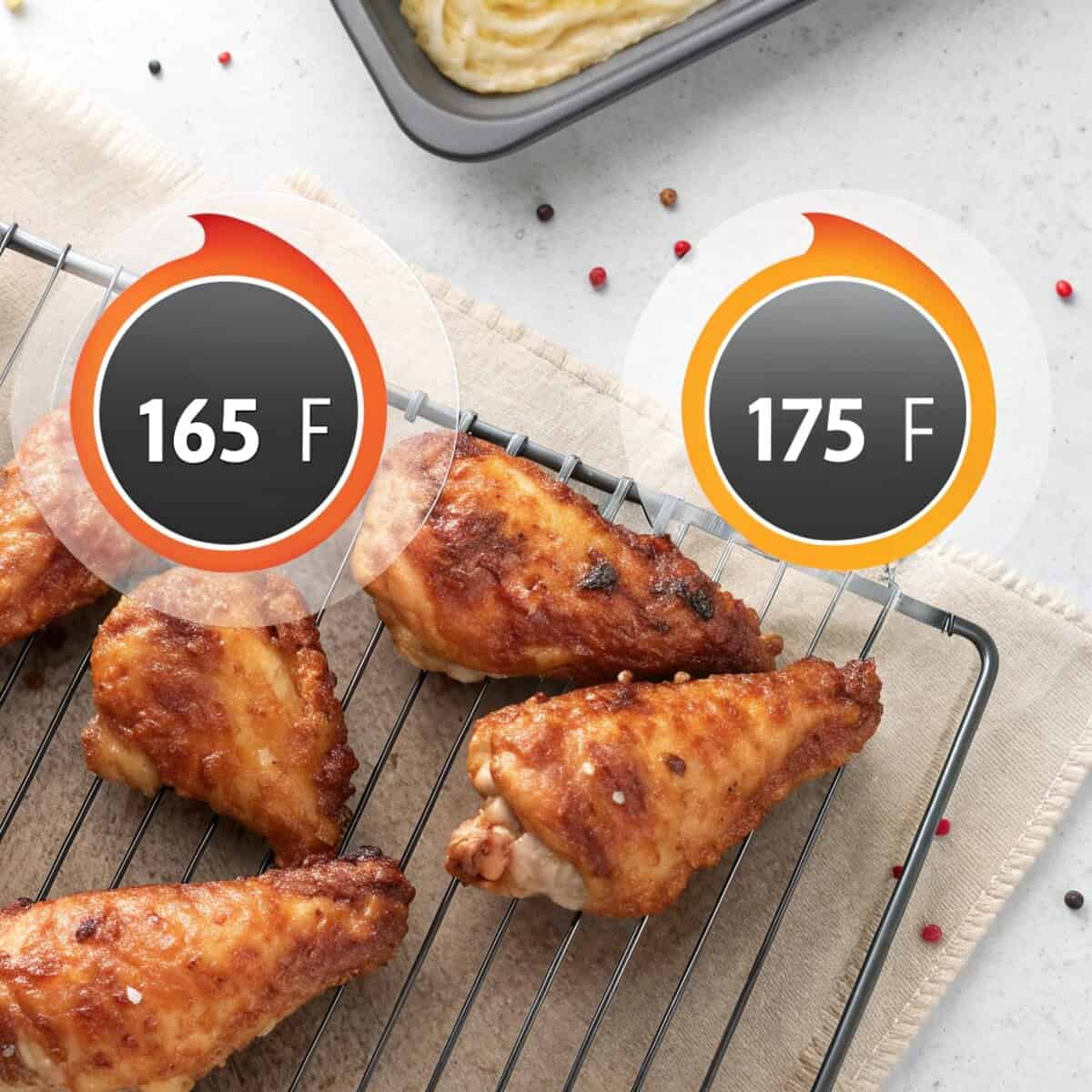
Chicken wings: 165°F minimum, 175°F for crispy skin
Wings are small and cook quickly, but they benefit from higher heat if you want crispy skin.
Safe temperature: 165°F
Best for crispy wings: 175-180°F, especially if you’re baking or grilling them
Tip: For extra crispy wings, cook to 165°F, then blast them under the broiler for 2-3 minutes.
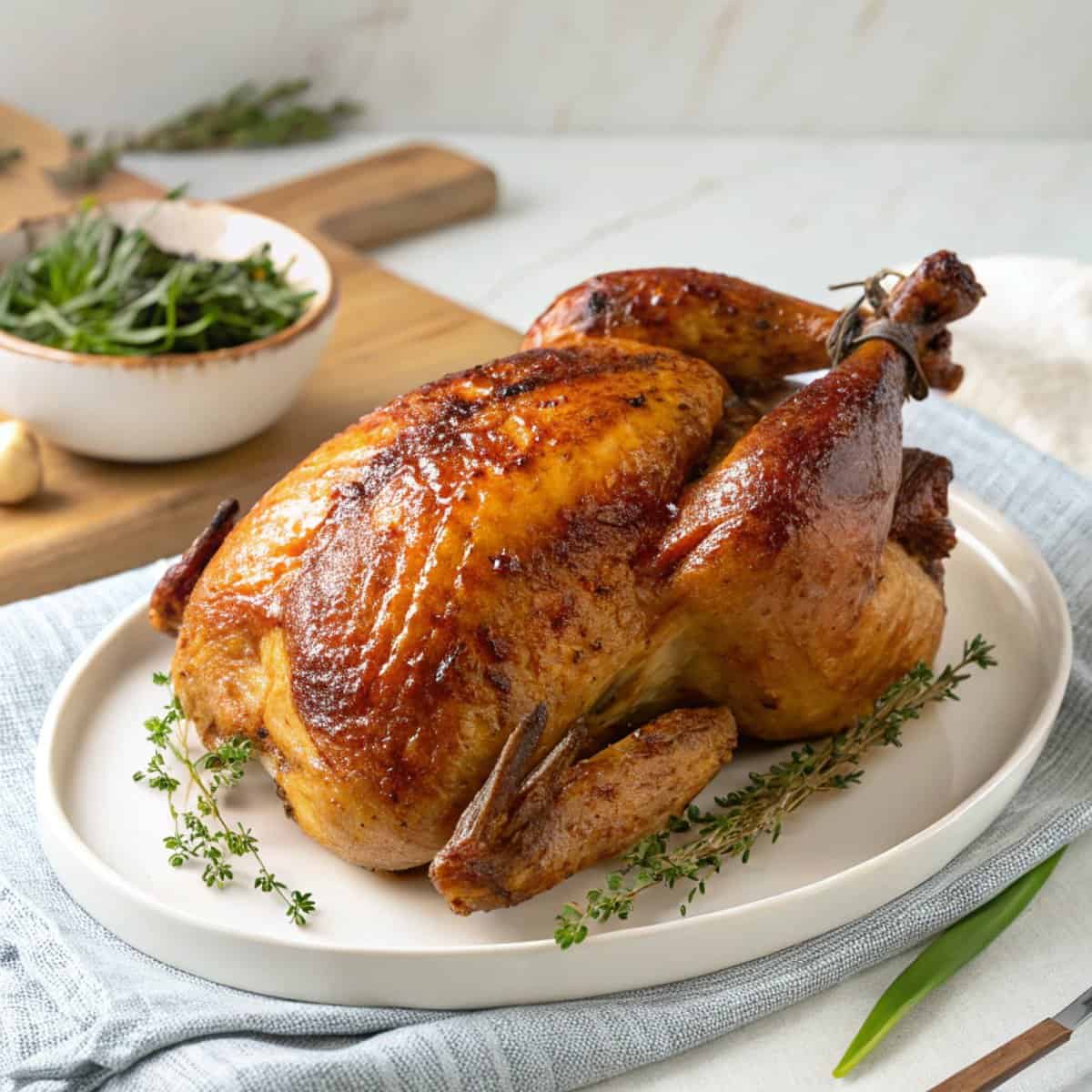
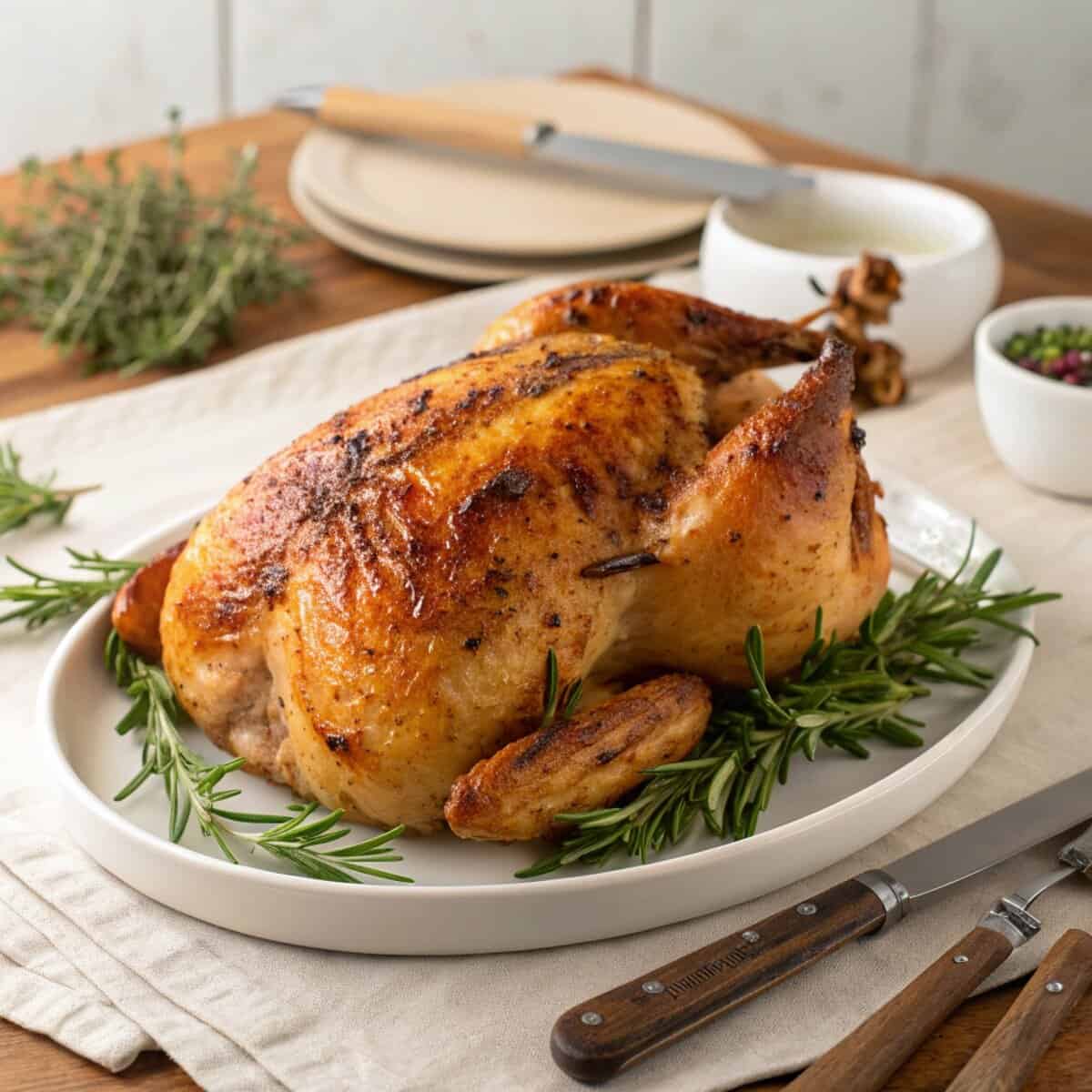
Whole chicken: 165°F in the thickest part
When roasting a whole chicken, you need to check multiple spots because different parts cook at different rates.
Where to check:
- Thickest part of the breast (should read 165°F)
- Thickest part of the thigh (should read 175°F)
- Between the thigh and body (this area cooks slowest)
Don’t touch the bone when measuring—bone conducts heat differently and will give you a false reading.
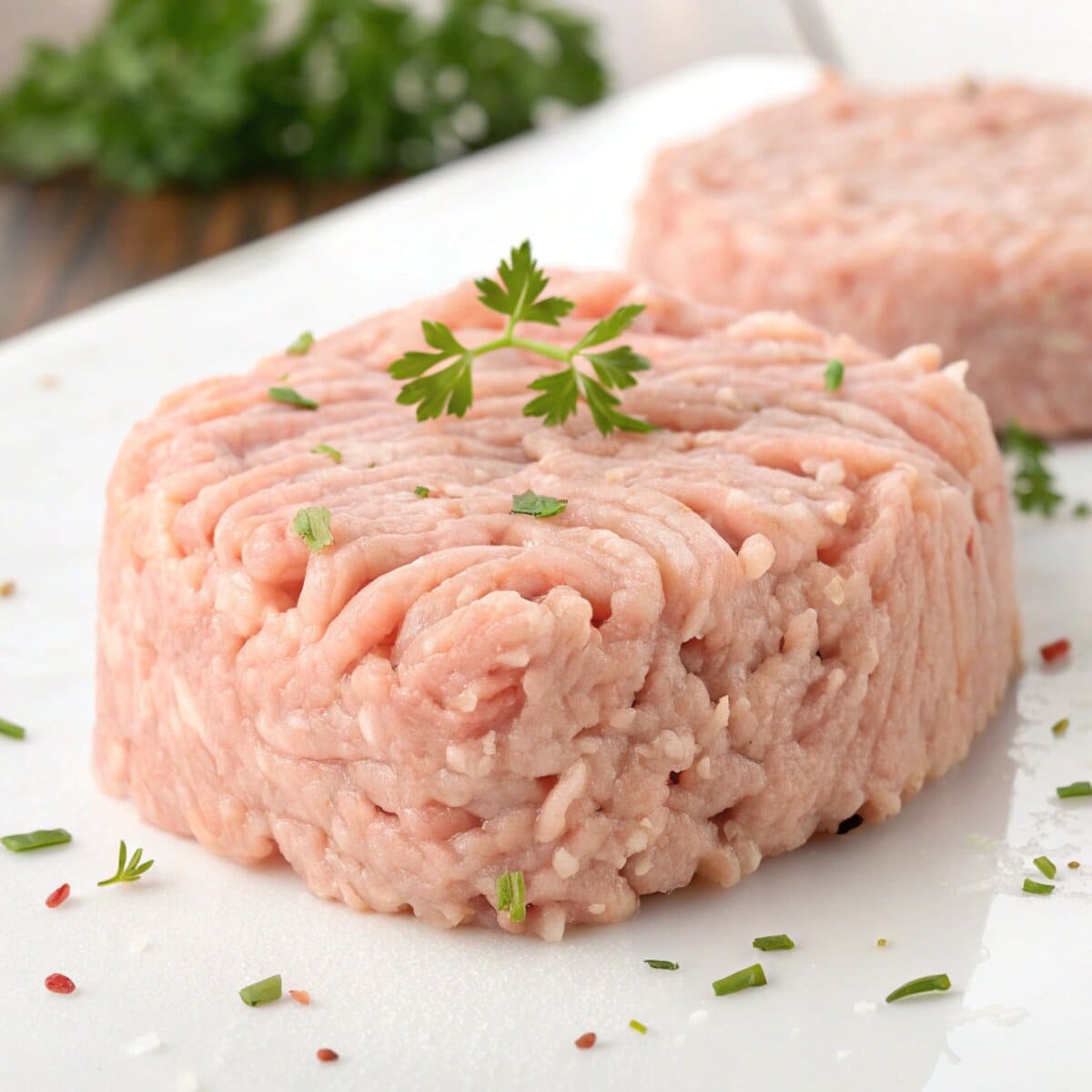
Ground chicken: 165°F throughout
Ground chicken must reach 165°F all the way through because bacteria can be mixed throughout the meat during grinding.
Check multiple spots in burgers, meatballs, or meatloaf to make sure the center has reached temperature.
No pink allowed: Unlike beef, ground chicken should never be served with any pink remaining.
How to take chicken’s internal temperature correctly
Using a thermometer is easy, but you have to do it right or you’ll get inaccurate readings.
| Step | What to Do | Why It Matters |
|---|---|---|
| 1. Use instant-read thermometer | Digital instant-read gives results in 2-3 seconds | More accurate than dial thermometers |
| 2. Insert in thickest part | Push probe into the center of the thickest section | Thickest part cooks slowest |
| 3. Avoid bone & pan | Don’t let probe touch bone, cartilage, or cooking surface | These conduct heat differently, giving false readings |
| 4. Wait for stable reading | Let number stop climbing before reading | Ensures accurate temperature |
| 5. Check multiple spots | Test 2-3 different areas, especially on whole chickens | Ensures even cooking throughout |
Common mistakes when checking chicken temperature
| Mistake | Why It’s Wrong | What to Do Instead |
|---|---|---|
| Checking too early | Lets heat escape, extends cooking time | Wait until chicken looks close to done, then check |
| Touching the bone | Bone reads hotter than meat | Insert probe into meat only, away from bones |
| Only checking one spot | Large pieces cook unevenly | Check thickest part plus 1-2 other spots |
| Not letting it rest | Juices run out when cut immediately | Rest 5-10 minutes; temp rises another 5°F |
| Relying on color alone | Cooked chicken can look pink near bone | Always use a thermometer |
| Using cheap thermometer | Inaccurate readings | Invest in quality instant-read ($15-30) |
Does chicken really need to reach 165°F?
Yes, absolutely. The USDA established 165°F as the safe minimum temperature because at this point, salmonella and other harmful bacteria are instantly killed.
What about 145°F or 150°F? Technically, chicken held at 150°F for several minutes is also safe, but this requires precise temperature control for extended time—not practical for home cooking. Stick with 165°F to be safe.
Is pink chicken safe? Sometimes fully cooked chicken looks pink near the bones due to hemoglobin, especially in young chickens. If the thermometer reads 165°F, it’s safe even if there’s a pink tinge. However, if the meat itself is pink and soft (not just near the bone), it’s undercooked.
What happens if chicken doesn’t reach 165°F?
Undercooked chicken can contain harmful bacteria like salmonella, which causes food poisoning. Symptoms include nausea, vomiting, diarrhea, fever, and stomach cramps that can last several days.
If you’re not sure, don’t risk it. Put the chicken back in the oven or on the stove and cook it longer. It’s better to have slightly overcooked chicken than to risk food poisoning.
Never serve chicken that hasn’t reached 165°F, no matter how it looks.
Cooking times by method (approximate)
These are general guidelines. Always verify with a thermometer rather than relying on time alone.
Baked chicken (375°F oven)
| Cut | Weight/Size | Approximate Time | Target Temp |
|---|---|---|---|
| Chicken breasts (boneless) | 6-8 oz | 20-25 minutes | 165°F |
| Chicken breasts (bone-in) | 10-12 oz | 35-40 minutes | 165°F |
| Chicken thighs (boneless) | 4-6 oz | 25-30 minutes | 175°F |
| Chicken thighs (bone-in) | 6-8 oz | 40-45 minutes | 175°F |
| Chicken drumsticks | 4-5 oz each | 40-45 minutes | 175°F |
| Whole chicken | 4-5 lbs | 1¼-1½ hours | 165°F breast, 175°F thigh |
Grilled chicken (medium-high heat)
| Cut | Approximate Time | Target Temp |
|---|---|---|
| Chicken breasts (boneless) | 6-8 minutes per side | 165°F |
| Chicken breasts (bone-in) | 10-12 minutes per side | 165°F |
| Chicken thighs (boneless) | 5-7 minutes per side | 175°F |
| Chicken thighs (bone-in) | 10-12 minutes per side | 175°F |
| Chicken drumsticks | 12-15 minutes, turning frequently | 175°F |
| Chicken wings | 20-25 minutes, turning frequently | 175°F |
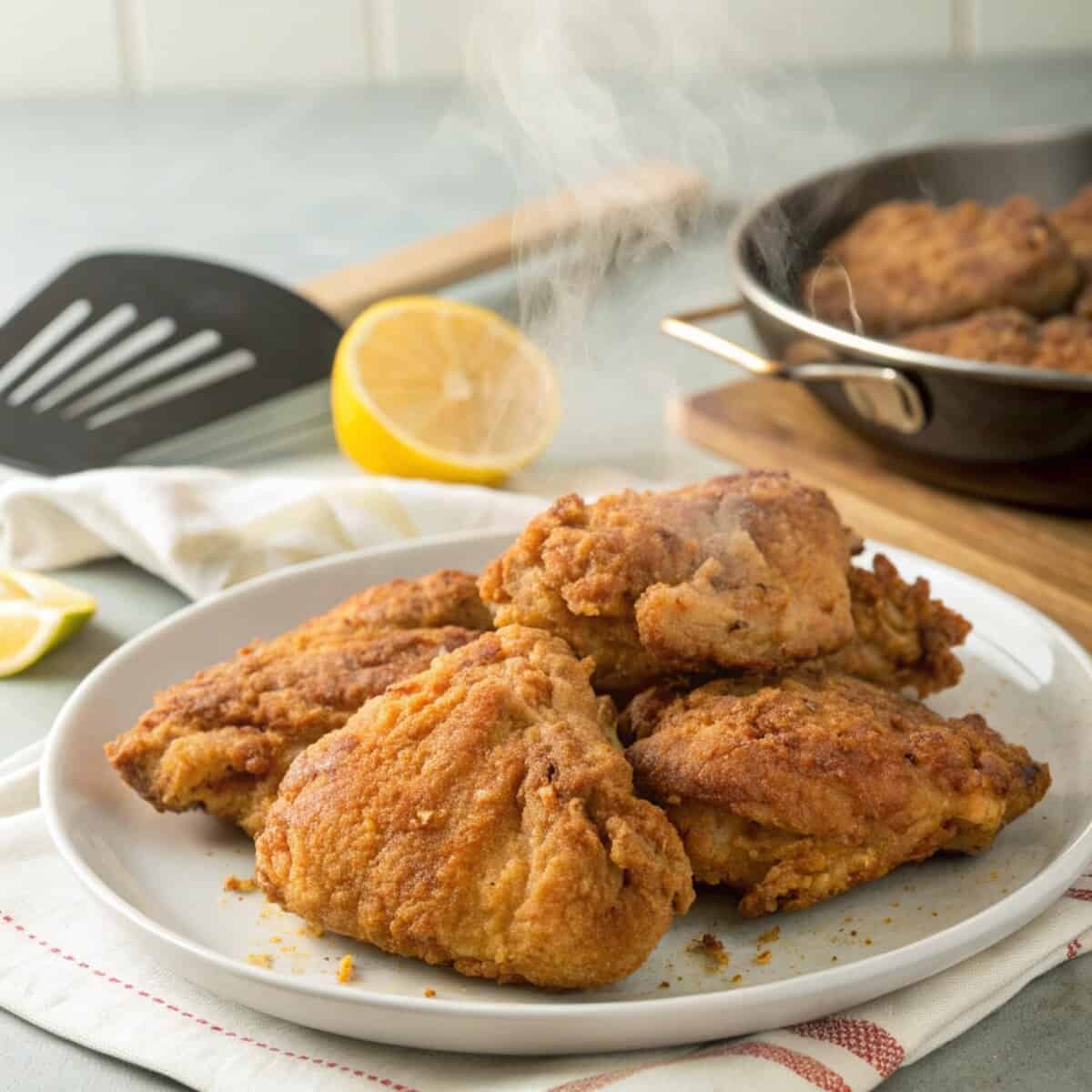
Pan-fried chicken (medium-high heat)
| Cut | Approximate Time | Target Temp |
|---|---|---|
| Chicken breasts (boneless, thin cutlets) | 3-4 minutes per side | 165°F |
| Chicken breasts (boneless, regular) | 6-8 minutes per side | 165°F |
| Chicken thighs (boneless) | 5-7 minutes per side | 175°F |
How long to rest chicken after cooking
| Chicken Cut | Resting Time | Temperature Rise During Rest |
|---|---|---|
| Chicken breasts | 5 minutes | +5°F |
| Chicken thighs | 5 minutes | +3-5°F |
| Whole chicken | 10-15 minutes | +5-10°F |
| Large roasted pieces | 10 minutes | +5°F |
Why resting matters:
- Juices redistribute throughout the meat
- Temperature equalizes and rises slightly
- Chicken becomes easier to carve
- Meat stays moister when cut
Tips for perfectly cooked chicken every time
- Invest in a good thermometer. A quality instant-read thermometer costs $15-30 and will save you from years of overcooked or undercooked chicken. I use my Thermapen multiple times a week.
- Pound chicken breasts to even thickness. Thick breasts take forever to cook through, and by the time the center hits 165°F, the edges are overcooked. Pound them to an even 1-inch thickness for consistent cooking.
- Brine or marinate. Both add moisture and flavor, giving you a buffer against drying out. Even a 30-minute brine makes a difference.
- Don’t overcrowd the pan. Whether you’re baking, grilling, or pan-frying, give chicken pieces space. Overcrowding causes steaming instead of browning.
- Use carryover cooking. Pull chicken breasts at 160°F and let them rest. They’ll coast to 165°F while staying juicier.
- Pat chicken dry before cooking. Moisture on the surface prevents browning. Pat chicken completely dry with paper towels before seasoning.
What if chicken isn’t at temperature yet?
| Cooking Method | How to Continue Cooking |
|---|---|
| Oven-baked | Cover with foil, continue baking at same temp, check every 5 min |
| Grilled | Move to indirect heat (cooler side), close lid, check every 3-5 min |
| Pan-fried | Lower heat to medium, cover pan, check every 3 min |
| Instant Pot | Add 2-3 more minutes of pressure cooking time |
Recommended meat thermometers
| Thermometer | Price Range | Read Time | Best For |
|---|---|---|---|
| ThermoWorks Thermapen ONE | $100+ | 1 second | Professionals, serious cooks |
| ThermoWorks ThermoPop | $30-35 | 3-4 seconds | Best budget option |
| Lavatools Javelin | $20-25 | 3 seconds | Great value, reliable |
| Taylor Precision Digital | $10-15 | 5-6 seconds | Basic, occasional use |
❓FAQs
You risk food poisoning from salmonella, campylobacter, or other bacteria. Symptoms include nausea, vomiting, diarrhea, fever, and stomach cramps that can last several days. It’s not worth the risk—always cook chicken to 165°F.
You probably overcooked it past 165°F, or you’re cooking lean chicken breasts at too high a temperature. Try pulling breasts at 160°F and letting them rest, or switch to chicken thighs which stay juicier.
Not reliably. The old methods (clear juices, white meat, firmness) aren’t accurate. A $15 thermometer is a small investment for food safety and consistently better chicken.
Yes, bone-in pieces take 10-15 minutes longer than boneless because the bone insulates the meat around it. Always check temperature near the bone in the thickest part.
For chicken breasts, yes—they’ll be dry. For thighs and drumsticks, 180°F is fine and might even be more tender, though I prefer stopping at 175°F.
Ground chicken must reach 165°F throughout. Check the center of burgers or meatballs with a thermometer. There should be no pink remaining anywhere.
Sometimes cooked chicken looks pink near the bone due to hemoglobin, especially in younger birds. If the thermometer reads 165°F, it’s safe to eat even with a slight pink tinge. When in doubt, check the temperature again.
I use a Thermapen, but ThermoWorks ThermoPop and Lavatools Javelin are excellent budget options. Look for one that reads in under 3 seconds and has a thin probe.
No! Rinsing chicken splashes bacteria around your sink and doesn’t make the chicken safer. Cooking to 165°F kills bacteria—rinsing just spreads it.
Yes. Resting allows juices to redistribute and the internal temperature to rise another 5 degrees. Cut into chicken immediately and you’ll lose all those juices onto your cutting board instead of keeping them in the meat.
Yes, but it takes about 50% longer than thawed chicken. Make sure to check the internal temperature in multiple spots since frozen chicken cooks unevenly.
Chicken doesn’t cook evenly throughout. Thicker areas take longer, and areas near bones cook differently. Always check the thickest part and at least one other spot to be sure.
The bottom line
Cooking chicken to the right internal temperature isn’t complicated, but it makes all the difference between dry, overcooked meat and juicy, perfectly cooked chicken your family will actually want to eat.
Remember these key points:
- 165°F is the minimum safe temperature for all chicken
- Dark meat tastes better at 175°F (thighs, drumsticks)
- Use an instant-read thermometer for accuracy
- Check the thickest part, away from bones
- Let chicken rest 5-10 minutes after cooking
Once you start using a thermometer consistently, you’ll wonder how you ever cooked without one. No more guessing, no more cutting into chicken to check, and no more dry, overcooked meat. Just perfect chicken, every single time.
Did you find this chicken temperature guide helpful? Save it for your next cooking session and let me know in the comments if you have any questions!
Pin this now to find it later
Pin It