


This post may contain affiliate links. Please read our disclosure policy.
This Cacio e Pepe recipe is a classic Roman pasta made with just a few simple ingredients—spaghetti, Pecorino Romano, freshly ground black pepper, and pasta water. The cheese and starchy water come together to make an irresistibly creamy, silky sauce without any cream, making this easy Italian pasta perfect for a quick weeknight dinner.
Be sure to check out our Cacio e Pepe Potato Gnocchi Without Cream!
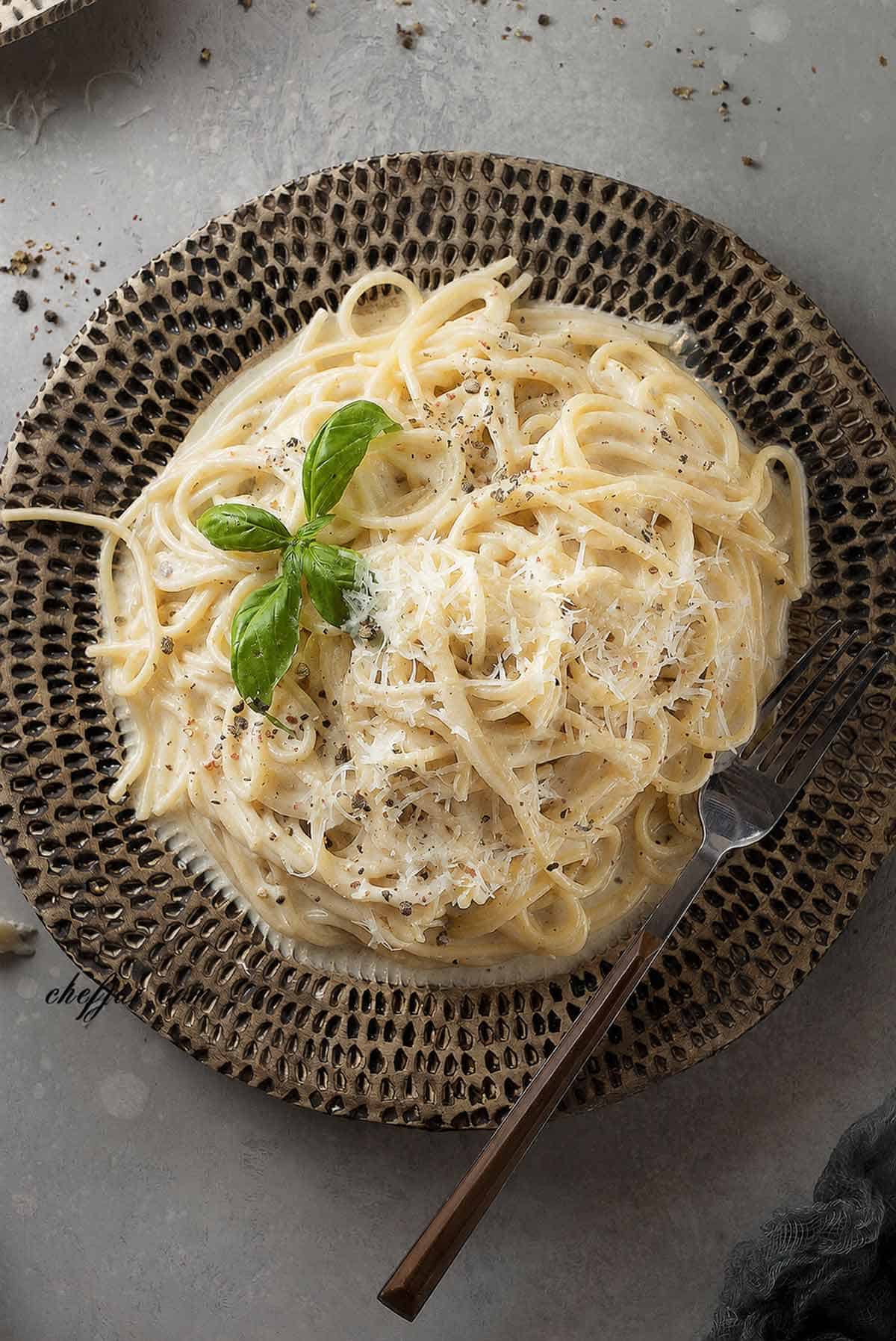
Why We Keep Coming Back to This Cacio e Pepe
- Just 4 ingredients: cheese, pepper, pasta, and salt. That’s genuinely the whole list.
- No cream, we promise: the “sauce” is really just starchy pasta water and cheese, emulsified together. It’s science, and it’s magic.
- Ready in about 20 minutes: perfect for a night when you want something that feels special but you’re not trying to spend hours in the kitchen.
- It’s honestly kind of addictive: peppery, cheesy, salty — we could eat this every week and not get tired of it.
Why Each Ingredient Matters (Yes, Even This Short List)
| Ingredient | Why It’s There |
|---|---|
| Pecorino Romano | This is the cheese, full stop. It’s sharp, salty, and melts into a smooth sauce when you handle it right. Please don’t try to swap in something bland here. |
| Spaghetti | The classic shape for a reason — its surface holds onto the pepper-cheese sauce beautifully. Undercooking it slightly matters more than usual, since it keeps cooking in the skillet. |
| Black pepper | Freshly ground, and a lot of it. Toasting it briefly in the skillet wakes up the flavor in a way pre-ground pepper from a jar just can’t match. |
| Pasta water | The real MVP of this dish. Its starch is what turns melted cheese into a sauce instead of a clumpy mess. Don’t skip reserving it. |
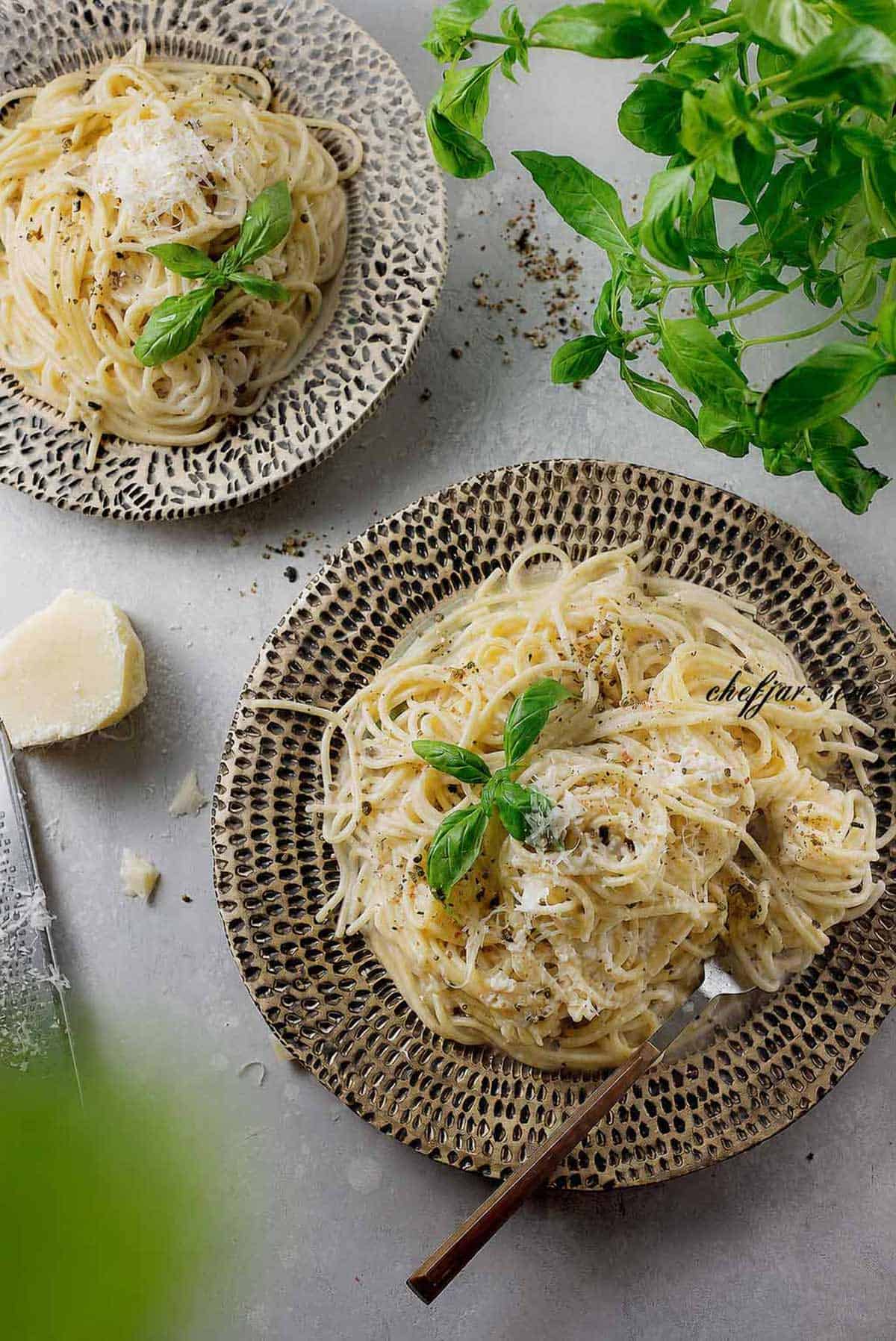
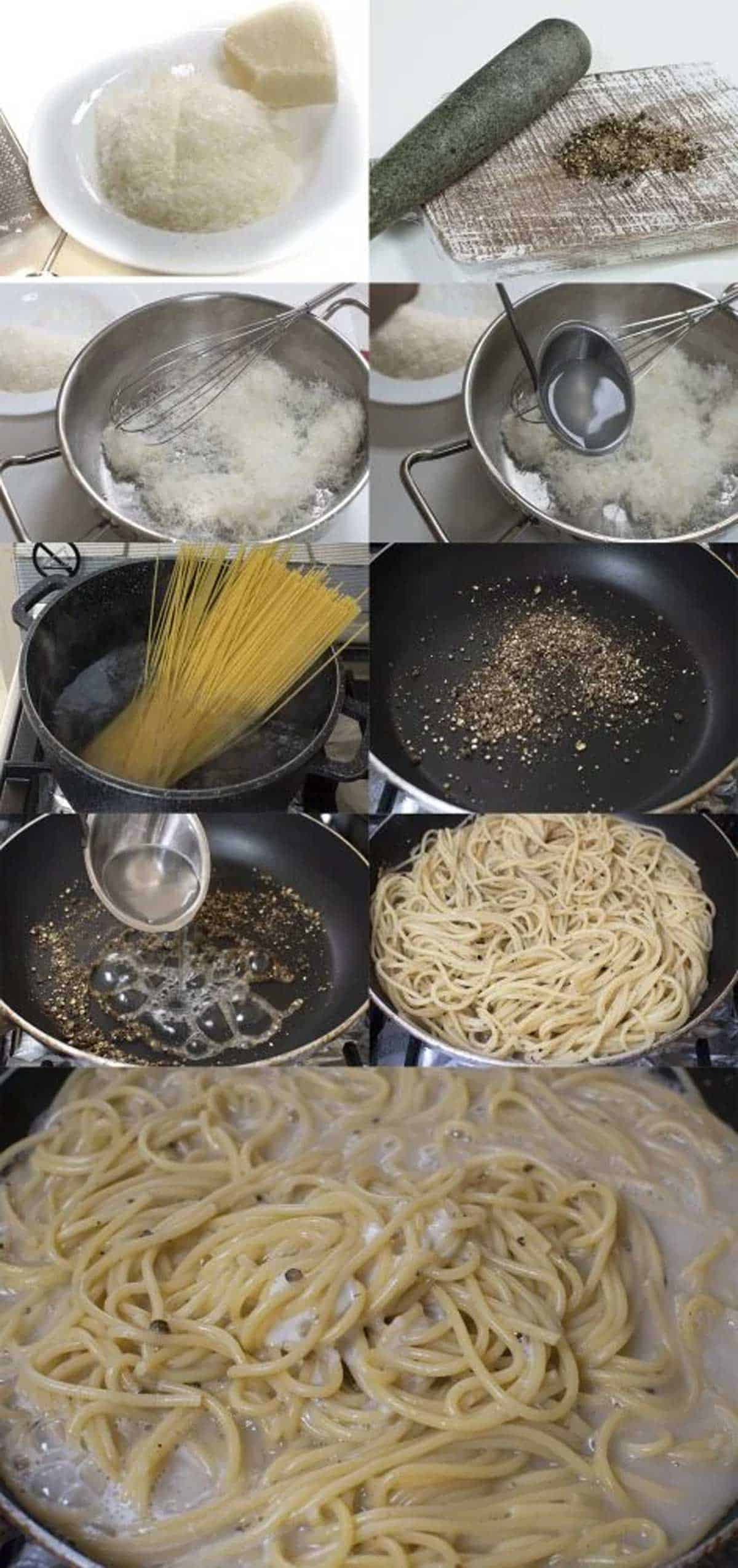
How We Make Cacio e Pepe
Our Honest Tip: Grate Your Own Cheese
We know pre-shredded cheese is tempting because it saves a step, but trust us on this one — it’s coated in anti-caking stuff that keeps it from melting smoothly, and that’s exactly what you don’t want here. Grate it fresh. It genuinely makes the difference between a silky sauce and a grainy, sad one.
- Get everything ready: Finely grate the Pecorino Romano and freshly grind the black pepper. Set both aside — you’ll want them within reach once things start moving.
- Cook the spaghetti: Bring a large pot of water to a boil. Lightly salt it, add the spaghetti, and cook it 1–2 minutes less than the package says for al dente. Reserve at least 2 cups of that starchy pasta water before you drain — you’ll need it.
- Make the cheese base: While the pasta cooks, place the Pecorino in a large bowl and gradually whisk in a small amount of warm pasta water until it’s smooth and creamy. Set this aside too.
- Toast the pepper: In a large skillet over medium heat, toast the black pepper for about 1 minute, until it smells fragrant. Add 1–2 ladles of pasta water and let it simmer for 1 minute.
- Bring it together: Transfer the spaghetti straight into the skillet with the pepper. Add 1–2 more ladles of pasta water and toss well. Keep cooking for 1–2 minutes, until the spaghetti is al dente, adding a splash more water if it looks like it needs it.
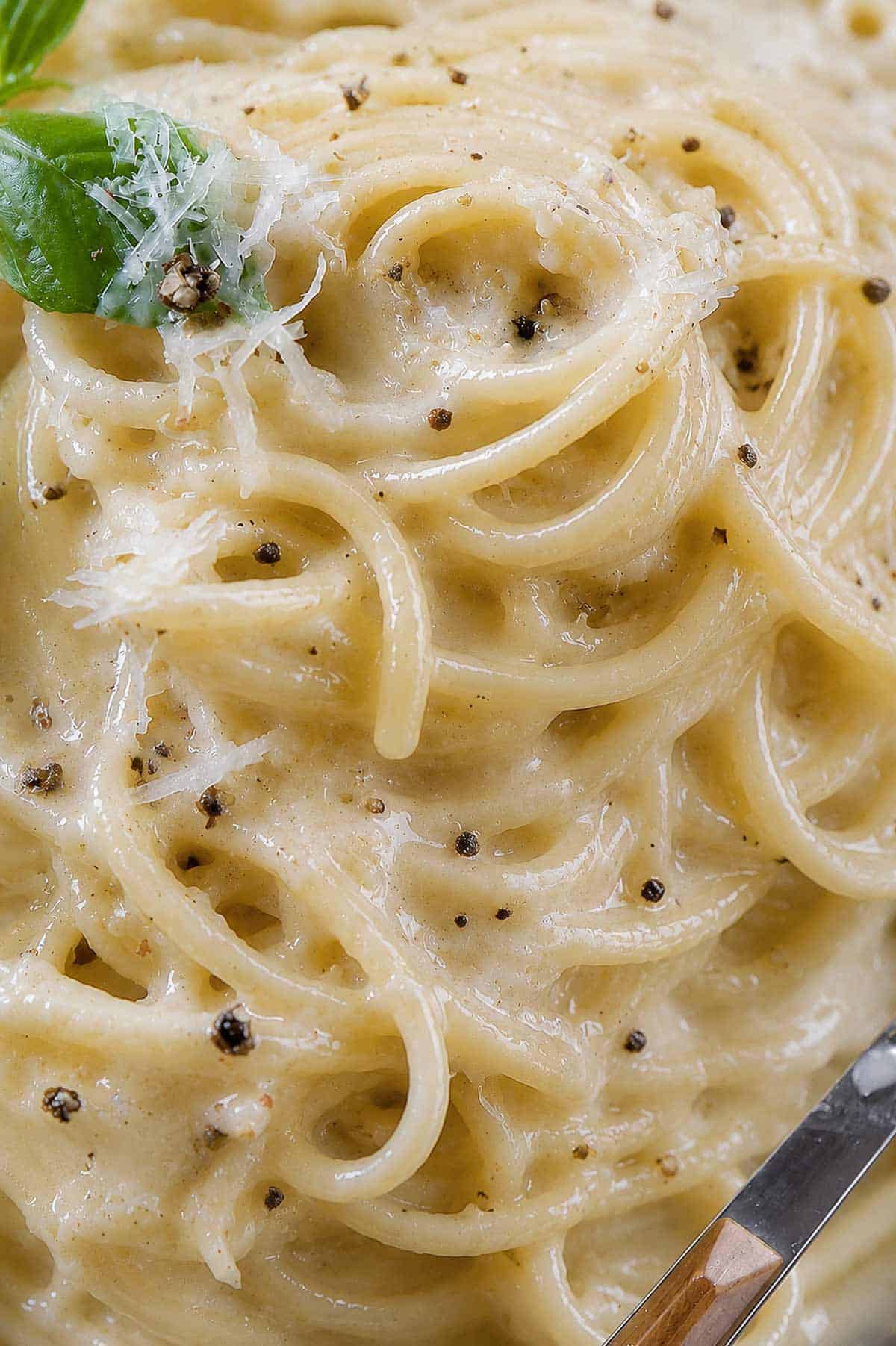
- Add the cheese: Take the skillet off the heat and let it cool for about 30 seconds — this part matters, we’ll explain why below. Add the Pecorino mixture and toss vigorously until the cheese melts into a smooth, creamy sauce that coats every strand. Add more pasta water a little at a time until it’s silky and generously saucy.
Our Honest Tip: Let the Pan Cool for 30 Seconds
This is the step people skip, and it’s the one that trips up most first attempts. If the skillet is too hot when you add the cheese, the proteins seize up and you get clumps instead of a sauce. Just count to thirty, then add the cheese off the heat. It’s such a small thing, but it’s the difference between a silky sauce and a stringy mess.
A Few Ways We’ve Switched It Up
- Lemon Cacio e Pepe-A little lemon zest whisked into the cheese mixture brightens the whole dish. We do this when we want something a bit fresher.
- Cacio e Pepe with Crispy Guanciale-Render some diced guanciale or pancetta first and toast the pepper in that fat instead of starting from scratch. It’s not traditional cacio e pepe anymore, but it’s incredible.
- Extra Peppery Cacio e Pepe-If you love a serious pepper kick like we do, just bump the black pepper up to 3 teaspoons. It changes the whole personality of the dish.
What We Like to Serve It With
- A Simple Green Salad: Something lightly dressed and a little bitter, like arugula, balances how rich this pasta is.
- Garlicky Sautéed Greens: Broccoli rabe or sautéed spinach on the side rounds out the meal without competing with the pasta.
- Crusty Bread: Honestly, just for scraping up any sauce left in the bowl. No shame in that.
- A Glass of Something Crisp: A light white wine, if that’s your thing, plays really nicely against all that pepper and cheese.
Storing Leftovers
- Refrigerator: You can keep leftovers in an airtight container for a day, maybe two, but we’ll be honest, the texture is never quite the same once the sauce has been chilled.
- Reheating: Reheat gently in a skillet over low heat with a splash of water or milk, stirring the whole time so it comes back together instead of separating.
- Our advice: This is one of those dishes that’s really at its best fresh out of the pan. We’d rather make a smaller batch than plan on leftovers.
Frequently Asked Questions
This is the number one issue people run into, and it’s almost always heat-related. If the pan’s too hot when the cheese goes in, it seizes instead of melting smoothly. Let the skillet cool for that full 30 seconds off the heat before adding the cheese, and make sure you’re using freshly grated cheese, not the pre-shredded kind.
You can, but we’ll be straight with you, it won’t be quite the same dish. Pecorino is sharper and saltier, which is really what gives cacio e pepe its personality. If Parmesan is all you’ve got, it’ll still be tasty, just milder, so taste as you go and add a little extra salt if it needs it.
We wouldn’t, if we’re being honest. Cacio e pepe really wants to be made and eaten within minutes of each other. What we do instead is have all our ingredients prepped and measured ahead of time, so the actual cooking, which only takes about 15 minutes, happens right before we want to serve it.
Give this cacio e pepe a try, and if it turns out as silky and craveable as ours, come back and leave a star rating below — it helps other home cooks find this recipe too!
Pin this now to find it later
Pin It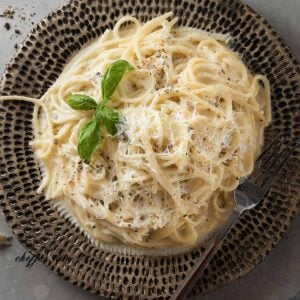

Cacio e Pepe Recipe
Equipment
Ingredients
- 7 ounces freshly grated Pecorino Romano cheese, about 2 cups, medium-aged
- 12 ounces spaghetti
- 1½-2 teaspoons freshly ground black pepper
- Salt, as needed
Instructions
- Finely grate the Pecorino Romano and freshly grind the black pepper. Set aside.
- Bring a large pot of water to a boil. Lightly salt the water, add the spaghetti, and cook 1–2 minutes less than the package directions for al dente. Reserve at least 2 cups of pasta water.
- Meanwhile, place the Pecorino in a large bowl. Gradually whisk in a small amount of warm pasta water until smooth and creamy. Set aside.
- Toast the black pepper in a large skillet over medium heat for about 1 minute, until fragrant. Add 1–2 ladles of pasta water and simmer for 1 minute.
- Transfer the spaghetti directly to the skillet with the pepper. Add 1–2 ladles of pasta water and toss well. Continue cooking for 1–2 minutes, until the spaghetti is al dente, adding a splash more pasta water if needed.
- Remove the skillet from the heat and let it cool for about 30 seconds. Add the Pecorino mixture and toss vigorously until the cheese melts into a smooth, creamy sauce that coats the spaghetti. Add more pasta water, a little at a time, until the sauce is silky and generously saucy.
- Serve immediately with extra freshly ground black pepper and grated Pecorino Romano.
Video
Notes
- Use freshly grated Pecorino Romano: Pre-shredded cheese doesn’t melt as smoothly and can make the sauce grainy.
- Salt the pasta water lightly: Pecorino Romano is naturally salty, so you won’t need as much salt as you would for most pasta recipes.
- Save plenty of pasta water: The starchy water is essential for making the creamy, emulsified sauce.
- Add the cheese off the heat: High heat can cause Pecorino to clump. Remove the skillet from the heat before adding the cheese mixture.
- Make the sauce a little looser than you think it needs to be when serving. Cacio e Pepe thickens very quickly as it sits.
Nutrition
Nutrition information is automatically calculated, so should only be used as an approximation.
© CHEF JAR. All rights reserved. All content and images on this website are protected by copyright and may not be reproduced without prior written permission. If you’d like to share this recipe, please link directly to this post rather than copying the content.




This recipe is a keeper, I’ve made it a few times now. What I love about this dish: it’s a quick and easy pasta recipe that is perfect for dinner. With only three ingredients in just twenty minutes, you can already enjoy a simple but heavenly taste pasta. I super love the exquisite flavor of Pecornio cheese that makes Cacio e Pepe an authentic and classic Italian pasta dish. Thank you Tati for sharing tips in your blog. They are so helpful in making this awesome dish.