This post may contain affiliate links. Please read our disclosure policy.
This Salmon Onigiri recipe is an easy way to make Japanese rice balls at home. Make them with a creamy, savory salmon filling tucked inside warm Japanese rice, or mix the salmon right into the rice before shaping. Form them by hand or use an onigiri mold, then finish with furikake and nori for an easy lunch, snack, or meal prep.
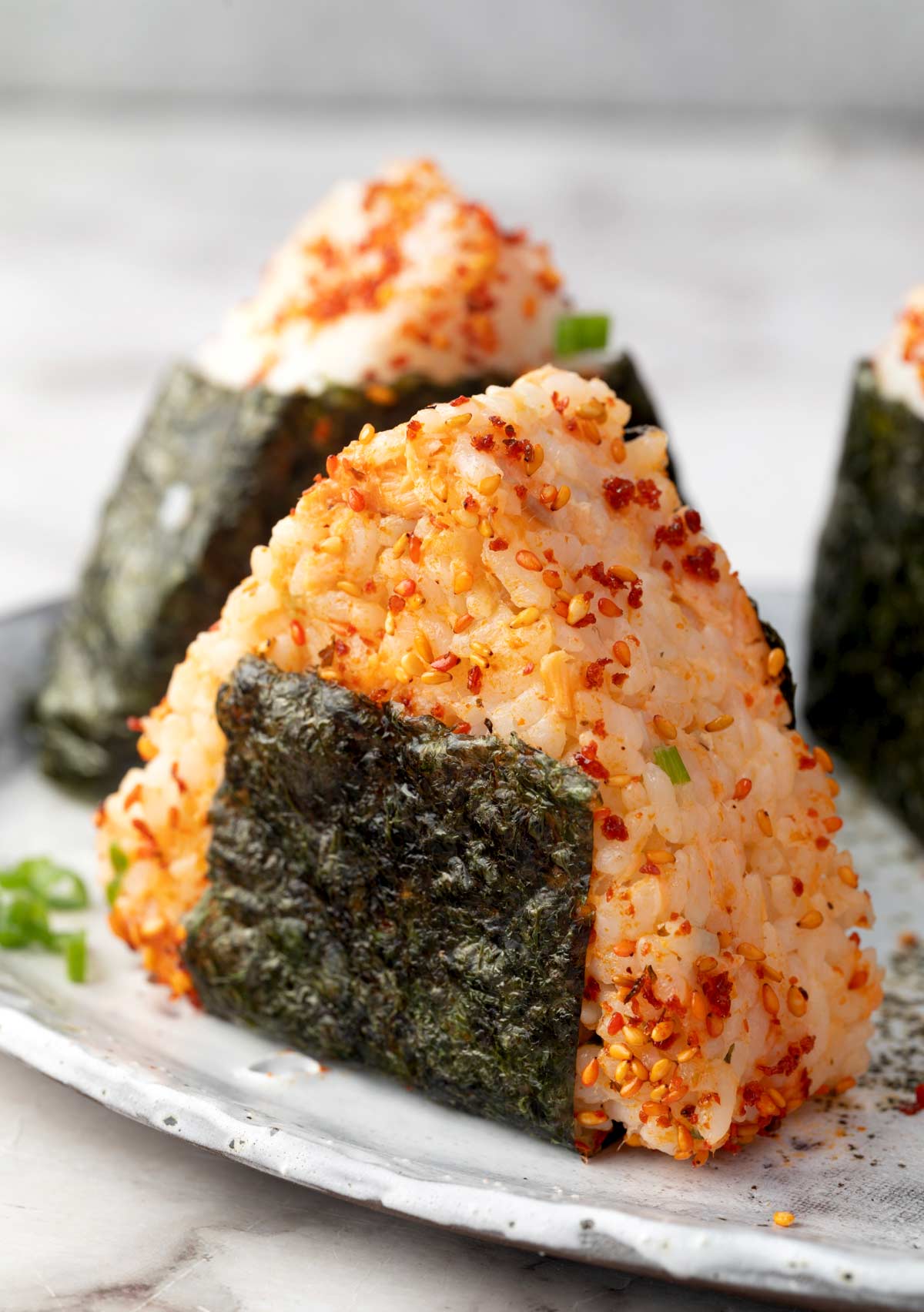
Why You’ll Love This Salmon Onigiri
- Portable and packable: onigiri travel well, making them perfect for lunches, road trips, or picnics.
- Creamy, spicy filling: Kewpie mayo and sriracha give the salmon a rich, slightly spicy flavor that’s genuinely craveable.
- No special equipment required: shape them by hand or use an onigiri mold, whichever is easier for you.
- Great for meal prep: make a batch ahead of time and wrap individually for grab-and-go meals throughout the week.
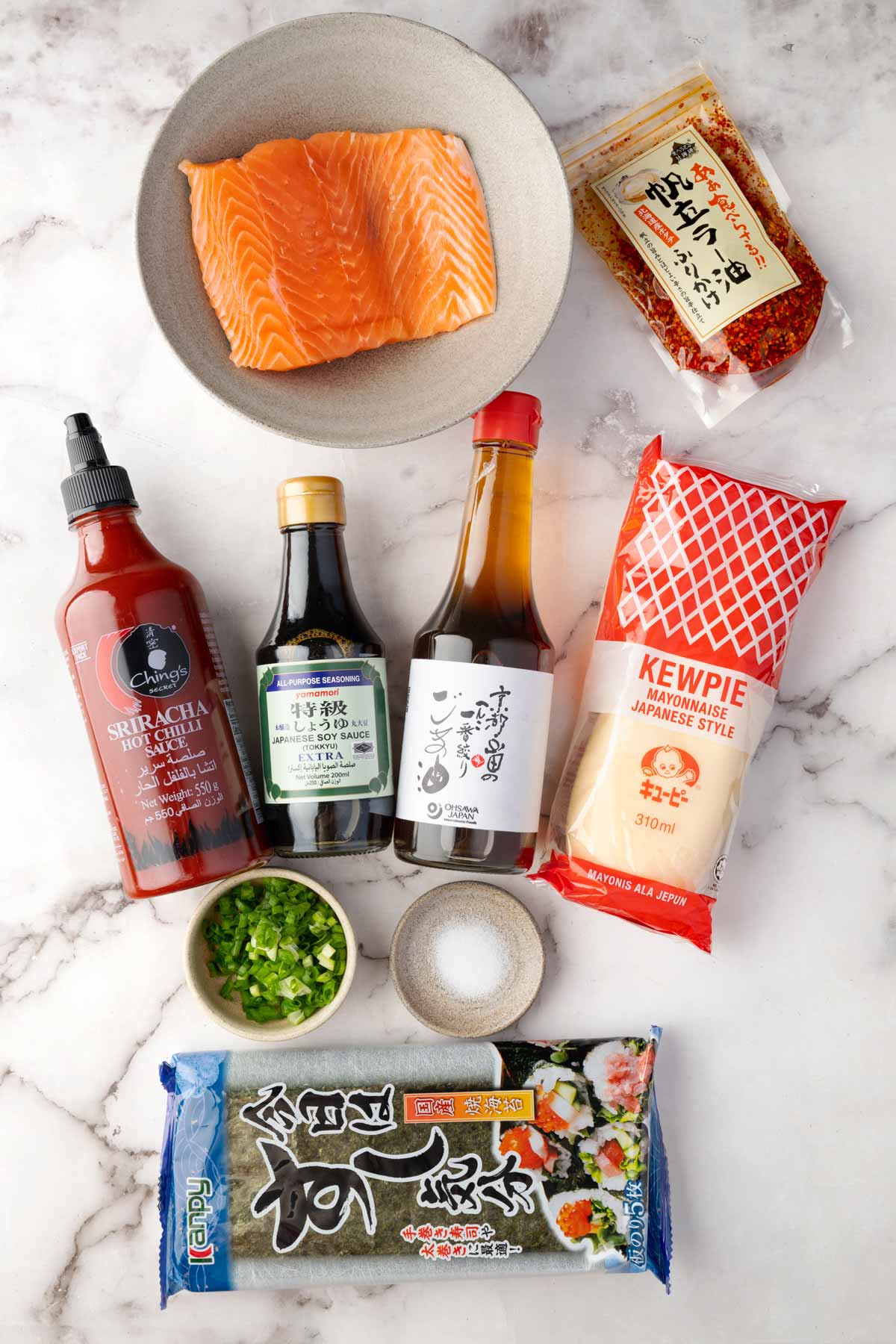
What You’ll Need for Salmon Onigiri
How to Make Salmon Onigiri
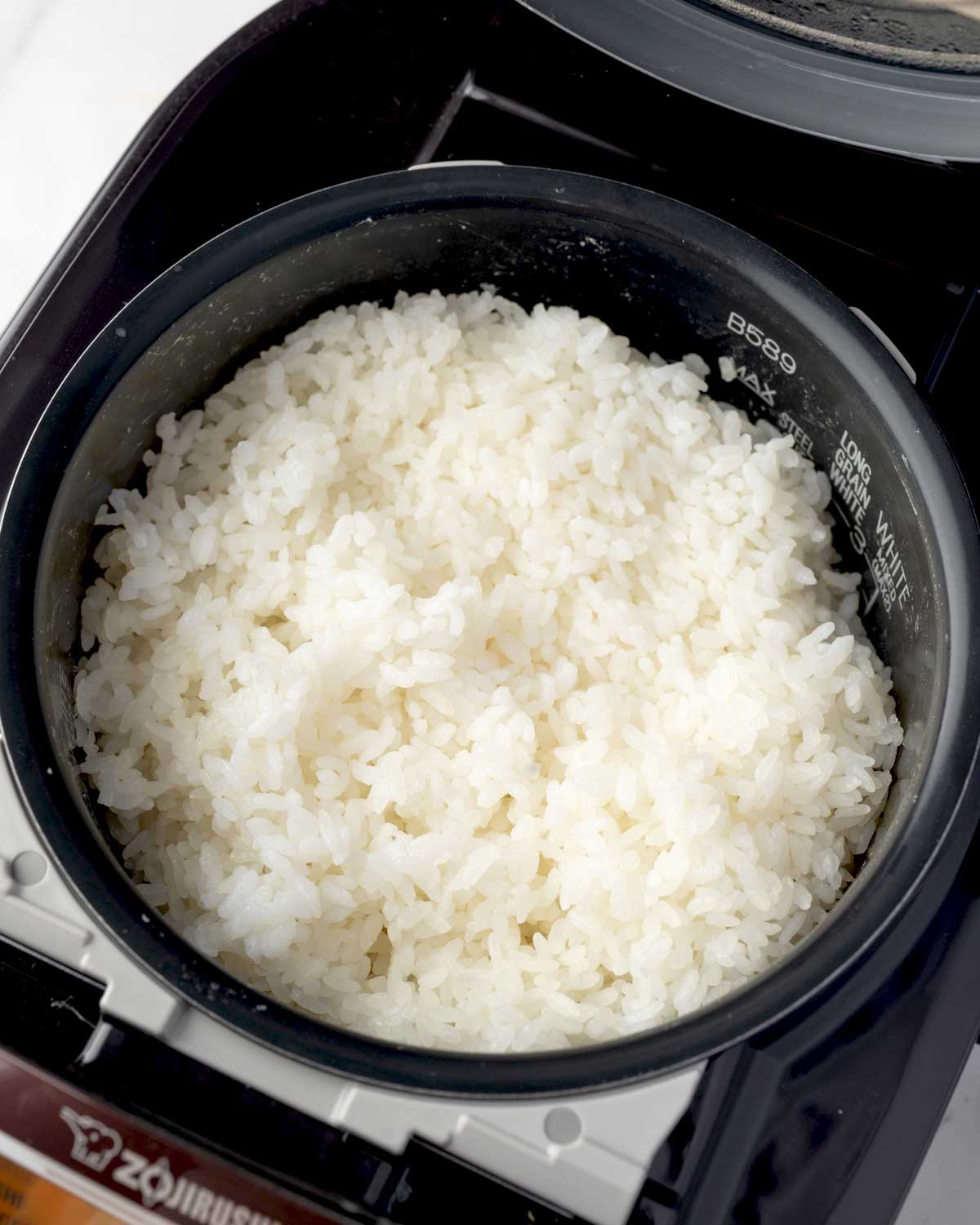
- Cook the rice: Rinse and cook the Japanese rice according to package directions. Season lightly with salt and keep warm.
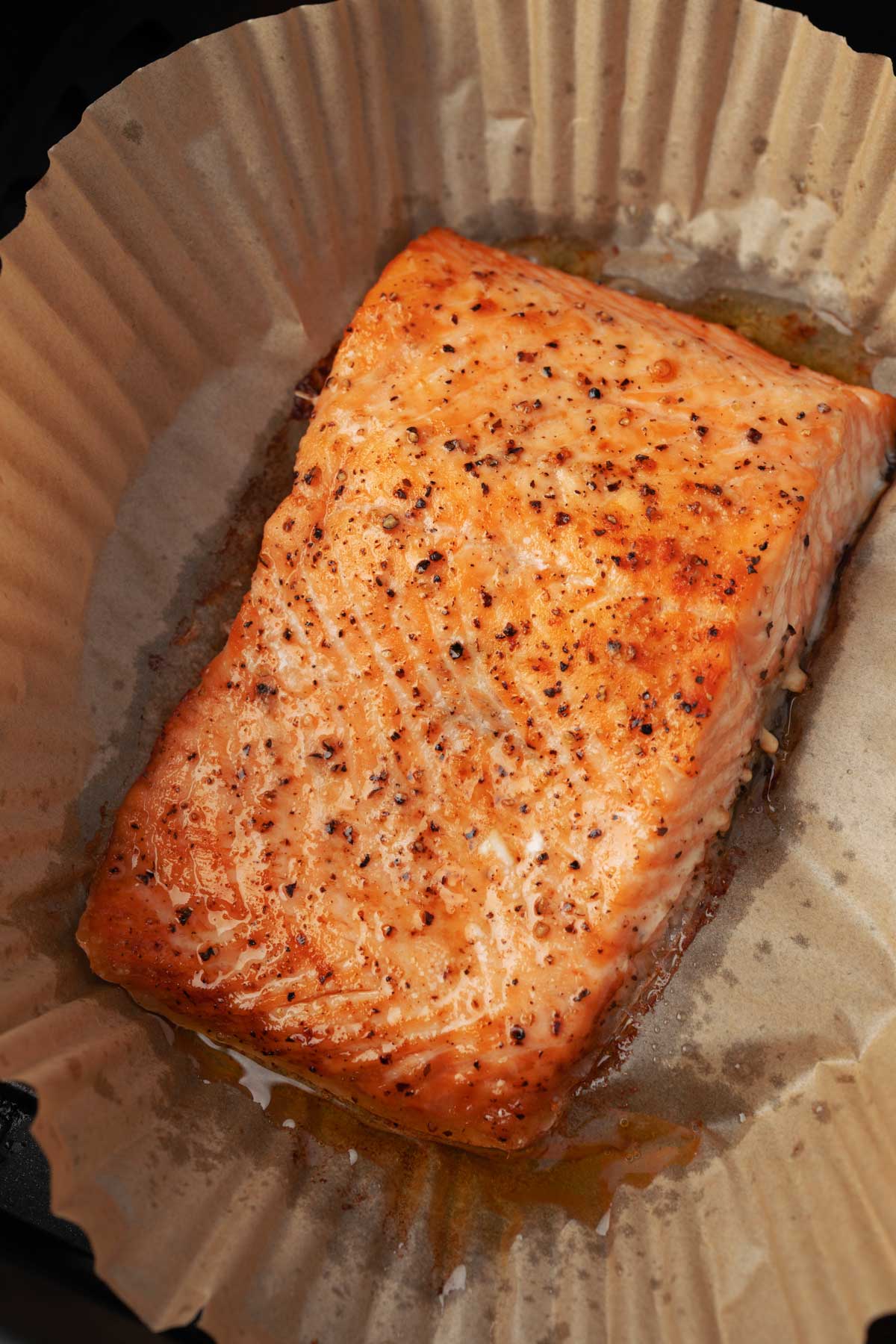
- Cook the salmon: Season with salt and bake at 400°F for 10–12 minutes, or air fry for 7–9 minutes. Flake the cooked salmon.
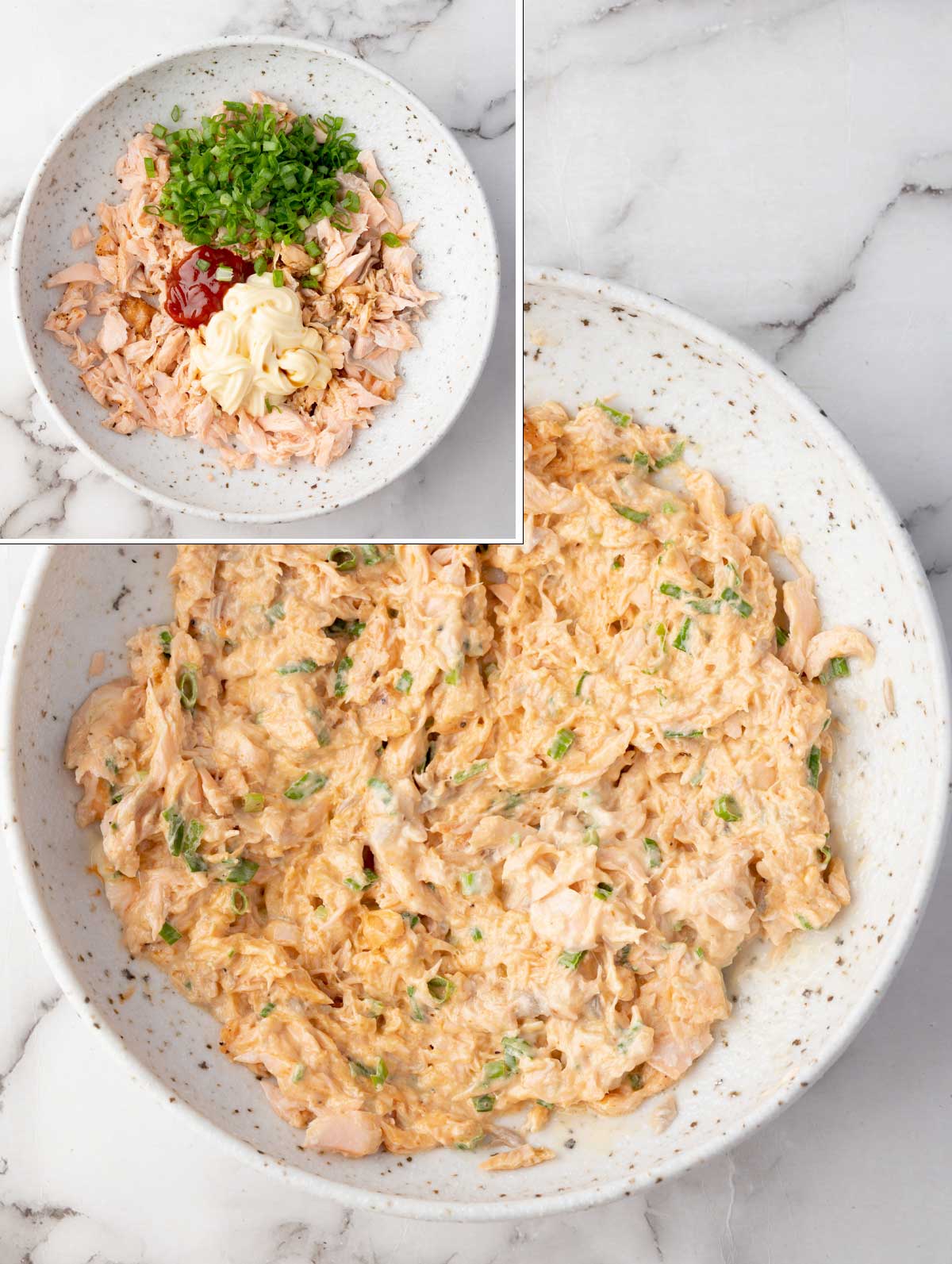
- Make the filling: Mix the salmon with Kewpie mayo, sriracha, soy sauce, sesame oil, and green onions.
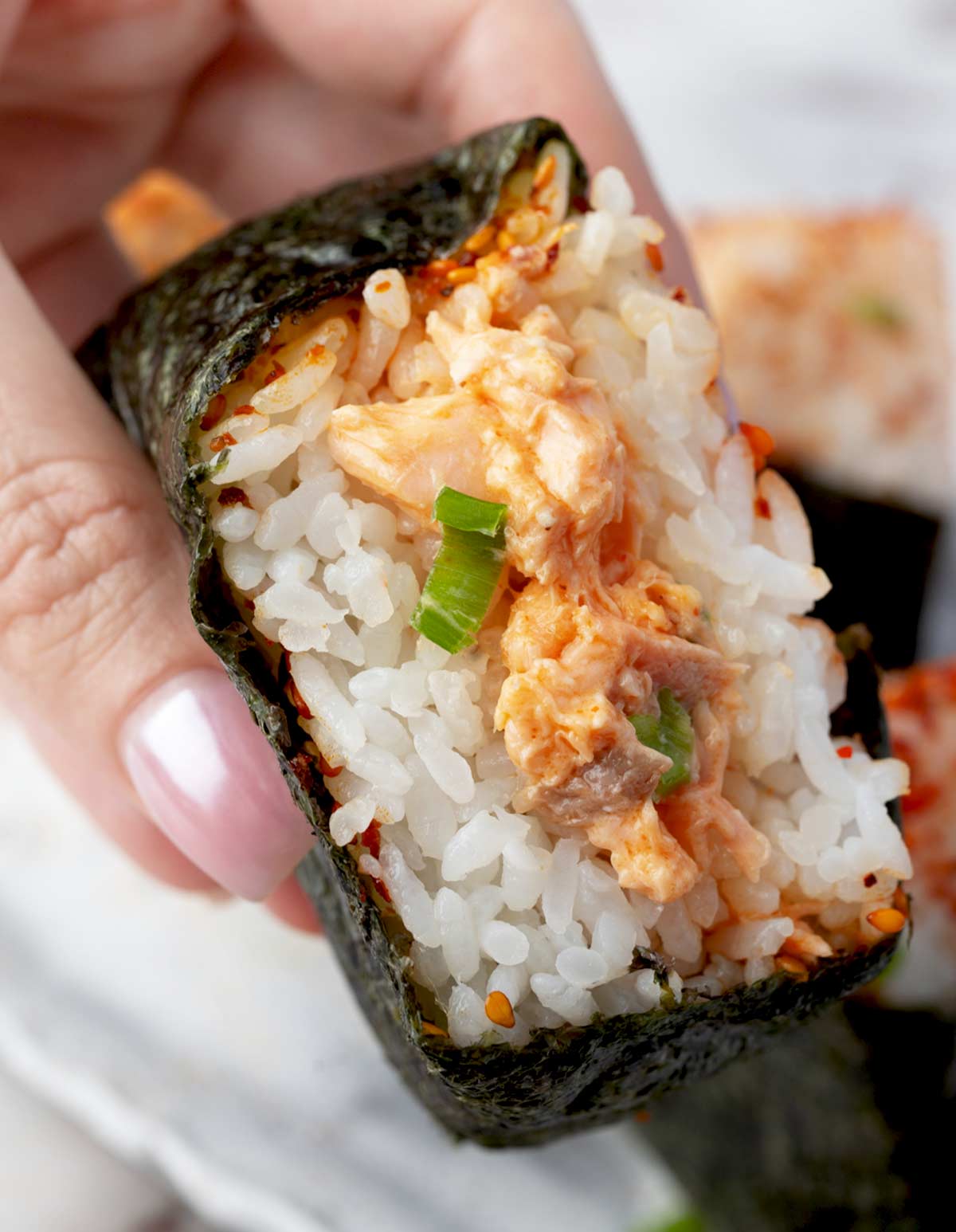
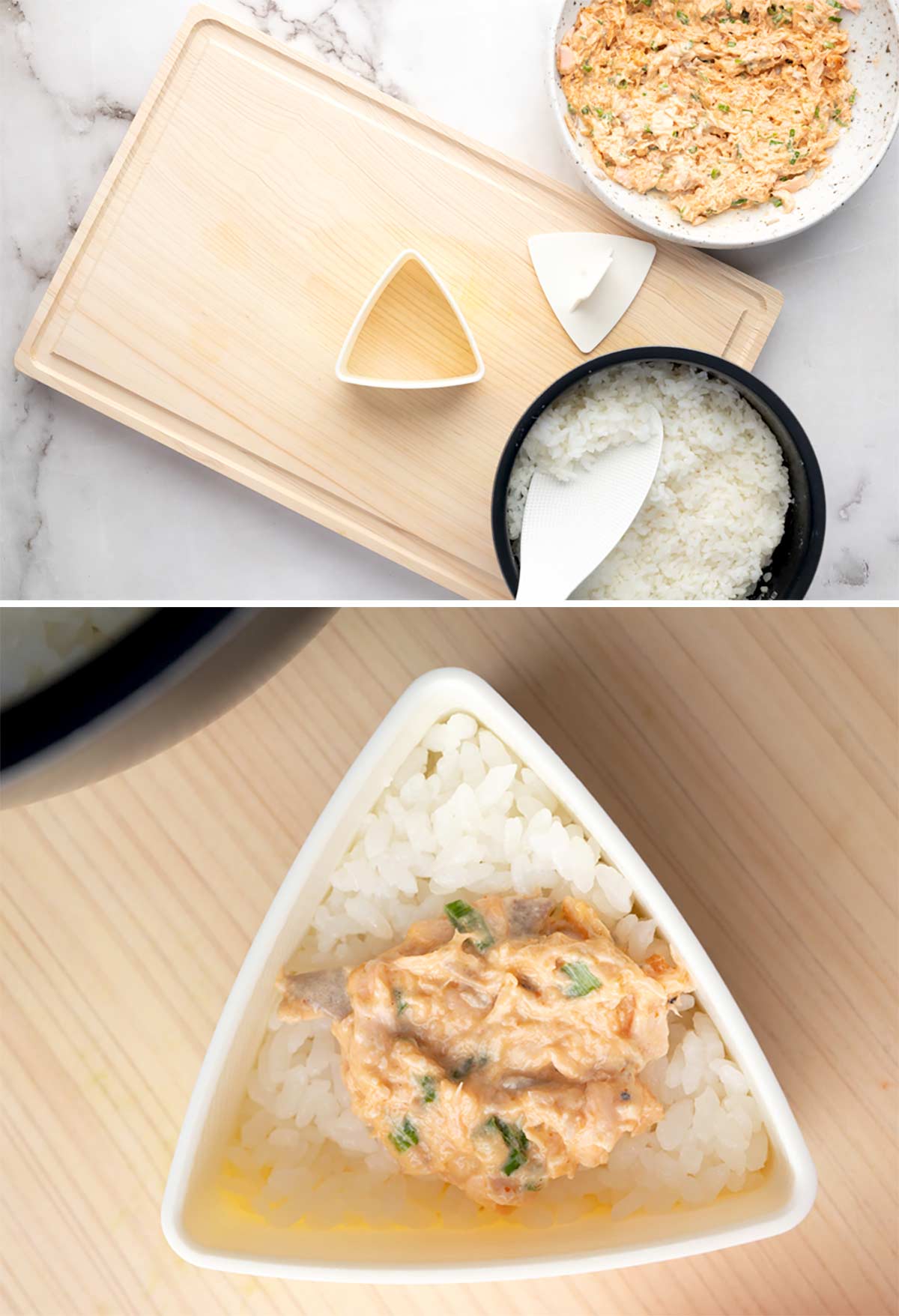
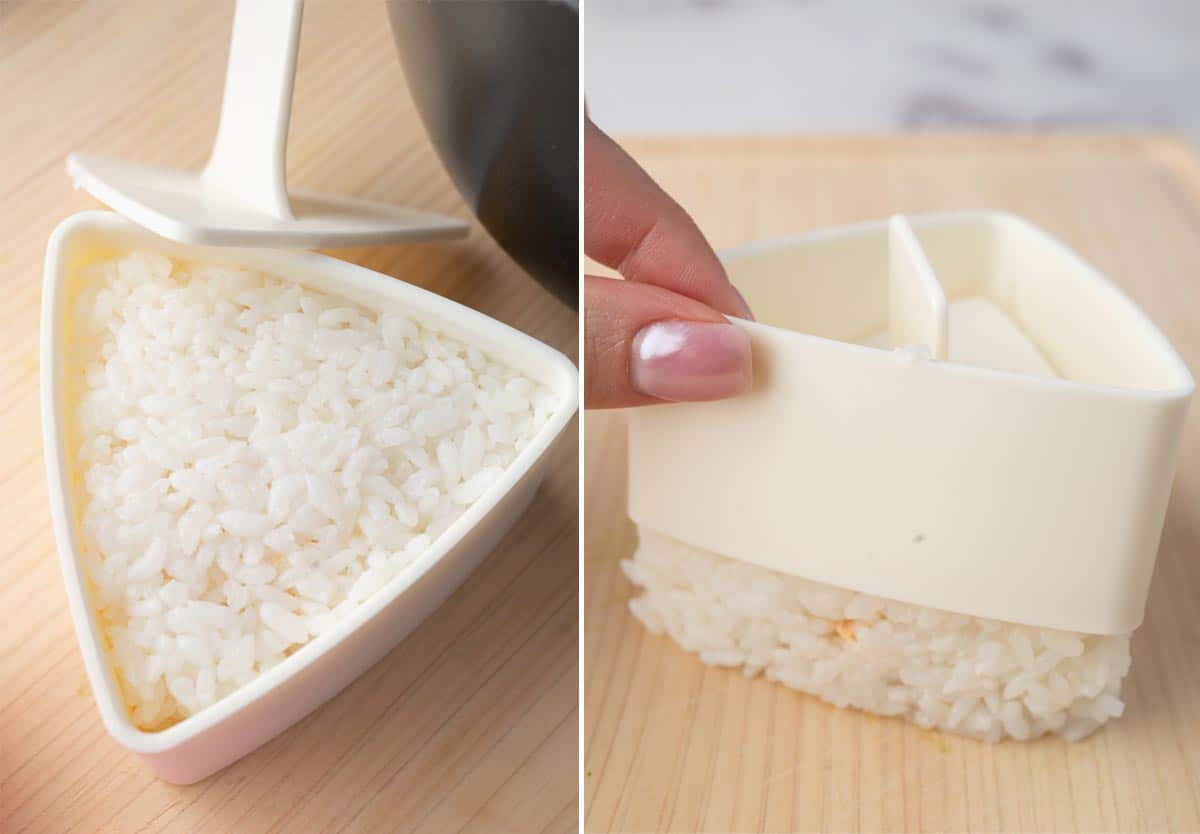
- Option 1 – Salmon-filled onigiri: Place some warm rice into an onigiri mold, leaving a small well in the center. Add a spoonful of the salmon filling, then cover with more rice. Press with the mold lid to compact and shape the rice, then gently release the onigiri.
- Option 2 – Salmon mixed with rice: Add the remaining salmon mixture directly to the warm rice and gently mix until evenly distributed.
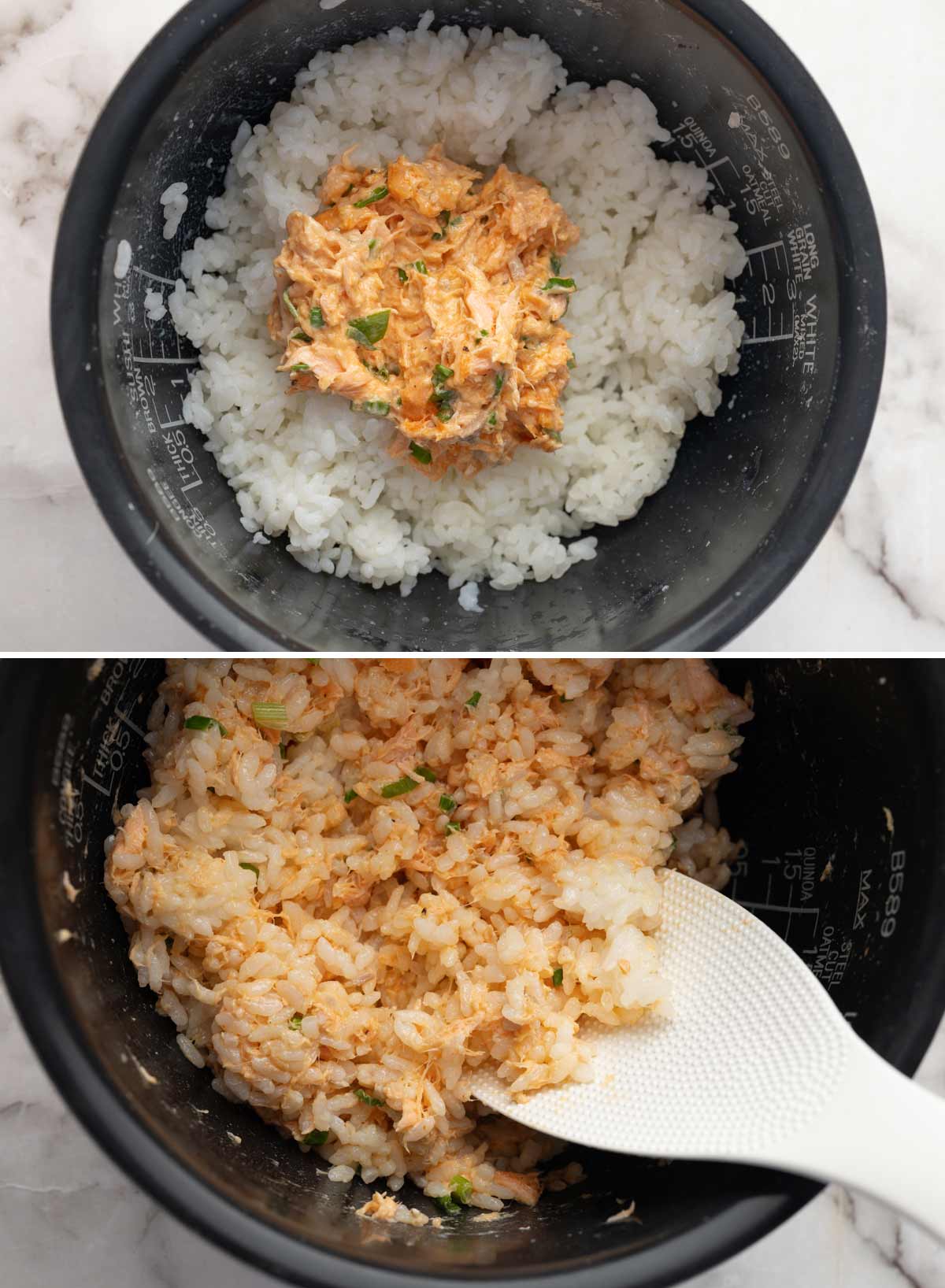
- Fill the onigiri mold with the salmon rice mixture, press firmly with the lid, and release.
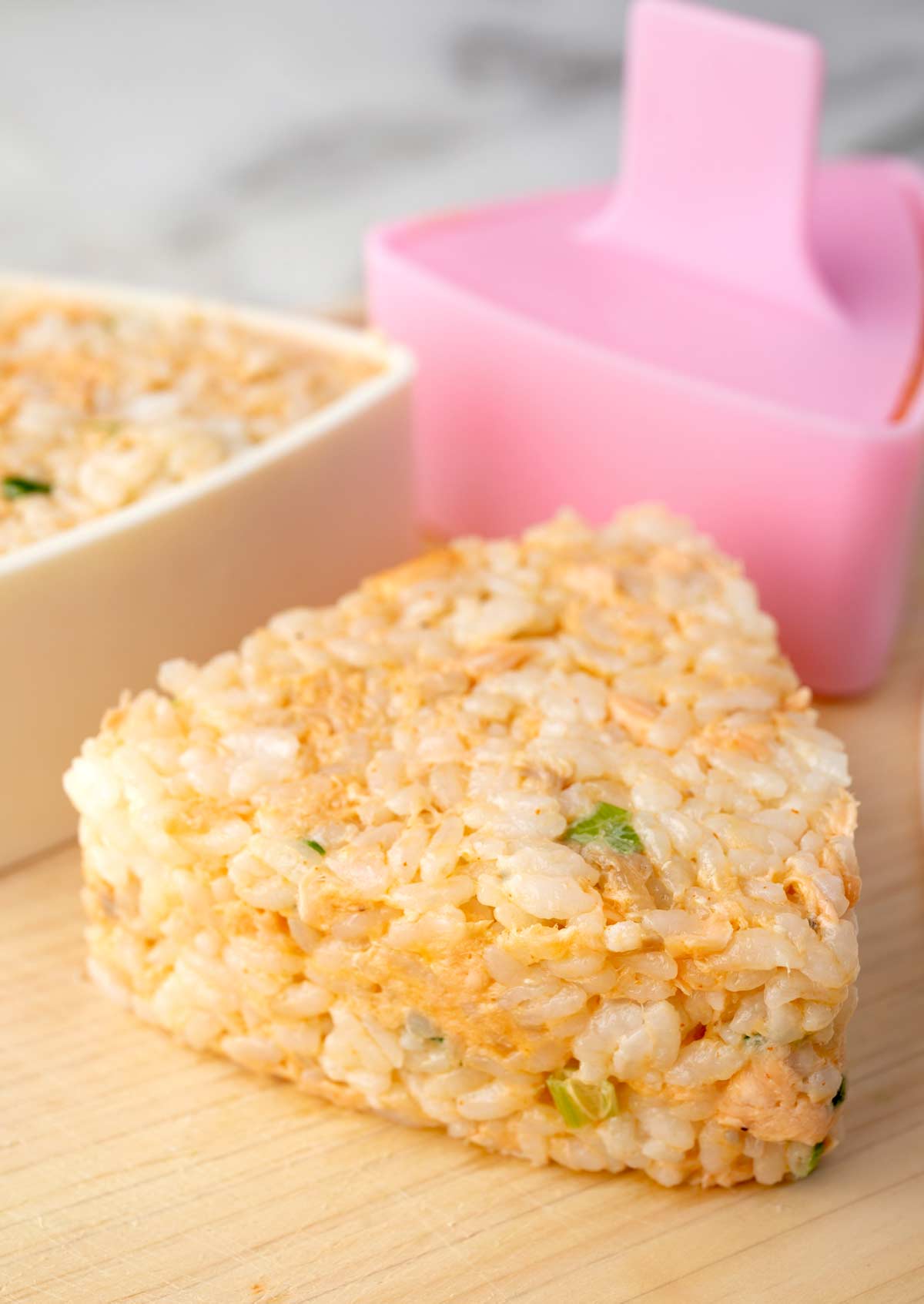
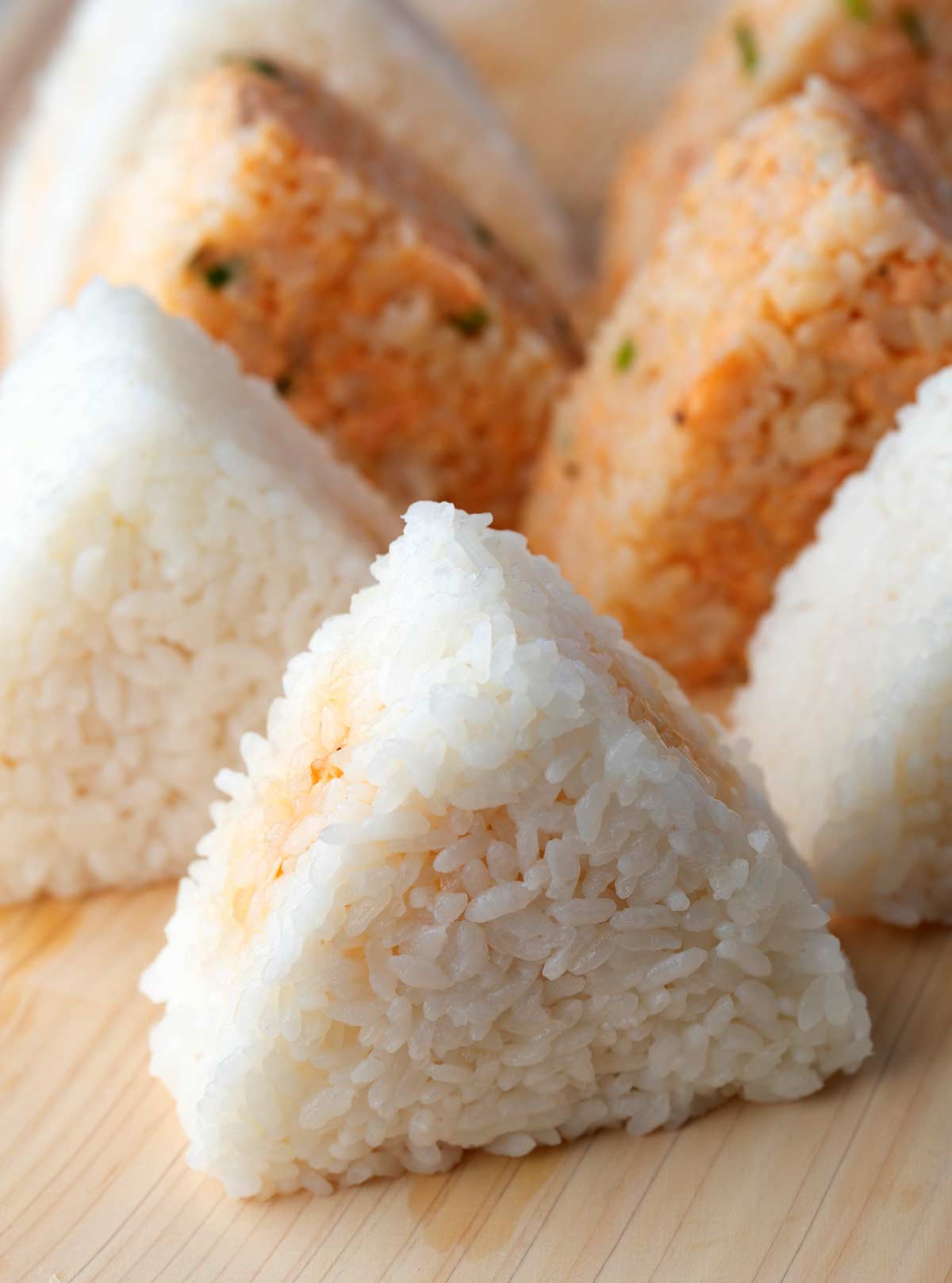
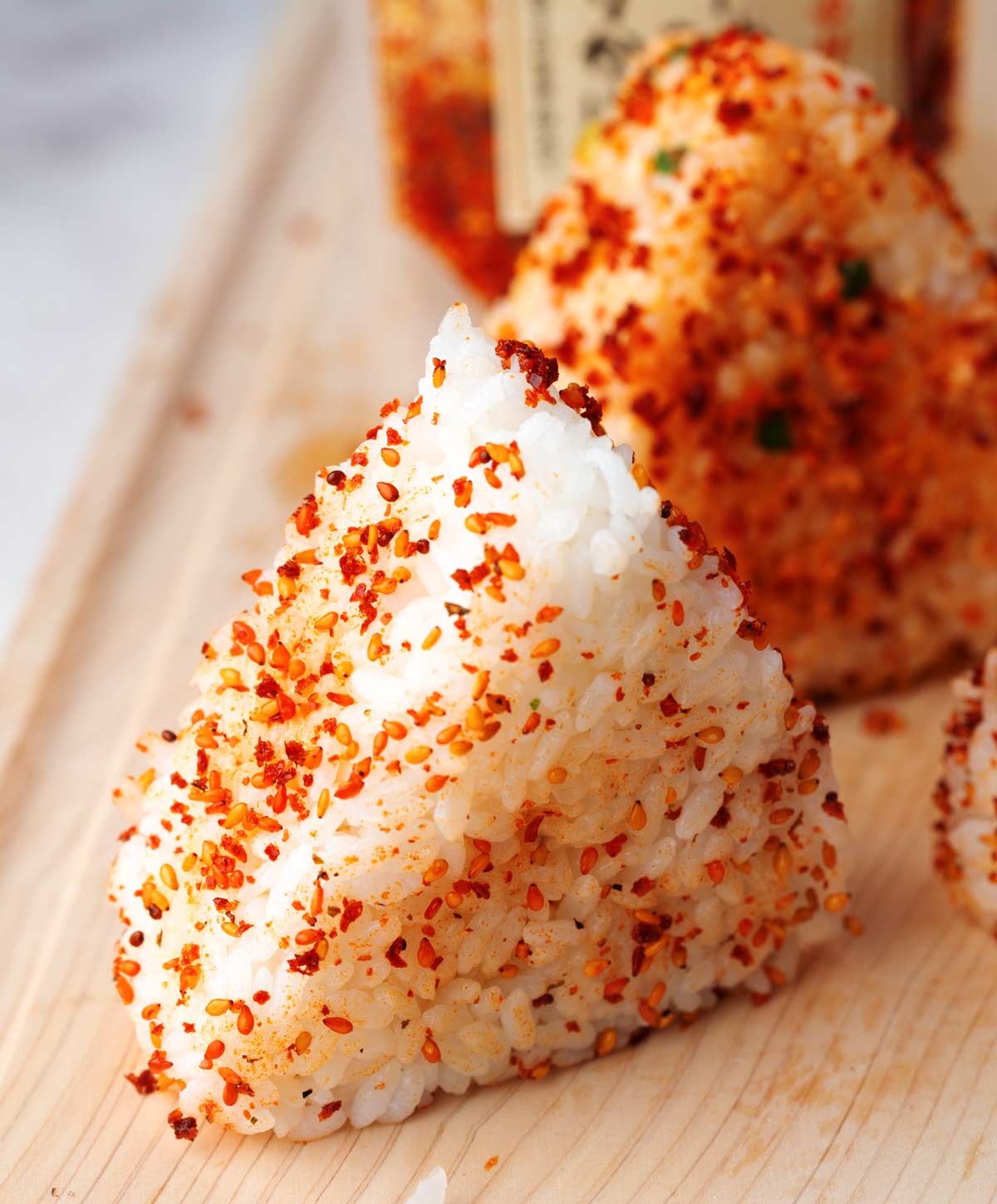
- Finish: Sprinkle the shaped onigiri with furikake, if desired. Wrap with nori just before serving.
Technique Tip: Wet Hands, Not Wet Rice
If shaping the onigiri by hand, keep your hands lightly wet and salted to prevent the rice from sticking without making it soggy or overly salty. Re-wet your hands between onigiri as needed, especially if the rice starts to stick.
Recipe Variations
- Spicy Tuna Onigiri-Swap the salmon for canned tuna mixed the same way with Kewpie mayo and sriracha for a quicker version.
- Teriyaki Salmon Onigiri-Replace the soy sauce and sriracha with a tablespoon of teriyaki sauce for a sweeter, less spicy filling.
- Avocado Salmon Onigiri-Fold a few small cubes of avocado into the salmon filling for extra creaminess.
- Mild Salmon Onigiri-Skip the sriracha entirely for a kid-friendly version that’s still rich and flavorful from the mayo and sesame oil.
Ways to Serve Salmon Onigiri
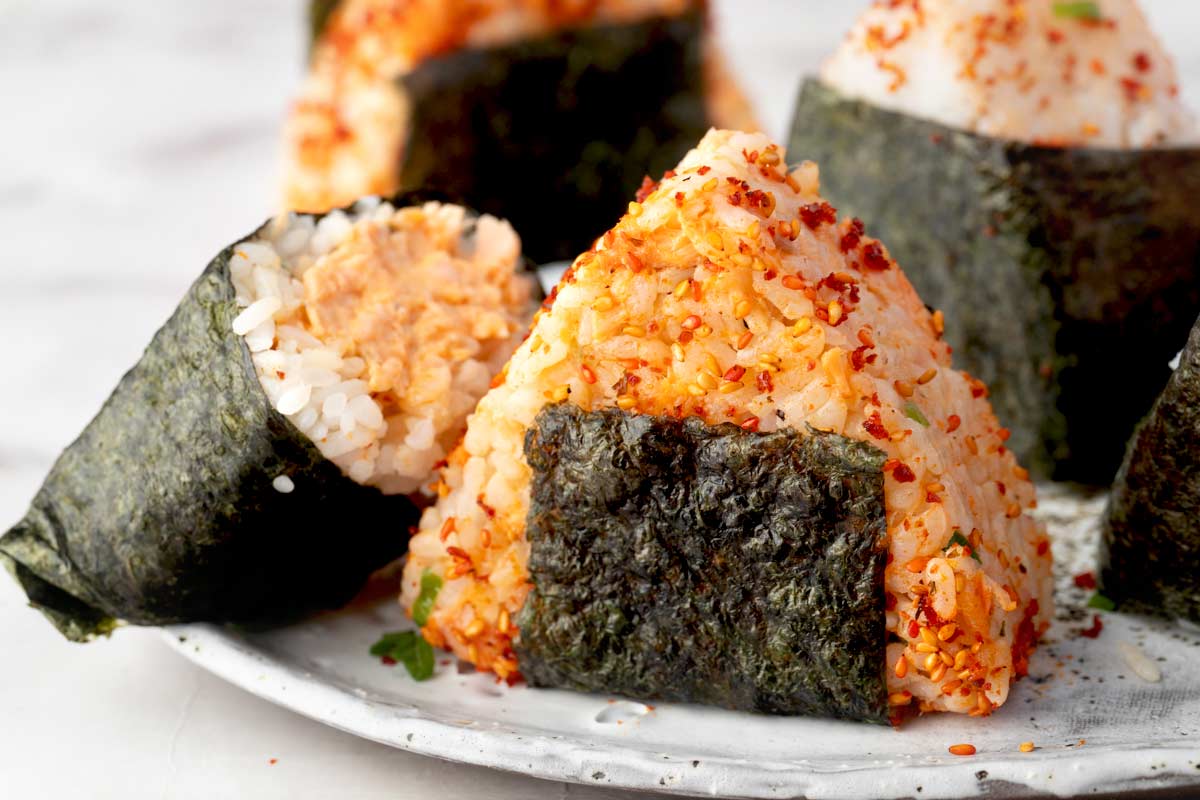
- Packed for Lunch-Wrap individually for an easy, portable lunchbox addition.
- With Miso Soup-A warm bowl of miso soup makes a comforting pairing for a light meal.
- As a Snack Platter-Serve a few alongside pickled vegetables and edamame for a light spread.
- On a Picnic-They travel well and don’t require reheating, making them ideal for outdoor meals.
Storage Instructions
- Room temperature: Onigiri can sit at room temperature for a few hours, ideally wrapped individually in plastic wrap.
- Refrigerator: Store in an airtight container for up to 2 days, though the rice will firm up when chilled.
- Reheating: Let refrigerated onigiri come to room temperature before eating, or microwave briefly to soften the rice again.
- Note: Add the nori just before eating if making ahead, so it stays crisp instead of turning soft and chewy.
Frequently Asked Questions
Yes, regular mayonnaise can be used in a pinch, though the flavor will be slightly less rich and tangy. Kewpie mayo is worth seeking out if you can, since it’s a big part of the filling’s signature flavor.
Yes, well-drained canned salmon works as a quicker substitute. The texture will be a bit different from flaked baked salmon, but the flavor of the filling will still come through nicely.
This usually means your hands aren’t wet enough, or too much time has passed and the rice has cooled and become tackier. Keep a small bowl of water nearby to re-wet your hands between onigiri as needed.
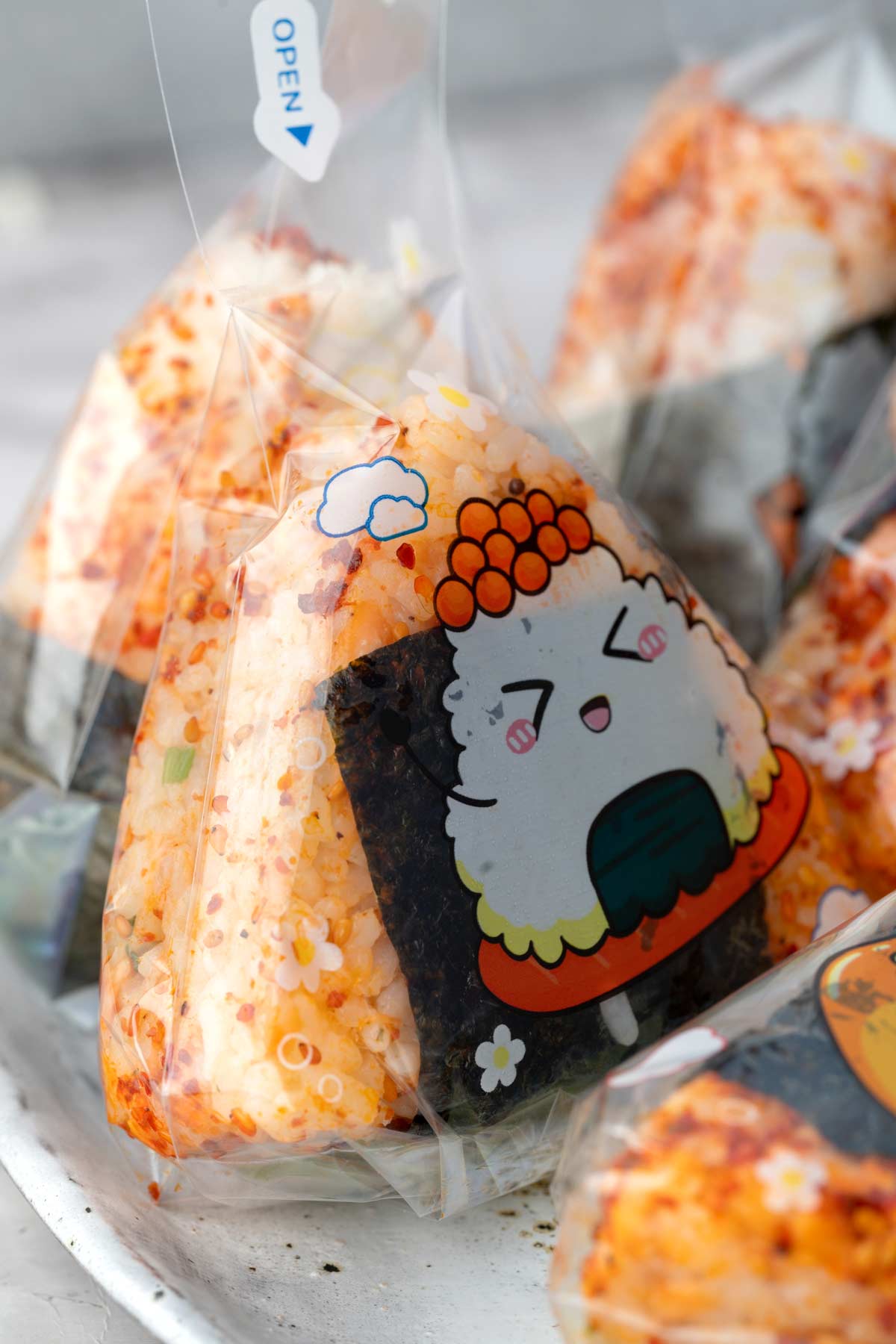
Nori softens quickly once it touches the moist rice, so it’s best added just before serving if you’re not eating the onigiri right away. Onigiri wrappers designed to separate the nori from the rice until you’re ready to eat can help keep it crisp longer.
Yes, the salmon filling can be made up to a day in advance and stored in an airtight container in the refrigerator. Bring it closer to room temperature before assembling so it’s easier to work with.
Give this salmon onigiri a try, and if it turns out as creamy and flavorful as ours, come back and leave a star rating below — it helps other home cooks find this recipe too!
Pin this now to find it later
Pin It

Salmon Onigiri Recipe
Equipment
Ingredients
For the Rice
- 2 cups Japanese short-grain rice
- 2¼ cups water, or according to your rice package
- ½ teaspoon salt
For the Salmon Filling
- 8 ounces salmon fillet
- ¼ teaspoon salt
- 3 tablespoons Kewpie mayonnaise
- 1-2 teaspoons sriracha, to taste
- 1 teaspoon soy sauce
- 1 teaspoon toasted sesame oil
- 3 green onions, finely sliced
For Assembling
- Furikake, optional
- sheets nori, cut into strips about 2 inches wide, or into pieces large enough to wrap around the bottom of each onigiri.
Instructions
- Cook the rice: Rinse the rice several times until the water runs mostly clear. Cook according to package directions. Once cooked, let it rest, covered, for 10 minutes. Gently fluff and season with salt. Keep warm.
- Cook the salmon: Season the salmon lightly with salt. Bake at 400°F for 10–12 minutes, or air fry at 400°F for 7–9 minutes, until cooked through and it flakes easily with a fork. Let cool slightly, remove the skin, and flake the salmon.
- Make the salmon mixture: In a bowl, combine the flaked salmon, Kewpie mayo, sriracha, soy sauce, sesame oil, and green onions. Mix until creamy but still slightly chunky.
- Option 1 – Make filled salmon onigiri: Place a layer of warm rice in an onigiri mold, pressing it gently around the bottom and sides. Add about 1 tablespoon of the salmon mixture to the center, leaving a border of rice around the edges. Cover with more rice, then use the mold lid to press everything together. Turn the mold over and gently release the onigiri.Option 2 – Mix the salmon with the rice: For salmon throughout every bite, add the salmon mixture directly to the warm rice and gently fold until evenly combined. Spoon the salmon rice into the onigiri mold, press with the lid to shape, then gently release. Don't overmix or press too firmly, or the rice can become mushy.
- Shape by hand instead: If you don't have a mold, wet your hands with water and lightly sprinkle them with salt to prevent sticking. Shape either version into a triangle, pressing just firmly enough for the rice to hold together.
- Finish the onigiri: Sprinkle with furikake, if desired. Wrap a strip of nori around the bottom, or use onigiri wrappers.
- Enjoy immediately, or let the onigiri cool completely before wrapping individually for storage.
Notes
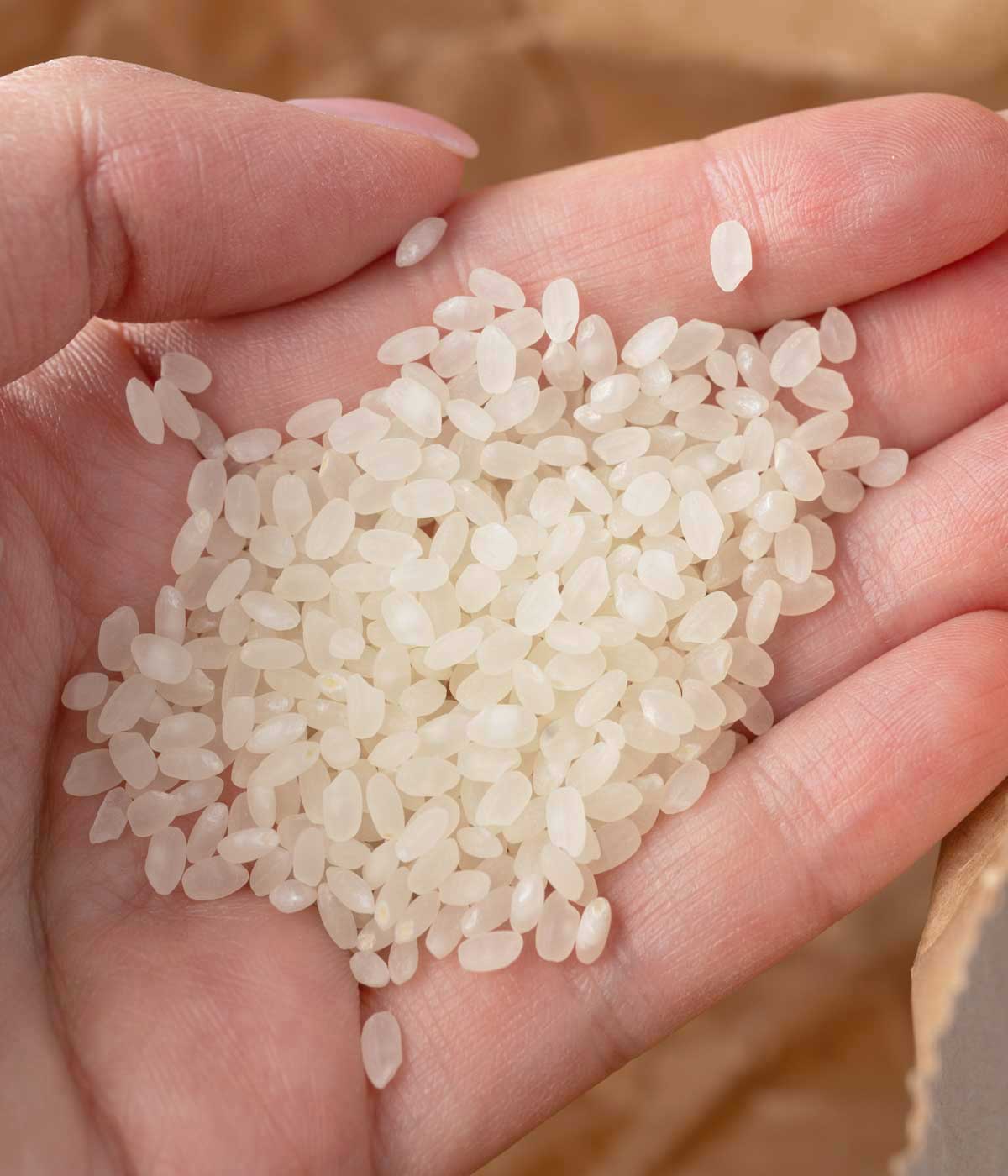
- Use the right rice: Japanese short-grain rice (often labeled sushi rice) works best because it is naturally sticky enough to hold the onigiri together. Avoid jasmine, basmati, or other long-grain rice.
- Shape while warm: The rice is easiest to shape while it’s still warm. Let it cool just enough to handle comfortably.
- Keep your hands wet: Lightly wet your hands before shaping to prevent the rice from sticking. A small pinch of salt on your hands also adds traditional onigiri flavor.
- Don’t overfill: About 1 tablespoon of salmon filling per onigiri is plenty. Too much filling can make the rice difficult to seal and shape.
- Using an onigiri mold: For evenly shaped triangles, layer rice, salmon filling, and more rice in the mold, then gently press to compact.
- Adjust the heat: Use more or less sriracha depending on how spicy you like your salmon filling, or leave it out completely for a mild version.
- Storage: Salmon onigiri is best enjoyed fresh. If needed, refrigerate it in an airtight container for up to 1 day. For the best texture, keep the nori separate until serving.
Nutrition
Nutrition information is automatically calculated, so should only be used as an approximation.
© CHEF JAR. All rights reserved. All content and images on this website are protected by copyright and may not be reproduced without prior written permission. If you’d like to share this recipe, please link directly to this post rather than copying the content.