


This post may contain affiliate links. Please read our disclosure policy.
Rich, creamy, and loaded with warming spices — this easy coconut chicken curry is a 40-minute one-pan dinner that tastes like it simmered all day.
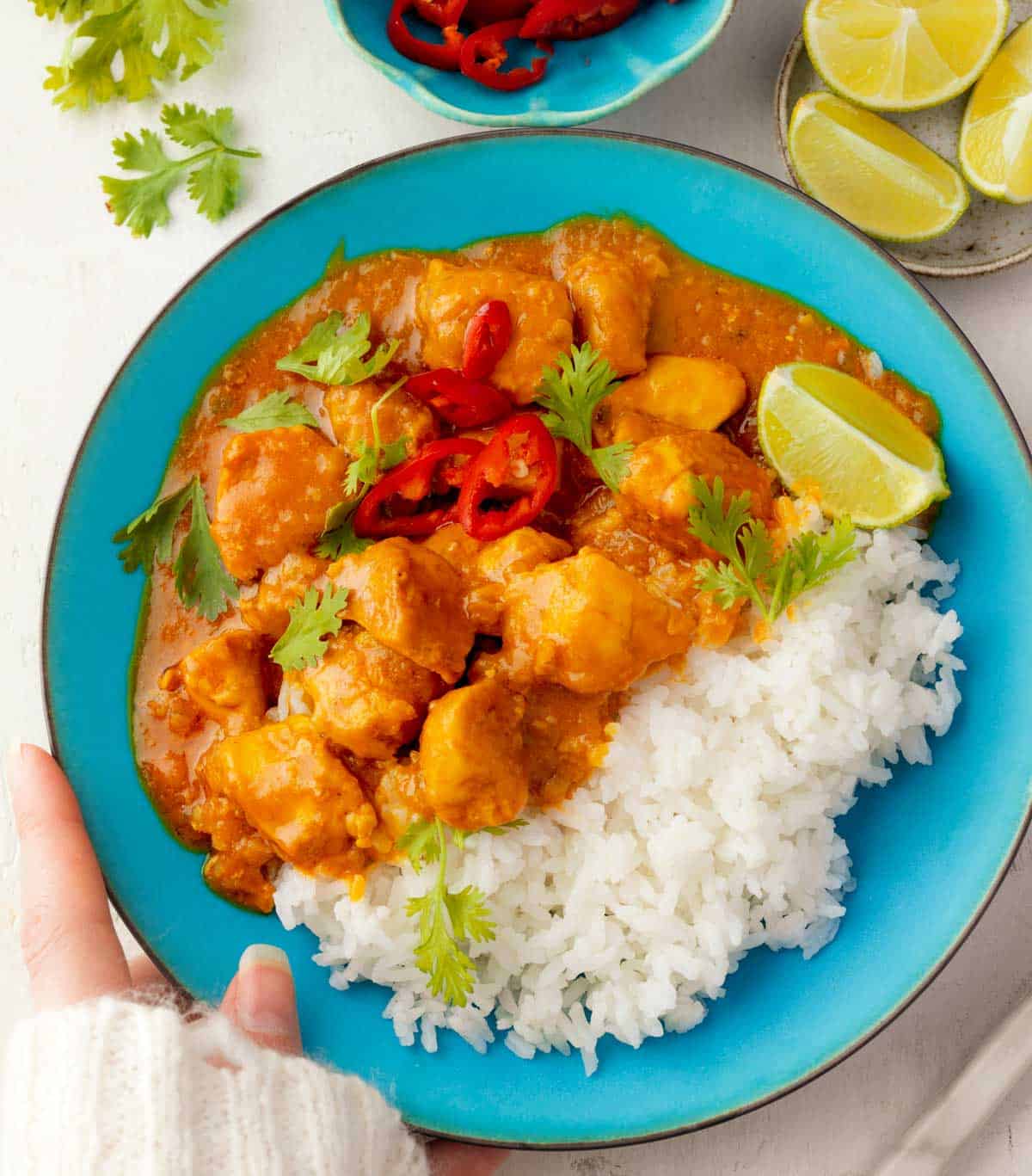
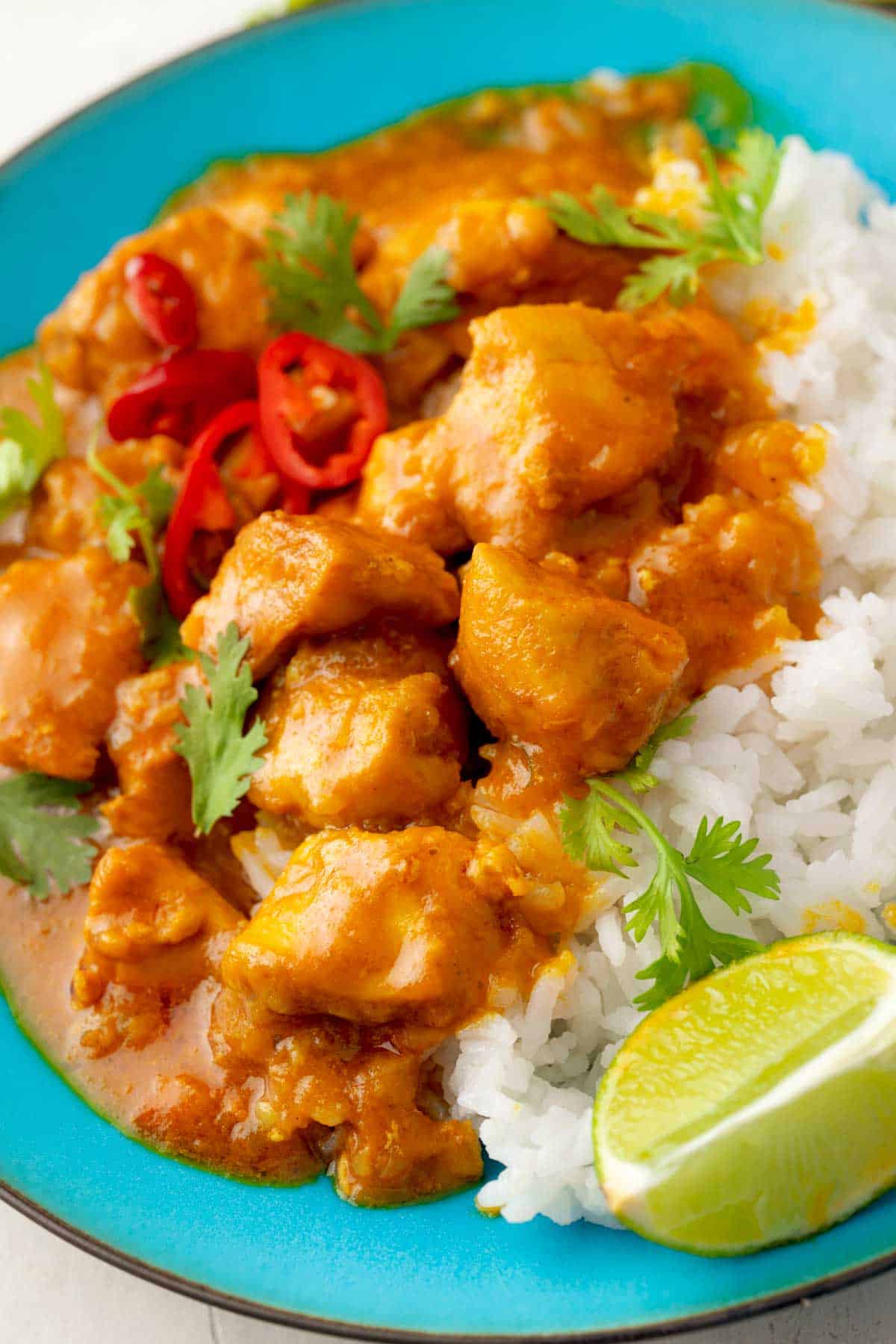
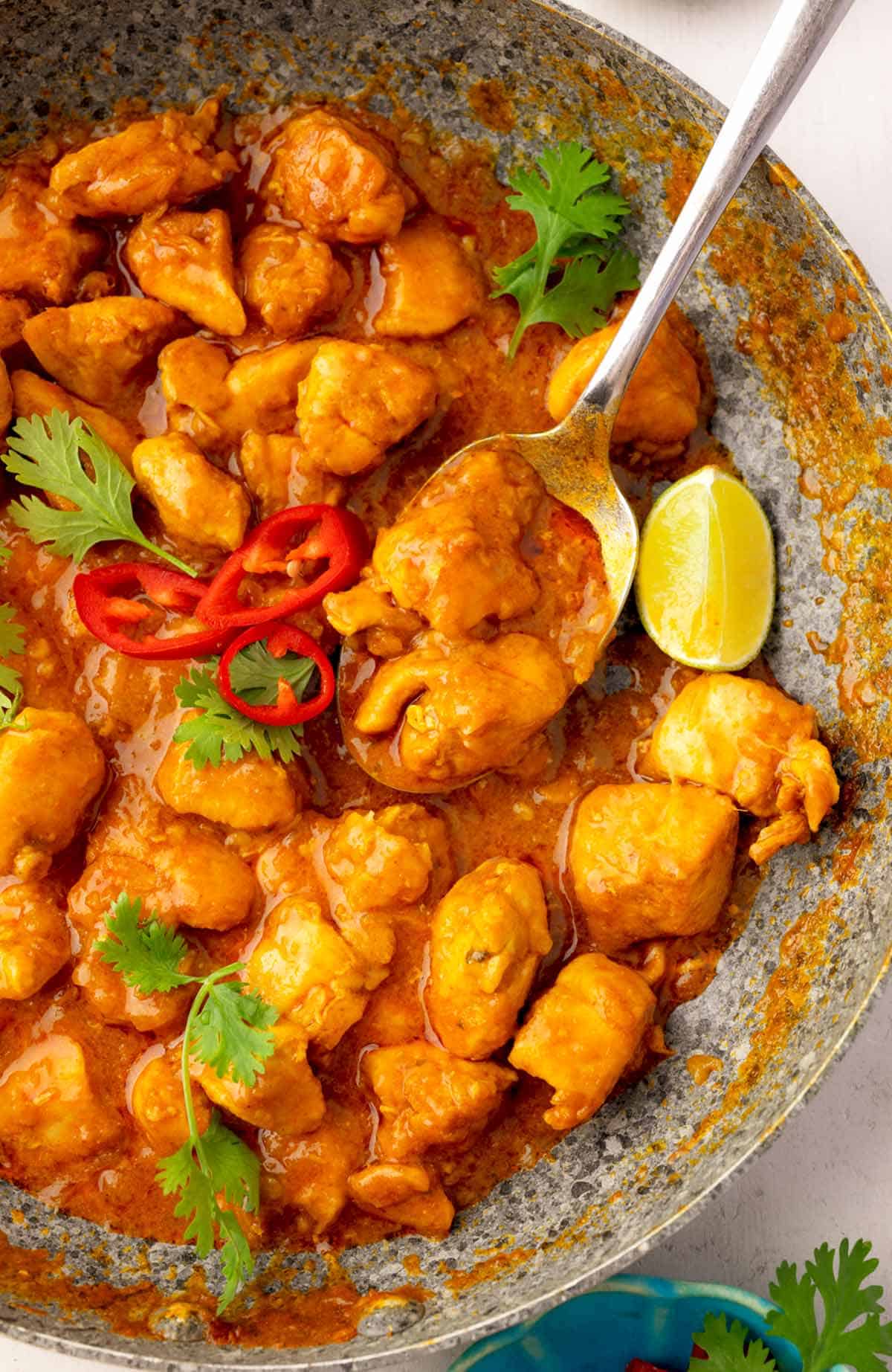
This coconut chicken curry is the kind of recipe that quietly becomes a household staple. It’s rich and creamy from full-fat coconut milk, deeply savory from Thai red curry paste and Madras curry powder, and bright with fresh ginger and lime.
What sets this apart from a basic curry is the two-step cooking process: the chicken gets a quick sear before the sauce comes together, locking in a golden crust and adding depth that you simply can’t get if you drop raw chicken straight into the liquid. The result is a curry with layers — something that tastes like real effort, even when it wasn’t.
Why you’ll love this recipe
- Deeply flavorful: Thai red curry paste and Madras curry powder make layers of rich, balanced flavor with just the right amount of heat.
- One pan, easy cleanup: Everything cooks in a single pot, from searing the chicken to simmering the curry sauce.
- Naturally gluten & dairy free: Full-fat coconut milk makes the curry creamy without any dairy or flour.
- Perfect for meal prep: The flavors deepen overnight, and leftovers reheat beautifully the next day.
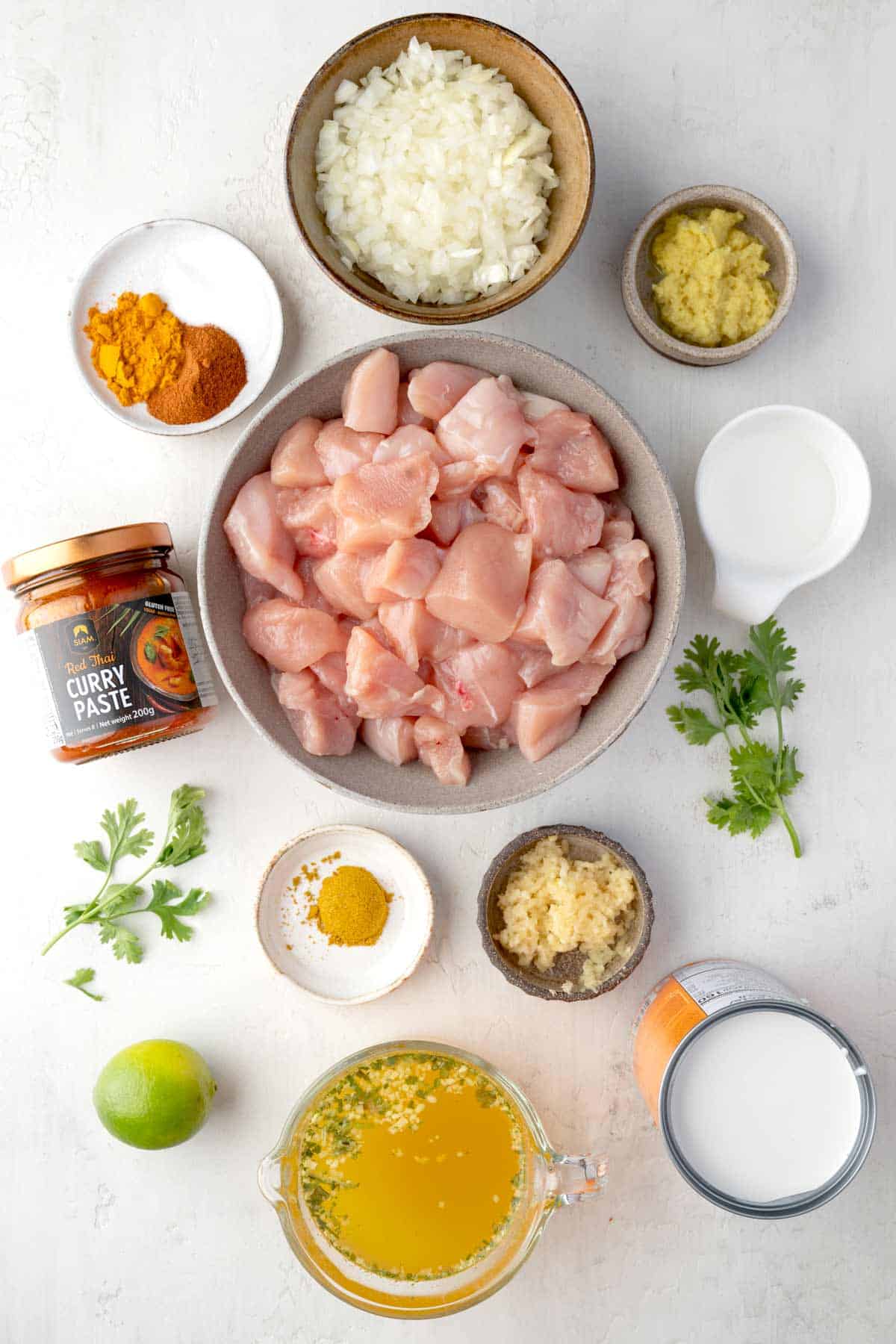
You’ll need
Ingredient Tip
The quality of your Thai red curry paste makes a significant difference. Mae Ploy and Maesri are widely available, affordable, and far more flavorful than most grocery-store brands. If your curry paste has been open in the fridge for more than a few months, replace it — it loses its punch quickly.
How to make coconut chicken curry
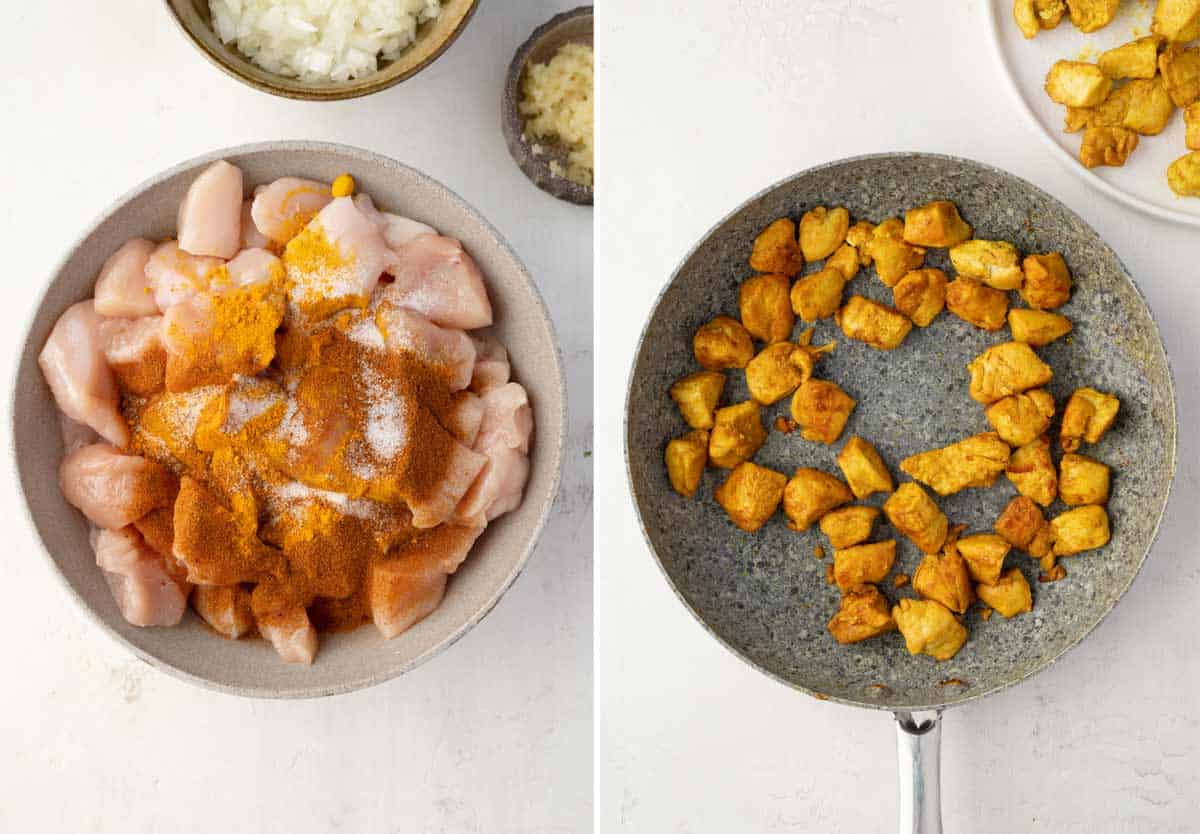
- Season the chicken: Toss the chicken with paprika, turmeric, and salt.
- Sear the chicken: Heat coconut oil in a skillet and cook the chicken until lightly golden. Transfer to a plate.
- Cook the aromatics: Cook the onion until soft, then add garlic and ginger.
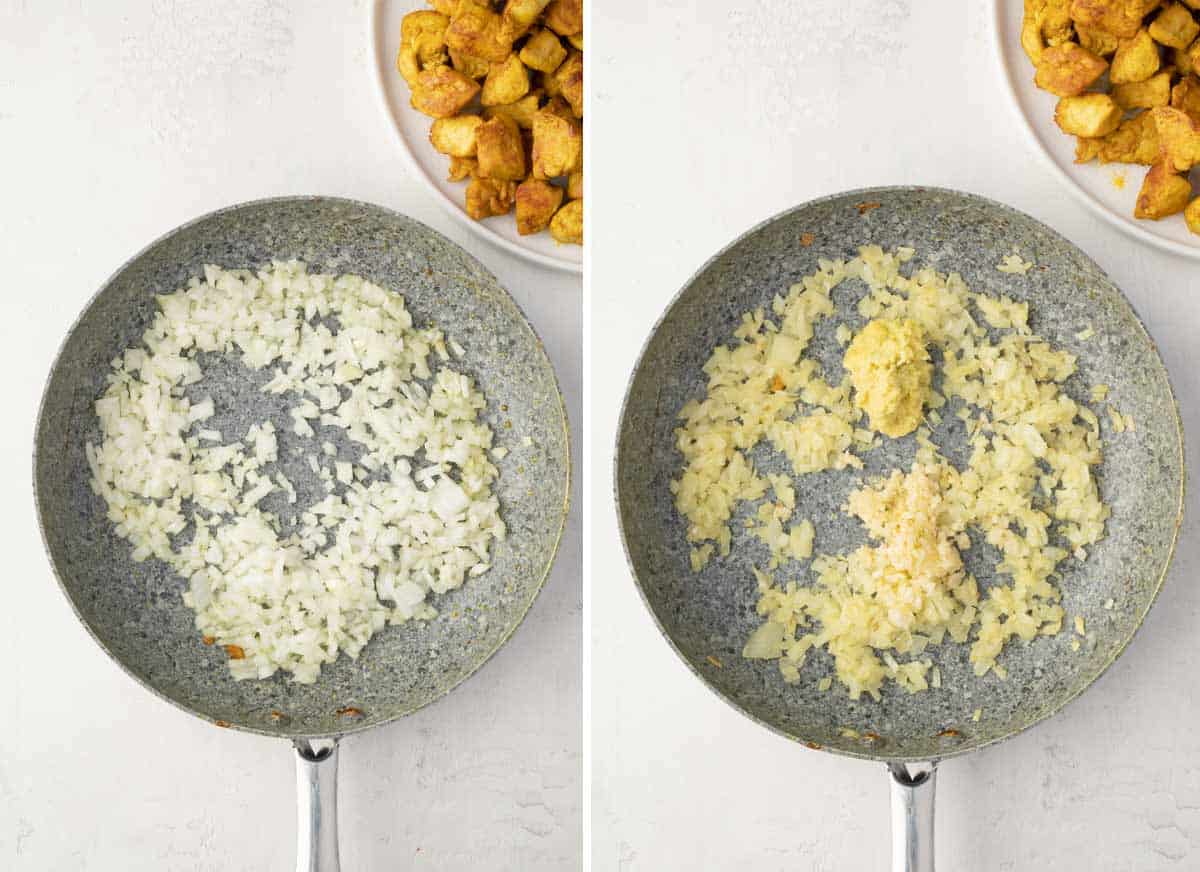
- Add the spices: Stir in the curry paste and curry powder and cook for 1 minute.
- Build the curry: Return the chicken to the skillet. Add coconut milk and chicken stock and bring to a gentle simmer. Cook until the chicken is fully cooked and the sauce slightly thickens.
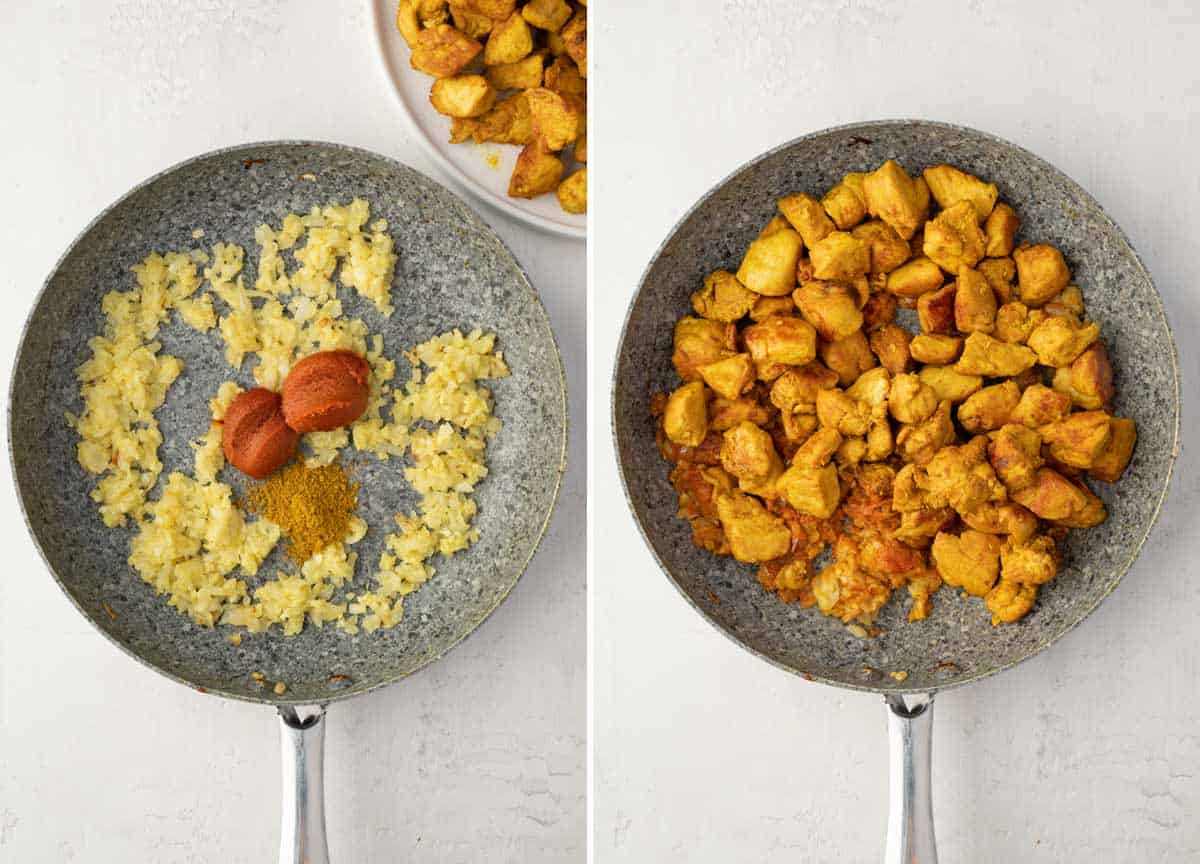
- Remove from the heat: Stir in lime juice.
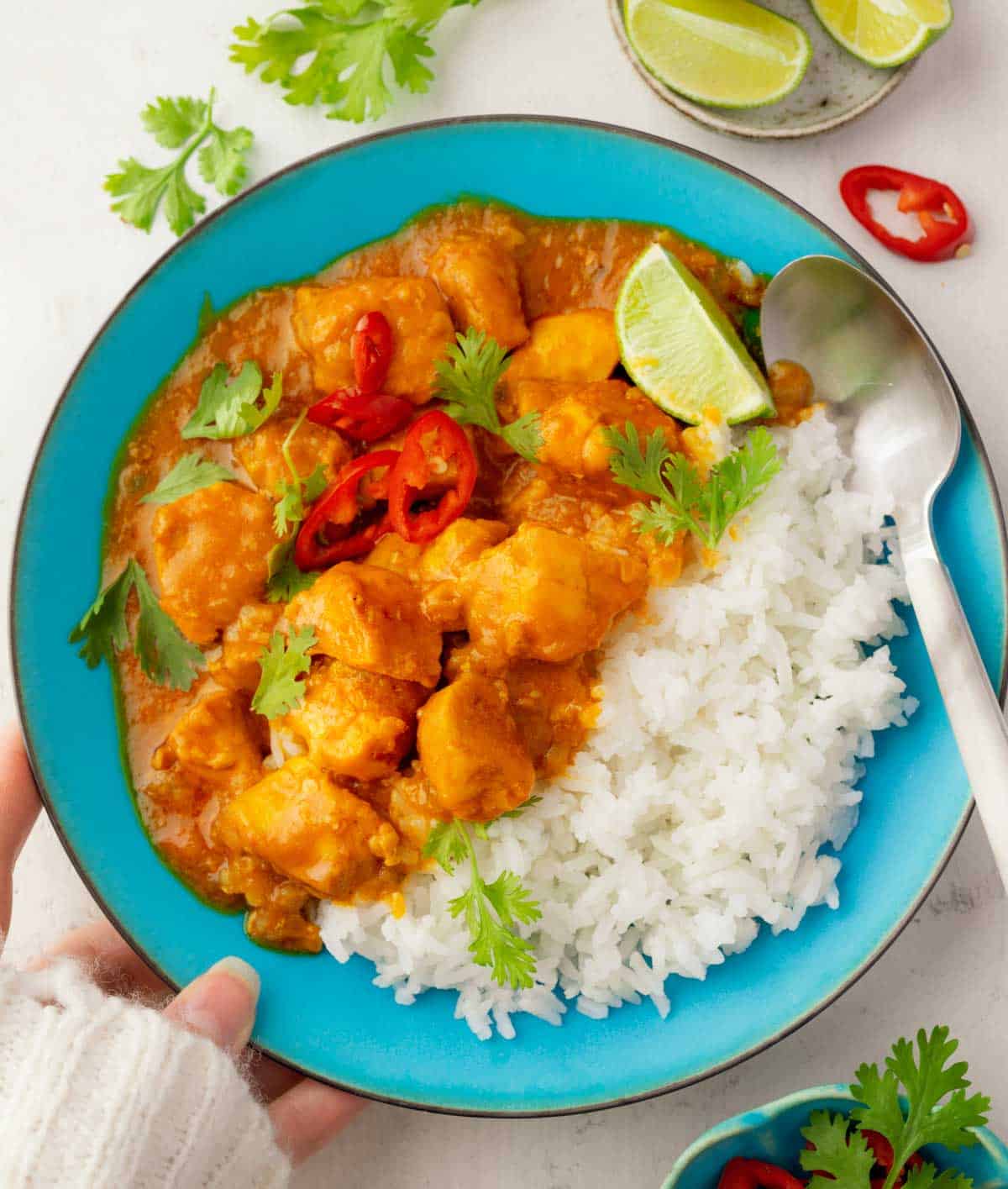
- Adjust and serve: Season to taste and serve over rice or noodles with cilantro and lime wedges.

Helpful Tips
- Sear the chicken first — don’t skip this: The sear is not just about cooking the chicken; it’s about building flavor. When the spice-coated chicken hits a hot, oiled pan, you get a golden crust through the Maillard reaction. Those browned bits left in the pan become part of the sauce when you deglaze with coconut milk and stock. Two to three minutes per side is all it takes — the chicken finishes cooking in the sauce.
- Bloom the spices in oil: Adding the curry paste and Madras powder directly to the oiled skillet and cooking for a full minute before adding liquid is called blooming. Heat releases fat-soluble flavor compounds in spices that water can’t — it’s the single biggest difference between a flat-tasting curry and a fragrant one.
- Use full-fat coconut milk: There is no workaround here. Light coconut milk will give you a thin, slightly sweet broth. Full-fat coconut milk gives you a thick, creamy, deeply satisfying sauce. Shake the can well before opening, or if the cream has separated, use the whole can — cream and liquid together.
- Taste and adjust at the end: Every curry paste and stock brand has different salt and spice levels. Before serving, always taste: needs more brightness? A squeeze more lime. Tastes flat? A pinch more salt. Too spicy? A tiny bit of brown sugar softens the heat without making it sweet.
- Make it your own: Stir in a handful of baby spinach in the last two minutes of cooking — it wilts down to almost nothing but adds color and nutrition. Sliced bell peppers or snap peas added with the coconut milk also work beautifully.
Recipe variations
Once you’re comfortable with the base recipe, this curry adapts easily:
| Variation | How to Adapt |
|---|---|
| Chicken Thighs | Boneless chicken thighs are juicier and more forgiving than breasts. Use the same amount and follow the recipe as written. |
| Vegetarian / Vegan | Replace the chicken with chickpeas and cubed firm tofu. Use vegetable stock instead of chicken stock. |
| Shrimp Curry | Skip the searing step. Add peeled shrimp during the simmer step and cook for 3–4 minutes, just until pink and opaque. |
| Extra Creamy | Stir in 2 tablespoons of full-fat coconut cream at the end for a richer, silkier sauce. |
| Green Curry Version | Substitute Thai green curry paste for the red curry paste and use Thai basil instead of cilantro. |
| Slow Cooker Method | Sear the chicken and cook the aromatics first, then transfer everything to a slow cooker. Cook on LOW for 4–5 hours and stir in lime juice before serving. |
What to serve with coconut chicken curry
The sauce in this curry is too good to waste — you want something to soak it up.
- Jasmine rice (classic)
- Basmati rice Rice noodles
- Naan or roti
- Cauliflower rice (low-carb option)
- Steamed broccoli
- Simple mango chutney
Storage and reheating
Coconut chicken curry is one of the best meal prep recipes out there — it stores and reheats exceptionally well.
| Method | Duration | Notes |
|---|---|---|
| Refrigerator | Up to 4 days | Store in an airtight container. Reheat gently on the stovetop over medium-low heat with a splash of stock or water to loosen the sauce. |
| Freezer | Up to 3 months | Cool completely before freezing. Thaw overnight in the refrigerator. The sauce may separate slightly after freezing — stir gently over low heat and it will come back together. |
Meal prep tip: Store the curry and rice separately. Rice gets mushy when stored in the sauce overnight. Reheat both individually and combine in the bowl.
Frequently asked questions
Simply simmer uncovered for a few extra minutes over medium heat, stirring occasionally. The sauce will reduce and thicken naturally as the liquid evaporates. Avoid adding flour or cornstarch — it changes the texture and flavor. The most common cause of a watery curry is light coconut milk.
As written, it’s mild to medium — the coconut milk tames the heat of the red curry paste considerably. For a milder version, use 1 tablespoon of curry paste instead of 2. For more heat, add sliced Thai chili or red pepper flakes when adjusting seasoning at the end.
If you made this coconut chicken curry, we’d love to hear how it turned out! Leave a star rating and a comment below — it helps other readers find this recipe and genuinely makes our day.
Pin this now to find it later
Pin It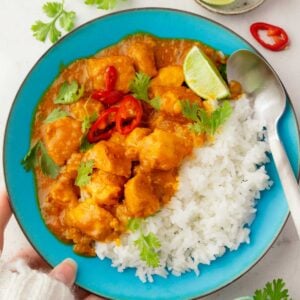

Coconut Chicken Curry
Ingredients
- 1½ pounds boneless, skinless chicken breasts, cut into 1-inch pieces
- ½ tablespoon ground paprika
- 1 teaspoon ground turmeric
- 1 teaspoon kosher salt, plus more to taste
- 3 tablespoons coconut oil, divided
- 1 medium yellow onion, diced (about 1 cup)
- 5 garlic cloves, minced
- 1½ tablespoons fresh ginger, grated
- 2 tablespoons Thai red curry paste
- 1 teaspoon Madras curry powder
- ¾ cup good-quality chicken stock
- 1 13.5-ounce can full-fat unsweetened coconut milk
- Juice of ½–1 lime, to taste
- Cooked jasmine rice or noodles, chopped fresh cilantro, lime wedges, for serving
Optional
- ½ teaspoon brown sugar for balance
- Red pepper flakes or sliced Thai chili for extra heat
- Baby spinach or bell peppers for added vegetables
Instructions
- Season the Chicken: In a large bowl, toss the chicken with paprika, turmeric, and salt. Set aside.
- Sear the Chicken: Heat 2 tablespoons coconut oil in a large skillet over medium-high heat. Sear the chicken for 2–3 minutes per side until lightly golden. The chicken does not need to be fully cooked. Transfer to a plate.
- Cook the Aromatics: Add the remaining coconut oil to the skillet. Add the onion and cook until soft and translucent, about 6–8 minutes. Stir in the garlic and ginger and cook 1–2 minutes more until fragrant.
- Bloom the Spices: Add the Thai red curry paste and Madras curry powder. Cook for 1 minute, stirring constantly.
- Build the Curry and simmer: Add the chicken and stir well to coat. Pour in the coconut milk and chicken stock. Bring to a gentle simmer and cook for 8–10 minutes until the chicken is cooked through and the sauce slightly thickens.
- Remove from the heat and stir in lime juice.
- Adjust the Flavor: Taste and adjust seasoning with more salt or lime juice if needed. Add optional brown sugar for balance or red pepper flakes for more heat.
- Rest and Serve: Let the curry rest for 10–15 minutes if possible, then serve over jasmine rice or noodles with cilantro and lime wedges.
Notes
- Use full-fat coconut milk: It makes the best creamy texture and prevents the sauce from tasting thin or watery.
- Don’t boil the curry aggressively: A gentle simmer keeps the coconut milk smooth and helps the chicken stay tender.
- Searing adds flavor: Browning the chicken first results in deeper flavor and gives the sauce a richer, restaurant-style taste.
- Chicken breast cooks quickly: Since the chicken is seared first, avoid over-simmering or the meat may dry out.
- Adjust spice level easily: Add extra curry paste, red pepper flakes, or Thai chili for more heat. Add a small pinch of brown sugar if the curry tastes too sharp or spicy.
- Great add-ins: Bell peppers, spinach, peas, or mushrooms work well in this curry. Add delicate vegetables near the end of cooking.
- Tastes even better later: The flavors deepen after resting, making leftovers especially good the next day.
- Best served with: Jasmine rice, rice noodles, or warm naan to soak up the sauce.
Nutrition
Nutrition information is automatically calculated, so should only be used as an approximation.
All rights reserved. CHEF JAR. All images and content are copyright protected. PLEASE do not use my images without my permission. If you want to share this recipe, PLEASE provide a link back to this post.




I made this on a busy weeknight and was surprised by how much flavor it had. The sauce was creamy, rich, and perfectly spiced. Better than takeout and much easier than I expected.
Hi David! That’s such a compliment. I’m glad the recipe was easy to make and delivered on flavor. Thanks for sharing your experience!
This recipe was comforting, flavorful, and surprisingly easy to make. The coconut sauce was silky and rich, and my whole family cleaned their plates.
Hi Samantha! That’s wonderful to hear. There’s nothing better than a recipe the whole family enjoys. Thanks so much for your kind words!
This curry was rich, creamy, and full of flavor. It tasted like something I’d order from my favorite restaurant, but it was surprisingly simple to make at home.
Hi Olivia! What a wonderful compliment. I’m so glad you found it easy to make and restaurant-worthy. Thanks for giving it a try!